Pregnancy
The Girl he Never NoticedPregnancy is the hidden condition around which Liz Montrose’s life, fears, and relationships are organized. It began as an unwanted complication in a failed youthful relationship, made her a single mother, and shaped her determination to protect Scout from a father who had urged her to have an abortion. By the end, pregnancy has acquired an entirely different meaning: Liz welcomes Cameron Hillier’s baby with joy and presents it as proof that her love for him is real.
Origin and Concealment
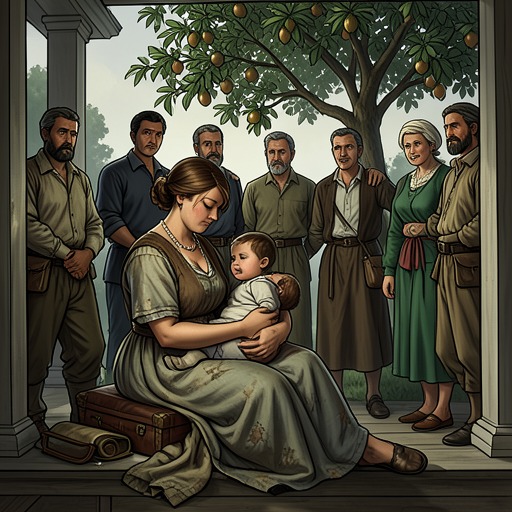
Liz knew she was pregnant when Scout’s father rejected the future that pregnancy implied. He told her that an abortion was the only thing to do, while offering to help her through it and simultaneously announcing that he was making a new start with another woman, moving interstate, and taking up a new position. Liz refused the abortion, told him she could cope, and walked out; that was the last time she saw him. Her decision preserved Scout’s life but ended any prospect of an ordinary shared parenthood with the child’s father.
Liz did not hide her pregnancy from him at first. She told him, but his response convinced her that he did not want Scout to be born and might believe that Liz had tried to trap him into marriage. Afterward, Liz went away for a month, changed campuses, and became an external student. Because she had no idea whether he tried to contact her before moving, the concealment remained partly a consequence of separation and partly a deliberate choice. Years later, when Cameron asks whether she knew she was pregnant, Liz confirms that she did, despite his cynicism, and struggles to keep her composure while recounting it.
Single Motherhood and Custody Anxiety
Pregnancy leads directly to Liz’s single motherhood and to the protective secrecy that governs her conduct. When Cameron asks about Scout’s father, Liz’s manner changes abruptly; the subject is a sore point rather than ordinary family history. She initially insists that the matter is none of his business, but eventually explains why she has kept the father ignorant of Scout’s existence. When Scout was born, Liz could think only that the child was hers. Since her father had not wanted her to see the light of day, Liz could not accept that he should later share her.
Her certainty is complicated by her awareness of Scout’s future autonomy. Liz still wants to keep the father away for the present, yet recognizes that Scout may eventually want to know him. The legal and emotional stakes therefore remain separate in her mind: Liz understands that being Scout’s mother gives her a strong position, but fears that the father and his wife could find other ways to draw Scout away. They have been married for four years, have no children, possess a settled home, and the father is gaining prestige in his chosen field. Liz, by contrast, describes herself as merely getting by. Pregnancy has thus left her with a permanent fear that economic stability and social respectability might be used against her maternal security.
Cameron tries to reassure her that, as Scout’s mother, she cannot simply be displaced unless she cannot provide for the child. Liz’s fear nevertheless reaches beyond formal law. She imagines Scout growing older and preferring what her biological father and his wife can offer, while judging her own less settled circumstances against theirs. The original pregnancy therefore continues to structure the present: it is not only the event that made Liz a mother, but also the source of her custody anxiety and her vigilance about being deemed an unsuitable one.
Consequences for Work and Marriage
Liz’s pregnancy and motherhood influence her response to Cameron’s offer of a position at Yewarra. He tells her that the job would include a comfortable staff cottage large enough for Liz, Scout, and Mary Montrose, with Archie as a ready-made friend for Scout. Cameron says that Liz has impressed him, is as good as Roger Woodward, and may be better in some areas; he believes that her organizational and people skills qualify her for work beyond that of a diary secretary. The offer provides professional recognition, a home-based arrangement, and a family environment, but its practical importance is inseparable from Liz’s concern about Scout.
Liz accepts because the position would improve her finances, eliminate the need for part-time weekend work, strengthen her résumé, and give her more time with Scout. She also believes it would make her appear more capable of providing for her daughter if Scout’s father ever challenged her suitability. Her pregnancy has therefore produced a long-term economic burden, but it also motivates a determined effort to convert competence and employment into maternal protection. The new position is not merely career advancement; it is part of Liz’s strategy for proving that she can give Scout a secure life.
The same history complicates Cameron’s marriage proposal. Liz wonders whether accepting would be an act of gratitude rather than a free choice, especially because he has helped her and offers the protection of his name. Cameron rejects that basis: he tells her to decide without gratitude and insists that their mutual desire, not obligation, must determine the answer. He later describes the proposed union as a marriage of convenience intended to safeguard Scout from her father. Pregnancy and its consequences have made marriage appear to Liz as both emotional commitment and legal-social protection, creating the danger that love might be confused with practical necessity.
From Vulnerability to Chosen Family
The meaning of pregnancy changes as Liz’s relationship with Cameron deepens. When she is frightened and exhausted, Cameron does not take advantage of her; he says that she is still dressed, that he does not take advantage of sleeping girls, and that they should make no earth-shattering decisions while she is overtired and overwrought. In that moment, Liz understands that Cameron is her answer—not for Scout’s sake, but for her own. He makes her feel safe and attracts her more powerfully than any other man has. The contrast with Scout’s father is decisive: the earlier pregnancy arose amid rejection and abandonment, whereas her bond with Cameron is associated with restraint, safety, and reciprocal desire.
Liz eventually tells Cameron that she would never have slept with him without loving him. Although her actions may have seemed motivated by Scout, she insists that they were about Cameron and had been about him from much earlier. This confession revises the meaning of her earlier choices. The child she already has remains central to her fears and decisions, but the relationship with Cameron cannot be reduced to a protective arrangement. Her pregnancy by him becomes the next stage in a family story she enters willingly rather than one she endures alone.
Later Pregnancy and Narrative Significance
At the close of the supplied narrative, Cameron notices that Liz looks secretive and correctly guesses that there is a baby. Liz gravely confirms it, then tells him that she is over the moon. She explains that she once worried she could never prove how much she loved him because she could only say it; carrying his baby feels like proof, since she wants his child with all her being. Cameron is visibly moved and believes her, receiving the news as an expression of love rather than as a threat or obligation.
This later pregnancy reverses the emotional charge of the first. Liz’s earlier pregnancy was met by a father who proposed ending it, leaving her to bear motherhood alone and to defend Scout’s future against imagined loss. The new pregnancy is met by Cameron’s recognition, tenderness, and shared joy. It does not erase the damage of the past, but it transforms pregnancy from evidence of abandonment into evidence of belonging. The condition that once forced Liz into secrecy now confirms the family and love she has actively chosen.