“Filthy, stinking drunk”
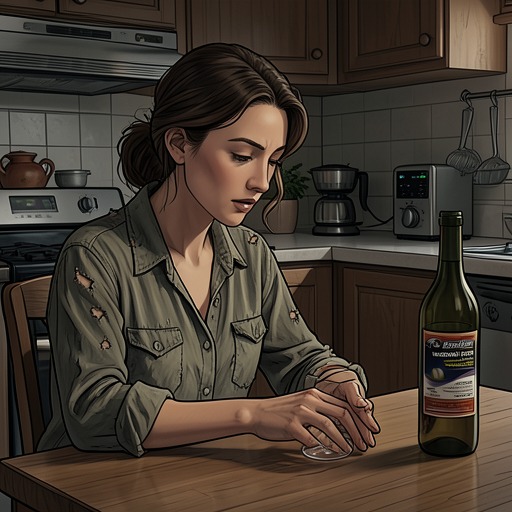
The Girl on the Train“Filthy, stinking drunk” is Tom’s phrase for Rachel Watson’s intoxication, but its force in the novel reaches beyond a description of drinking. Repeated in a phone call and then replayed in Rachel’s mind, it becomes a verbal trigger linking present shame to an older pattern in which Tom told her what she had done while she struggled to remember it.
The Phrase and Its Return
On the phone, Tom tells Rachel she was “blind drunk” and “staggering all over the place,” then recalls that she had fallen in the street, crying and “a total mess.” He uses the phrase while answering her question about whether she had been hurt, but the exchange turns quickly into a rejection: he asks why the detail matters and tells her not to call, leave notes, or come to his home because it upsets Anna. The phrase thus arrives inside a conversation Rachel hopes will clarify her memory, while reinforcing the distance Tom insists on keeping.
The words do not stay in that call. The following night, as Rachel lies awake on a sofa, Tom’s description returns in her mind so vividly that she jolts awake. Its recurrence brings not only shame but déjà vu: she recognizes that she has heard those exact words before. The phrase’s repetition makes it a hinge between the current search for what happened and a history Rachel has not fully understood.
Drinking, Memory, and Shame
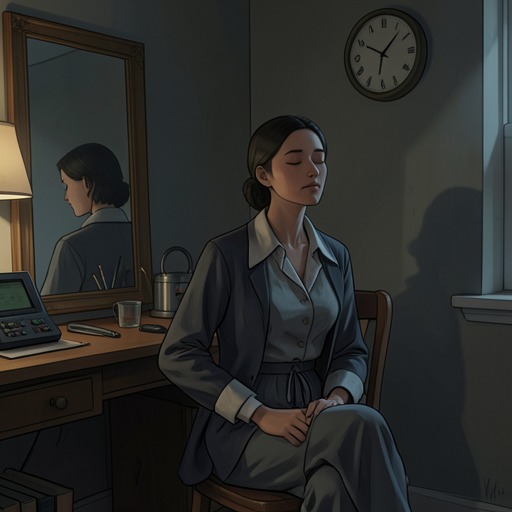
Rachel’s response is shaped by her earlier experience of blackouts. She recalls waking with blood on the pillow, a painful mouth, dirty fingernails, and a severe headache, then seeing Tom emerge from the bathroom with an expression she understood as hurt and anger. When he described violent acts she could not reconcile with what she remembered, she came to distrust her own recollection. Tom sometimes threatened to record her, saying he would play the recording back, though he never did. Rachel learned to apologize without asking what had happened, promising that she would not behave that way again.
The phrase therefore does more than name an episode of intoxication: it recalls a relationship in which Rachel’s missing memories left her dependent on Tom’s account of her conduct. Her thought that she may have remembered the past incorrectly sharpens the uncertainty. The words return as something familiar and authoritative, even though the memories attached to them are incomplete.
A Stigmatized Identity
Rachel’s fear of being seen through the signs of drinking appears elsewhere in her account. On the train, she imagines that familiar passengers may recognize her without knowing “what I really am,” and interprets a stranger’s glance at her wine as evidence that he finds her distasteful. She sees the damage of drinking and sleeplessness written in her swollen face, weight gain, posture, and movements. In this context, Tom’s phrase resembles a fixed label Rachel fears other people can already read on her.
Her shame also accompanies concealment. Rachel admits that she has been unemployed for three months, has not told Cathy, and lied to Detective Sergeant Riley about her job because she feared Cathy would worry about the rent. Cathy later confronts her after learning that she has been pretending to go to work; Rachel acknowledges that she was fired for being drunk at work. These facts show the phrase’s wider resonance: drinking is not only a private failing in Rachel’s own judgment, but a fact she hides and expects others to use against her.
The Phrase as a Turning Point
After sending Scott a message that falsely presents her as a friend of Megan, Rachel recognizes that drink has helped defeat her earlier resolve to stay out of the story. She describes “Drunk Rachel” as living only in the moment, swinging between expansive optimism and hatred, and acknowledges plainly, “I lied.” The phrase belongs to this same struggle over identity: Rachel is painfully aware of the person she becomes while drinking, yet does not treat that state as the whole of who she is.
By the end of the remembered sequence, fear has altered her behavior. Rachel says she is now too afraid to go out in the middle of the night to buy alcohol or to let herself slip, because that is when she becomes vulnerable. The insult remains painful, but its return also helps her recognize a repeated pattern of shame, lost memory, and apology. Its significance lies in that double edge: it voices a humiliating judgment Rachel has absorbed, while making the old cycle newly visible to her.