Alcohol Dependence and Addiction
The Girl on the TrainAlcohol dependence in Rachel Watson’s story is not simply a habit or a background vulnerability: it shapes how she manages fear, sleep, shame, and memory. Her movement toward abstinence begins after a frightening encounter with Scott Hipwell, but the narrative presents it as a precarious effort, sustained by immediate danger and painful consequences rather than by any claim that dependence has been resolved.
Use as Relief and Its Limits
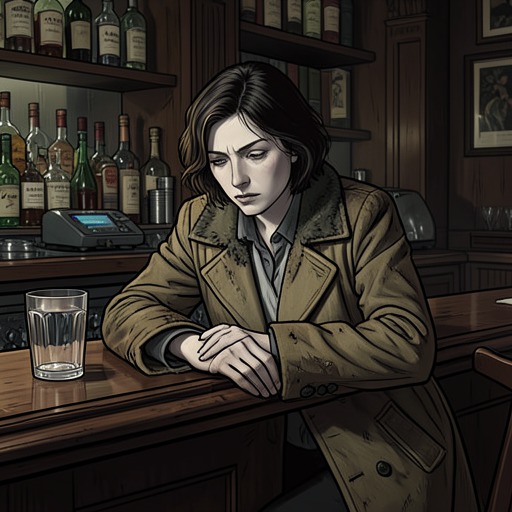
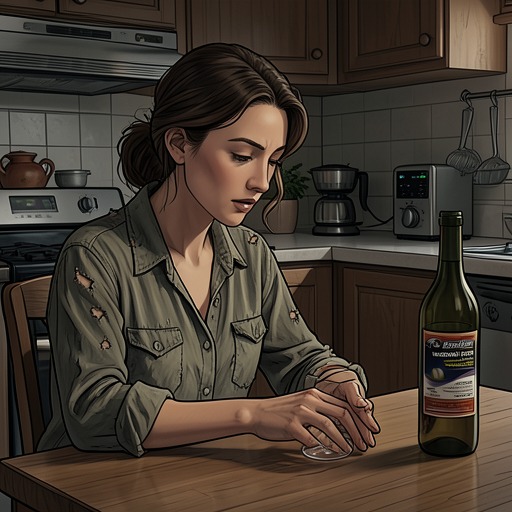
On the morning of 16 August 2013, Rachel reports that she has barely slept. She has drunk a bottle and a half of wine hoping to fall asleep, steady her shaking hands, and quieten her startle response. The attempt brings little relief: she keeps jolting awake, convinced that someone is in the room. Only as daylight arrives does she relax enough to sleep, and even then she dreams of being in the woods with Tom Watson and remains afraid. Alcohol is being used to regulate several forms of distress at once, yet neither the drinking nor the eventual sleep frees her from fear.
This scene makes dependence visible through its practical reach. Rachel turns to wine not only for pleasure but to manage physical agitation and interrupt wakefulness. The amount she drinks and the persistence of her symptoms show how urgently she wants relief; the failed night shows its limits. Her fear remains active through the attempt to numb it, and follows her into sleep.
Blackouts, Shame, and Tom’s Account
Rachel’s relationship with alcohol is also bound to gaps in memory and to Tom’s descriptions of what she did while drunk. She recalls denying that she had ever hit him, then being asked whether she remembered the previous night. Tom would recount things she could not reconcile with her own sense of herself. A hole in the plaster, made with a golf club, remained a visible object she associated with his account of her behavior, although she could not match that violence with the fear she remembered.
Over time, Rachel says, she stopped asking what had happened and stopped disputing Tom’s version when he volunteered details. She did not want to hear the worst of what she might have said or done. He sometimes threatened to record her and play it back, but never did. The threat nevertheless belongs to the pattern surrounding her drinking: her memory gaps leave her dependent on another person’s account, while shame makes her reluctant to seek clarification. On waking, she learned to apologize for her conduct and promise that she would not behave that way again. The repeated apology conveys how dependence and uncertainty about her own actions became entangled.
Fear as a Barrier to Drinking
On 18 August, Rachel recognizes that fear of becoming vulnerable has changed her behavior. She says she is now too afraid to go out in the middle of the night to buy alcohol and too afraid to let herself slip. This fear gives her a reason not to drink, but the reason is closely tied to danger rather than to a secure sense of recovery. Her resolve is real, yet its immediate support is the prospect of being exposed and harmed if she becomes impaired.
The narrative connects that resolve with a broader disturbance in her sense of safety. Rachel spends the night downstairs with the television on, with fear and strength both fluctuating. She hears Tom’s past accusation in her mind and wakes with shame and a powerful sense that she has heard the words before. Her memories return not as a calm, continuous account but through recurrence and recognition. In that context, drinking has been a way to blunt painful states, while sobriety leaves her more exposed to them. The account does not treat either condition as simple: alcohol fails to protect her, but avoiding it does not instantly quiet her fear.
Abstinence, Craving, and the Last Drink
Later, after Tom’s death, Rachel counts the days since her last drink. She imagines how good the first drink would feel halfway through, then uses the count to resist: twenty days, or twenty-one if she includes that day, making three weeks—the longest dry spell she has had in years. The specific count turns abstinence into something she must keep choosing from one day to the next. The craving remains vivid even as the time without alcohol becomes a source of cautious pride.
Rachel identifies Cathy as the person who served her last drink. After the police brought Rachel home, pale and bloody, and told Cathy what had happened, Cathy poured each of them a large measure of Jack Daniel’s and cried while apologizing. Rachel drank the whisky and vomited it back up; she has not had alcohol since, though she still wants it. This episode marks the beginning of the counted abstinence, but not the disappearance of desire. Cathy’s distress and Rachel’s physical response give the last drink a particular context: it followed the crisis and became, in retrospect, a boundary between drinking and the dry period.
Refusal and Unresolved Recovery
At a hotel later in the story, Rachel is still aware of the drinks available in the minibar. She takes bottled water and macadamia nuts and leaves the wine and small bottles of gin untouched, despite believing they could help her sleep and let her forget the look on Tom’s face as she watched him die. The temptation is directly linked to the wish to escape memory, but she does not act on it. The choice makes abstinence an active refusal, not evidence that craving has passed.
Rachel also walks along the harbour and beach in an effort to become exhausted enough to sleep, turning away from alcohol while still searching for another form of relief. She counts her days dry and recognizes that she wants to drink; both facts remain true at once. The ending of this thread is therefore neither a cure nor a simple collapse. It is a fragile stretch of sobriety in which Rachel continues to encounter fear, grief, and the wish to forget, while repeatedly declining the drink that once seemed to offer escape.