Alcoholism and recovery
The Girl on the TrainAlcoholism and recovery in Rachel Watson’s story are bound together by an uncomfortable tension: she wants to take responsibility for the damage drinking has done, yet her blackouts make that damage feel as if it belongs to someone else. Alcohol has cost her a marriage and a job, threatens her health, and leaves sobriety a day-by-day struggle. Recovery is not a clean reversal but a series of attempts to tell the truth, withstand craving, and keep moving when shame and exhaustion make retreat easier.
The Pattern of Drinking and Its Costs
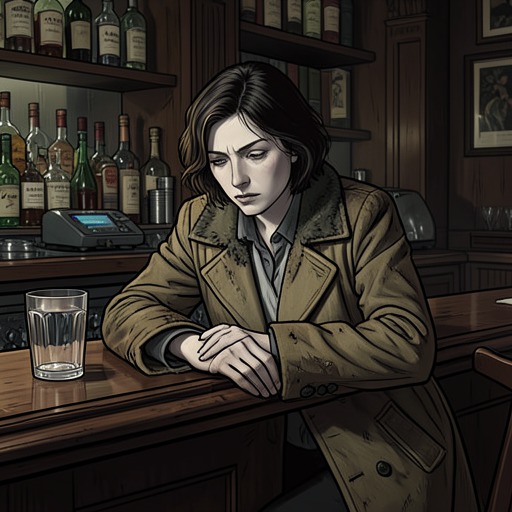
Rachel tells Dr Kamal Abdic that she has had problems with alcohol for four years. She links her drinking to the loss of her marriage and job, and worries that it is harming her health and might undermine her sanity. The disclosure makes clear that alcohol is not a passing indulgence in her life: it has become a force with consequences across work, intimacy, physical well-being, and her understanding of herself.
The job loss has a specific, humiliating history that Rachel has not told Cathy. Months earlier, after a three-hour lunch with a client, she arrived at work blind drunk and behaved so rudely and unprofessionally that the firm lost the client’s business. She remembers the waitress handing her jacket back, her unsteady walk into the office, colleagues turning to look, and Martin Miles taking her aside to tell her to go home. The sequence survives in her memory as a scene of public exposure, even as other parts of her life are blurred by drinking.
That concealed history shapes her exchange with Cathy. When Cathy asks whether she has met someone, Rachel nearly answers yes, but says instead that she went to an Alcoholics Anonymous meeting in Witney. Cathy wonders whether Rachel has slipped again after Friday; Rachel acknowledges that staying sober will not be straightforward and says she is doing her best. Her answer offers a glimpse of effort, but also shows how much of that effort remains hidden behind an evasive account. She feels guilty because Cathy genuinely cares whether she gets sober.
Blackouts and Responsibility
Rachel’s account to Dr Kamal Abdic gives the problem a moral as well as practical dimension. She says that she blacks out and cannot remember where she has been or what she has done. Sometimes she fears she may have said or done terrible things without being able to recall them. When someone tells her what she did, the action does not feel like hers; it seems detached from her, making it difficult to feel fully responsible and, in turn, difficult to feel that she has suffered enough remorse.
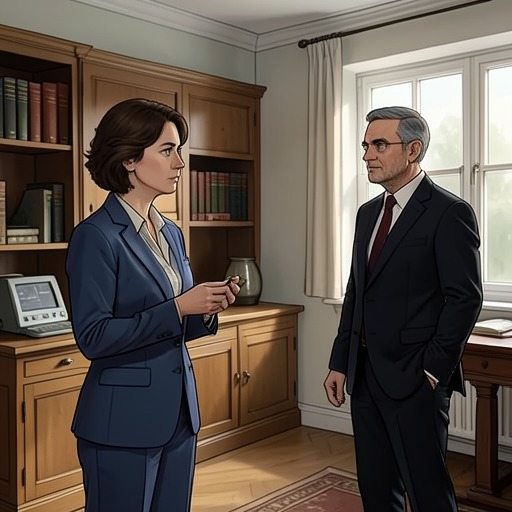
The act of telling this to Dr Kamal Abdic matters because Rachel recognizes the contradiction in seeking help from him in this setting: she has come to him for another purpose, but the account of her drinking spills out as something she has been waiting to say. He listens without looking around or taking notes, then reflects back the problem of accountability. The exchange gives her experience a clear formulation without resolving it. Memory loss is not presented as proof that she is blameless; rather, it is the obstacle Rachel herself identifies between knowing that harm may have occurred and feeling answerable for it.
Shame, Withdrawal, and the Struggle to Continue
By Friday, 26 July 2013, Rachel has stopped pretending that she is travelling to an imaginary office. She can barely make herself get out of bed, has not brushed her teeth since Wednesday, and is still feigning illness although she suspects no one believes her. The effort of dressing, taking the train to London, and wandering the streets has become too much. Rain deepens her sense of confinement, while sleeplessness and nightmares compound the difficulty: in the dreams she is trapped, knows someone is coming, cannot find the way out, and cannot make herself scream. The text distinguishes these troubles from drinking alone; the nightmares have become part of the wider crisis she is enduring.
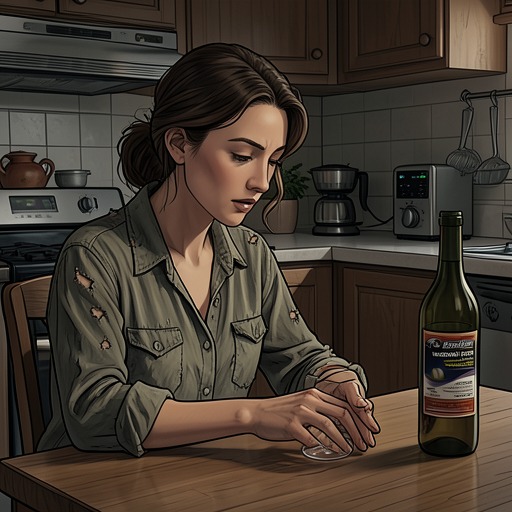
Recovery is also measured in the immediate contest between craving and choice. After several days without alcohol, Rachel lies in bed thinking about her past, then gets up because staying still may lead her to the corner shop. She feels the pull of a small buzz and the desire to escape her own thoughts, set against the modest sense that she has achieved something and should not throw it away. Neither side cancels the other: the wish to drink remains active even as she tries to protect the brief progress she has made.
Ordinary Routes as Recovery
Rachel turns the walk into a practical alternative to buying alcohol. Ashbury offers shops and suburbs but no decent park, so she chooses the church at the top of Pleasance Road, about two miles from Cathy’s flat. She has attended an Alcoholics Anonymous meeting there. She avoided the local meeting because she did not want to encounter people she might see again on the street, in the supermarket, or on the train. The choice shows both her use of support and her wish to keep that support private.
At the church she turns back and walks home with deliberate purpose, imagining herself as a woman with things to do and somewhere to go. Passing two men training for a marathon and a young woman carrying her heels, she wonders what other people might be hiding. The scene does not claim that a walk cures addiction; its significance lies in its scale. For the moment, Rachel gives herself a destination, moves through the town, and returns without going to the corner shop. Recovery appears as an unfinished practice, sustained by small decisions made while the urge to drink is still present.