Infidelity and betrayal
The Girl on the TrainInfidelity and betrayal are not merely plot revelations in Rachel Watson’s story; they become the lens through which she reads other people’s intimacy and measures what has been taken from her. The novel sets her actual discovery of Tom Watson’s affair with Anna Watson against a train-window scene that may be only a partial glimpse, showing how personal injury can turn observation into certainty and sympathy into accusation.
Discovery and the breach of trust
Rachel discovers Tom’s affair while trying to plan a surprise for their fourth anniversary. She has opened his laptop to check his work calendar, hoping to arrange a trip that might recall what their relationship used to be. Tom had warned her away from the computer after she accidentally deleted his email contacts, and his teasing remark about her weakness with technology helps establish the unequal terms of trust: Rachel has been made to feel incapable, yet she is also trying to act lovingly and secretly.
When she closes the calendar, Tom’s email account is still open. A message from Anna catches her attention; its string of Xs first looks like spam, then registers as kisses. The discovery is accidental in the sense that Rachel was not looking for evidence of an affair, but the open account makes the hidden relationship suddenly legible. She reads dozens of messages stored in a folder called Admin and learns that Anna is the recipient of Tom’s declarations of love and desire, along with his assurances that they will soon be together.
The contents transform an ordinary act of planning into a rupture. Rachel had imagined the anniversary trip as a way to recover closeness; instead, she finds that Tom has built an intimate life with someone else. The affair is especially painful because the messages do not present it as a passing lapse: Tom repeatedly tells Anna that he loves her and has never felt this way before. Betrayal therefore reaches beyond sexual exclusivity to Rachel’s confidence in the shared history she thought she understood.
The train-window projection
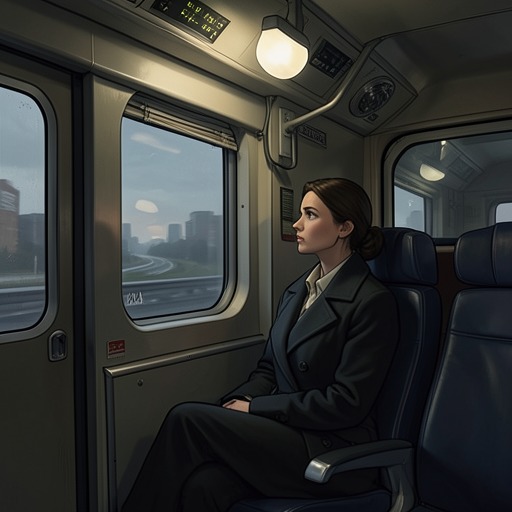
Later, while travelling by train, Rachel sees a woman she calls Jess in a garden with a man who is not the husband Rachel associates with her, Jason. The man’s identity remains uncertain even to Rachel: she imagines he might be a relative, a family friend, or an old friend visiting from Australia. What she sees clearly is Jess walking to him, putting her arms around his waist, and kissing him. The train moves on before Rachel can know more.
Rachel’s response is immediate and bodily: she realizes she has been holding her breath, then feels anger and a familiar ache. She thinks Jess has betrayed a loving husband and experiences the scene as a personal injury, as though she herself has been cheated. Her certainty about the kiss’s meaning is striking beside her uncertainty about who the man is and how he belongs to the household. The scene shows how the remembered pain of Tom’s affair supplies an emotional script for interpreting a stranger’s gesture.
Rachel’s outrage also reveals a moral contradiction. She condemns Jess for disregarding the damage done by following her heart, yet her reaction is intensified by the fact that Rachel recognizes the same kind of hurt from her own marriage. The imagined couple’s attractive, apparently happy life sharpens her sense of injustice. In that moment, watching from the train is not neutral observation: Rachel turns a fragment into a story of betrayal and relives her own loss through it.
Anna, family, and the afterlife of the affair
The affair’s consequences persist after Rachel and Tom’s marriage has ended. Anna’s voicemail asks Rachel to stop making nighttime calls because they wake Anna and Tom, and their daughter, Evie, who is having difficulty sleeping through the night. Anna speaks from within the routines of a household—its sleep, childcare, and shared problems—while Rachel hears the repeated pronoun we as proof of a family life from which she has been excluded.
Rachel interprets Anna’s place in the house through the history of the affair: Anna lives among the furniture Rachel bought and sleeps in the bed she once shared with Tom. Her anger turns domestic objects and routines into evidence of displacement. The betrayal is no longer confined to the original messages; it seems to Rachel to have carried her out of her home and left another woman occupying the familiar spaces. This is Rachel’s perception of the loss, not evidence that Anna’s later family life is itself an act of betrayal.
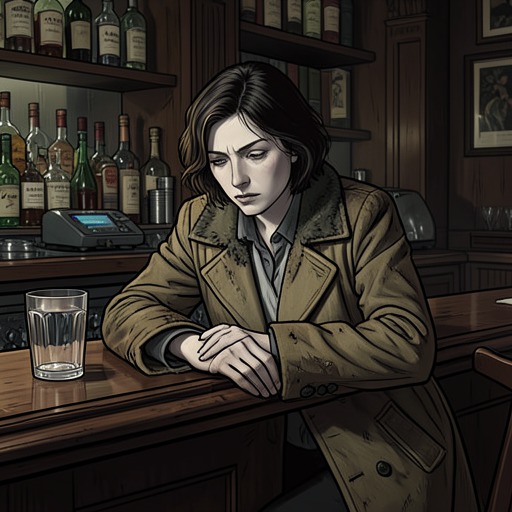
The voicemail also makes the conflict reciprocal in a painful way. Anna’s request is about repeated calls that disturb the household, but Rachel, drinking in a park and listening again, experiences it as an accusation from the woman she associates with the collapse of her marriage. She resents being told that her distress is inconvenient, while her own calls have become an intrusion into Anna’s family life. The affair has ended as a secret arrangement, but its emotional and practical boundaries remain unsettled.
Anger, shame, and narrative significance
Rachel’s response to betrayal does not leave her with a stable position as the injured party. In a later episode, after drinking for several hours, she sends Tom an email accusing his wife of lying to the police about her and demanding that he make Anna leave her alone. The next day she hopes the message was never sent, but finds it in her Sent folder, timestamped just after eleven the previous night. Its reference to Anna’s child horrifies her; Rachel says she cannot understand the person who wrote it and insists that she is not hateful, even as she asks herself whether that is true.
That episode complicates the division between victim and aggressor without equating their actions. Rachel’s pain over Tom’s affair helps explain the force of her fixation on Anna, but it does not erase the harm of her calls or the hostile email. Her shame is sharpened by earlier blackouts in which Tom told her she had embarrassed him and insulted another man’s wife. The history makes her uncertain not only about other people’s motives but about her own conduct and memory.
Across these scenes, betrayal operates as both an event and a way of seeing. Tom’s hidden correspondence gives Rachel a concrete reason to distrust the marriage she thought she had; the kiss glimpsed from the train shows that the wound persists as a habit of interpretation. Domestic details—an anniversary plan, a folder labelled Admin, the Xs in a message, a child woken by phone calls—give that emotional pattern its particular shape. The novel’s account of infidelity thus follows its consequences into perception, anger, family boundaries, and Rachel’s uneasy recognition of what she herself has become.