Mac
The Girl on the TrainMac is a formative partner in Rachel Watson’s life, remembered first as someone who offered her shelter and later as the person who disappeared after they buried their infant, Libby. The account Rachel eventually gives Kamal Abdic makes Mac central to a concealed period of her past: a relationship begun after a vulnerable adolescence, a secluded household near Holkham, and a bereavement neither partner could openly face together.
Identity and Introduction
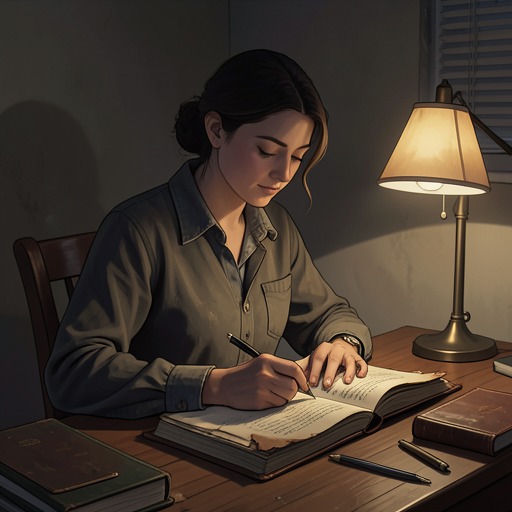
Rachel first meets Mac in Ipswich after running away following Ben Mills’s funeral. He is working at a pub and picks her up on his way home, having felt sorry for her. Her recollection marks him as a source of practical refuge at a time when she was unsettled and had been moving among men. She tells Kamal Abdic that Mac waited until her sixteenth birthday before their relationship began; the delay is one of the few specific details she gives about how they came together.
Mac’s full name is Craig McKenzie. Years later, Rachel searches online for him for the first time in a decade, but finds hundreds of people with that name and cannot identify which, if any, is hers. The failed search makes his absence concrete: although he shaped several years of her life, she has no reliable way to reach him or confirm where he went.
Life with Rachel
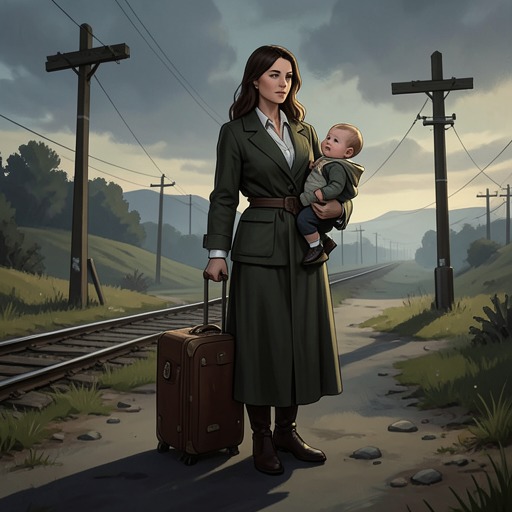
After Ipswich, Rachel moves into Mac’s cottage outside Holkham. It stands at the end of a lane, several miles from neighbors and shops, with land around it and an old railway track running alongside the property. Rachel estimates that she lived with Mac for about three years and says she was nineteen when that period ended.
The household changes over time. At first, the couple host frequent parties, with guests sleeping in the living room or in a hammock outside during summer. Mac eventually falls out with everyone, and visitors stop coming. The two are left largely on their own; days can pass without seeing anyone, and they buy groceries at a petrol station. Rachel recalls the isolation as something she needed after Ipswich and the experiences that preceded it. In retrospect, she describes the cottage, railway tracks, grass, dunes, and North Norfolk coast as a life organized around seclusion and the companionship of Mac.
Her account is not wholly straightforward. In an earlier conversation with Kamal Abdic, Rachel says that Mac left her and broke her heart, while acknowledging that this is only part of the truth and that she is not ready to explain more. The later disclosure supplies a concrete ending to their shared life, but Rachel’s hesitant telling also shows how long she has kept its most painful circumstances private.
Libby and the End of the Household
Rachel tells Kamal Abdic that she became pregnant while living with Mac. She says the pregnancy was too advanced for her to end by the time she realized it, and that the baby was not wanted by either of them. They named their daughter Elizabeth, known as Libby. Rachel’s account presents this history as a secret she has carried for more than a decade, and speaking Libby’s name aloud is a difficult step in disclosing it.
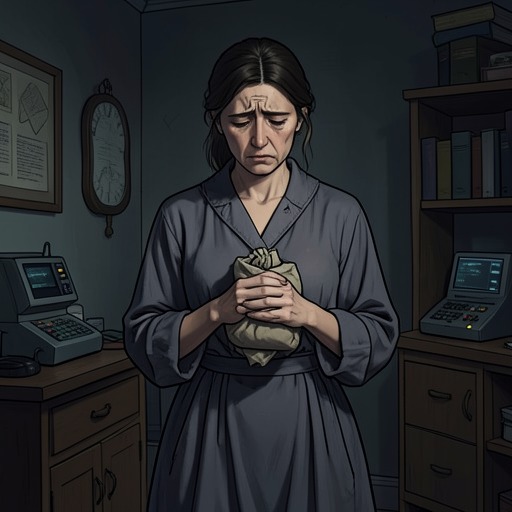
When Libby is only a few months old, Rachel and Mac have an argument, one of the conflicts that could grow from a small disagreement into a larger one. On this occasion, Mac leaves the house. The circumstances Rachel remembers are severe: the roof is leaking, rain has continued for days, and the house is cold. Rachel is exhausted and gets into a bath with Libby, holding the baby against her. She falls asleep, and Libby dies in the water. The account establishes the event as an accident; it does not suggest that Mac was present when it happened.
Mac returns and calls for Rachel. She is on the bathroom floor holding Libby, and when he reaches her she gives him the baby and runs from the house into the rain. Afterward, he finds her near the beach and brings her home. The next morning, Rachel wraps Libby in a sheet while Mac digs a grave at the edge of the property, near the disused railway line. They cover the grave with stones. Rachel remembers that they do not talk, look at one another, or discuss what has happened.
That night, Mac says he has to meet someone and goes out. Rachel fears he may be going to the police, but he does not return; she says he never comes back. The departure leaves the burial and its aftermath as the final shared act Rachel describes. It also gives a fuller, more painful context to her earlier statement that Mac left her: their relationship ends in the wake of Libby’s death, after the two have buried their daughter without discussing the loss.
Narrative Role and Significance
Mac is known almost entirely through Rachel’s retrospective account, first given in fragments and then disclosed in greater detail to Kamal Abdic. The movement from her brief explanation that Mac broke her heart to the account of Libby’s death and burial is a significant change in what she is willing to reveal. The cottage, once recalled as a private refuge, becomes the setting of a loss that she has kept unnamed and unspoken for years.
His disappearance also leaves Rachel alone with the memory of what happened. She tells Kamal Abdic that the feeling of being alone in the house still troubles her at night, and connects that fear to the period after Libby’s death. Mac’s absence is therefore not merely a biographical gap: it is part of the unresolved history Rachel is trying to put into words. The failed online search under his name underscores the distance between the intensity of their shared past and her inability, in the present, to find him.