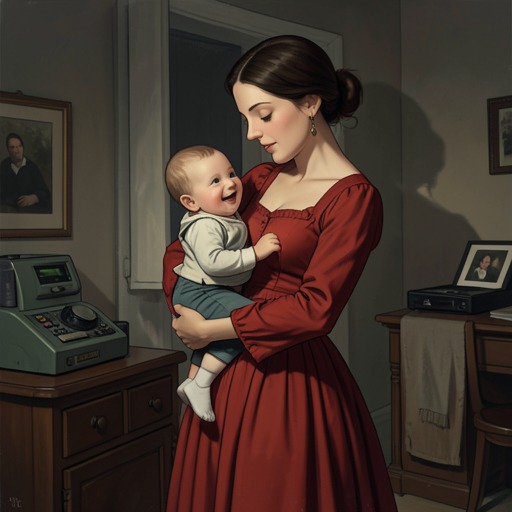
Megan Confesses Her Baby Libby’s Death to Kamal
The Girl on the TrainMegan Hipwell’s confession to Kamal Abdic reveals that her daughter Libby died in an accident when she was only a few months old, and that Megan and Mac buried her without reporting her death. The disclosure connects a concealed event from Megan’s youth to her later, persistent grief: telling Kamal what happened does not undo the loss, but it ends her complete isolation with the secret.
The Confession and Its Background
Megan approaches the subject as something she has never been able to say aloud. Her account begins with her life at seventeen: she had left her parents’ home and was with Mac, a man who excited and adored her. She describes their relationship as something she needed in that moment, rather than something expected to sustain her indefinitely. The pregnancy changed that situation, although neither of them initially acknowledged the change. Megan says that by the time she understood she was pregnant, it was too late to end it, and that Libby had not been wanted by either parent.
Megan recounts how she and Mac carried on as though nothing had changed. She did not seek medical care, attend scans, or follow the usual preparations for pregnancy. She describes herself as avoiding the situation rather than making a considered plan. As the pregnancy advanced, her body changed and she became increasingly tired, while she and Mac grew irritable and argued. In her telling, the birth finally made unavoidable what they had spent months failing to acknowledge.
Libby’s Birth and the Accident
Megan had Libby at home. She connects her avoidance of hospitals to the last time she had been in one: after her brother Ben was killed. She had not attended scans, and says that smoking, drinking, and fear of being lectured also made her reluctant to seek help. Mac arranged for an acquaintance with some nursing experience to come to the house. Megan remembers Libby as small and lovely, with dark eyes and blonde hair, and recalls that she slept well. She and Mac named her Elizabeth, calling her Libby. For Megan, saying the child’s name during the confession is itself a return to something long left unspoken.
The accident occurred after Megan and Mac had a fight. She cannot remember what caused the argument, but says that their disagreements could escalate and that either of them might leave for a time. This was the first time since Libby’s birth that Mac had gone away and left Megan alone. Their home was cold, the roof was leaking, and Megan was exhausted. She drank in an attempt to warm herself, then took Libby into the bath and held her against her chest. Megan fell asleep. When she became aware that something was wrong, Libby was no longer safely in her arms and had drowned in the bath.
The Aftermath and Burial
Megan remembers waking on the bathroom floor with Libby in her arms as Mac returned and called for her. When he reached her, she was unable to move at first. She then gave him the baby and ran out of the house into the rain, eventually reaching the beach. She recalls thinking about going into the water but being too afraid. Mac later found her and brought her home. Her account conveys the confusion and distress of that night without offering a fuller explanation of what she experienced or did during the period she cannot remember.
The following morning, Megan wrapped Libby in a sheet while Mac dug a grave at the edge of their property, near a disused railway line. They placed stones over the grave as a marker. Megan says they did not discuss what had happened or look at one another. That night Mac left, saying he had to meet someone. Megan wondered if he was going to the police, but he never returned. The burial and Mac’s departure left Megan alone with both the loss and the knowledge that they had hidden Libby’s death.
Memory, Disclosure, and Significance
Megan tells the story in stages. In her first account she reaches the moment of the accident and breaks off; later, when Kamal invites her to continue, she returns to the memory and describes Mac’s return, her flight, and the burial. The interruption and resumption make the confession more than a chronological explanation: the event is recalled in fragments, and Megan’s difficulty speaking is part of how the narrative presents its continuing hold on her.
She says that the aftermath still returns at night. She has been afraid to sleep, has perceived Libby’s presence in the house, and has feared being left there alone. These experiences show that the burial did not close the event for her; it remained active in her memory and shaped her sense of safety. Kamal listens without condemning her, moves beside her, and eventually embraces her. Megan interprets his response as evidence that she is safe with him and that telling him was the right thing to do. The confession therefore changes what can be shared, even though it does not erase her grief or establish that she has recovered from it.