Megan’s grief and guilt over Libby
The Girl on the TrainMegan Hipwell’s grief and guilt over Libby are not confined to the past: the loss returns with force when Megan becomes pregnant again, making the possibility of motherhood inseparable from fear of repeating what happened. Her memories unsettle her, but also help determine what she wants for the unborn child: to tell the truth, accept responsibility, and try to become a good mother.
Loss and its public shadow
Megan’s earlier loss is disclosed publicly through a report about the investigation into her disappearance. The story, attributed vaguely to sources close to the Hipwell investigation, alleges that she may have been involved in the unlawful killing of her own child around ten years earlier and speculates that it could have provided a motive for her murder. Detective Inspector Gaskill, who had spoken to the household after Megan disappeared, makes no comment. The report therefore presents an allegation, not a confirmed account; its uncertainty contrasts with the weight that the concealed past carries in Megan’s private thoughts.
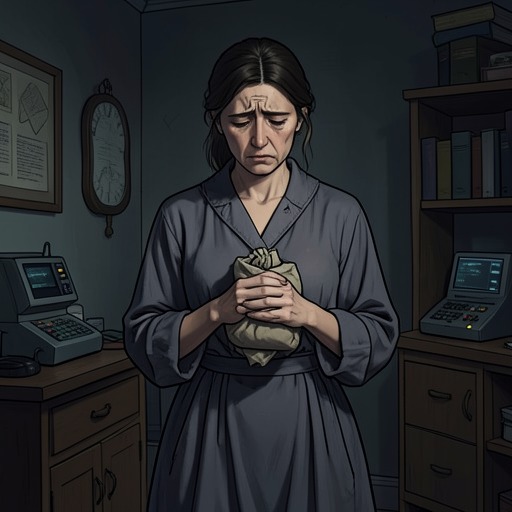
Her grief is bound to a sense of responsibility. When she discovers she is pregnant, she cannot separate the new child from her memory of Libby. She thinks of Libby’s face and recalls her death, and finds that she cannot bring herself to reject the pregnancy. The new life does not replace the child she lost. Instead, it makes that loss immediate again, turning the prospect of motherhood into both a source of attachment and a source of alarm.
A new pregnancy and returning fear
In a morning entry dated Friday, 12 July 2013, Megan describes the pregnancy as something she cannot escape or dismiss. She imagines the baby as a girl, though she does not know the child’s sex, and is unsure whether Scott Hipwell is the father. She fears what she might do to the baby, as well as what might happen to her, and worries about being left alone with a child. These are expressed as fears and uncertainties, not as a prediction of what she will do. The presence of the pregnancy brings the possibility of a future into direct contact with memories she has not put to rest.
Her anxiety is sharpened by Scott’s absence. She wakes shortly after five, alone while he is away at a conference, and cannot settle the questions of whether he will accept her and the child or discover that the baby may not be his. She imagines that he will be happy when she tells him, but also recognizes that she does not know how he will respond. Grief thus shapes not only her feelings about the baby but her perception of what can safely be shared within her marriage.
Earlier childcare had not offered Megan an easy route back to motherhood. Scott encouraged her to spend time around babies, hoping it would make her want one; instead, she found that caring for Evie left her wanting to get away and wash off the baby smell. At Anna Watson’s home, Megan felt like a spare part amid the constant attention to the child. That earlier discomfort does not cancel her later desire to love the unborn baby. Rather, it shows that pregnancy does not produce a simple or automatic cure for her grief: care, longing, and unease coexist.
Seeking support, without a simple cure
When the fear becomes difficult to bear, Megan calls Kamal Abdic at home shortly after six and tells him that she is in trouble and does not know what to do. She considers calling Tara but expects her to be overprotective; Kamal is the person she turns to, and he comes over. At the kitchen table, Megan feels love for him and recognizes that he has forgiven her earlier conduct. His reassurance is important to her: he urges her to forgive herself and suggests that she no longer has to keep running from her past.
That reassurance does not settle the questions about Scott. Kamal tells Megan that the decision about whether to trust Scott and rely on him must be hers. The conversation offers support, but it leaves her responsible for choosing how to proceed. Her grief is not presented as something another person can erase; Kamal’s forgiveness helps her face it, while the memory of Libby remains part of the decision she must make.
The loss also returns as an image of absence. Megan imagines herself alone in a dark house, listening for a child’s cries and expecting the sound of Mac’s footsteps, while knowing that they will not come. This remembered domestic scene gives her fear a particular shape: she is not only anxious about managing a new baby, but haunted by the life and care she once expected and then lost. Her present pregnancy brings hope, yet it also revives the silence associated with that earlier loss.
A different attempt at motherhood
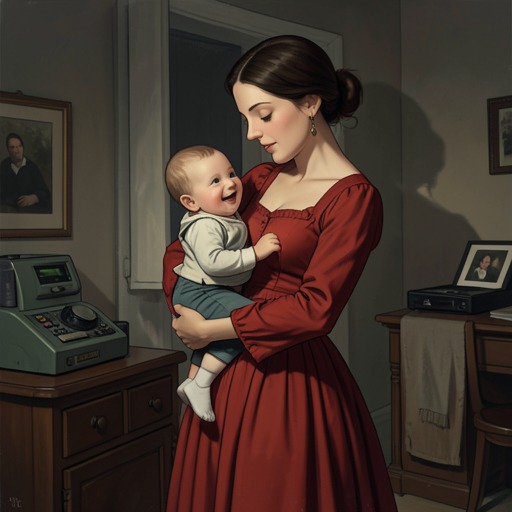
Megan’s decision is to try to do things differently. Awake beside Scott after a difficult night, she resolves to love and raise the baby, and to act rightly from the moment she knows the child is coming. She understands that this resolve follows an earlier period of uncertainty, but frames it as an obligation both to the baby and to Libby. The new child is not made responsible for repairing the past; rather, Megan treats her care for the baby as a chance to refuse the patterns of secrecy and flight that have marked her life.
She considers the identities she has occupied, from child and runaway to lover, bad mother, and bad wife. She is unsure whether she can remake herself as a good wife, but concludes that she must try to be a good mother. Her resolve is tentative in its outcome but firm in its immediate demand: tell the truth, stop hiding, and let the consequences follow. Grief and guilt therefore remain active at the end of these reflections. They do not disappear into a reassuring promise; they become the measure against which Megan hopes to make different choices.