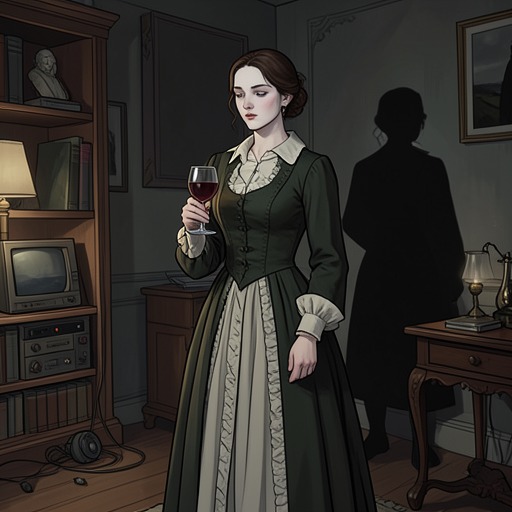
Rachel Watson's alcohol-related memory loss
The Girl on the TrainRachel Watson’s alcohol-related memory loss is more than an absence of recollection: it separates her from actions she knows she may have committed, complicating her effort to feel responsible for them. Her blackouts have damaged her marriage, employment and health, while the uncertainty they leave behind makes both memory and self-knowledge difficult to trust.
The experience of the blackouts
Rachel tells Dr Kamal Abdic that she has struggled with alcohol for four years. She recognizes a mounting cost: drinking has already contributed to the loss of her marriage and job, is harming her health, and makes her fear for her sanity. The effects therefore reach beyond what she can or cannot remember; they have altered the practical circumstances of her life and her confidence in her ability to understand herself. She describes blacking out and being unable to remember where she has been or what she has done. Sometimes, she fears, she may have said or done terrible things without retaining any memory of them. When another person tells her what happened, the account can feel detached from her own identity, as if the person who acted were not really her. The missing recollection does not persuade her that nothing happened. Instead, it deprives her of the felt connection that might make an action seem fully hers.
Responsibility without recollection
Rachel is troubled by the gap between knowing that she is responsible for harmful actions and feeling the emotional weight of that responsibility. She says that the actions seem removed from her, as though they do not belong to her, and that this distance makes it difficult to feel sufficiently remorseful. Her distress is not simply a wish to recover information; she wants her sense of accountability to match what she believes she has done. Dr Kamal Abdic listens without interrupting to make notes, then reflects that Rachel wants to take responsibility but finds it hard to feel fully accountable when she cannot remember. He suggests that apology can still be sincere even when the person apologizing cannot recall the transgression. Rachel accepts that this addresses part of the problem, but insists that she wants to feel worse. The exchange distinguishes outward acknowledgment from inward experience: an apology may be meaningful, yet it does not restore the missing emotional immediacy Rachel thinks she needs.
The limits of recovering memory
Rachel later asks Dr Kamal Abdic about hypnosis, hoping to learn whether it might recover memories. He explains that some therapists believe it can bring back repressed memories, but that the practice is controversial. He neither uses nor recommends it, saying that he is unconvinced it helps and believes it can sometimes be harmful. When Rachel asks whether he can recommend another therapist, he declines, emphasizing that people under hypnosis are suggestible and that memories apparently retrieved in this way may not be real memories. His caution leaves Rachel without the quick, definitive route she may be seeking. It also makes the distinction between remembering and acquiring a convincing account important: a memory that feels recovered is not necessarily reliable. The warning does not establish what Rachel has forgotten or whether any particular recollection is false. Rather, it preserves uncertainty, refusing to let a technique stand in for proof.
Doubt and the narrative of the past
That uncertainty extends into Rachel’s interpretation of other people and events. After a dream involving Scott Hipwell and Megan Hipwell, she wakes with dread and wonders whether what she thought she knew about them was something she had made up. She considers whether the dream is merely her mind sorting through what Tom said and her guilt about what happened with Scott. The possibility that her perceptions are mistaken therefore returns not as a solved puzzle, but as a source of renewed fear. The scene also shows how memory trouble shapes the book’s narration. Rachel must weigh what she remembers, what others have told her, and what her dreams may be rearranging. Her uncertainty does not make every perception false; it prevents her from treating perception as secure evidence. Across both the conversation about blackouts and the later question about hypnosis, the central problem remains the same: how to claim responsibility for the past without pretending that an absent or unstable memory can be repaired by certainty alone.