Rachel Watson–Cathy relationship
The Girl on the TrainThe Rachel Watson–Cathy relationship is a practical alliance built on an old, limited friendship: Cathy gives Rachel Watson a place to stay when she has nowhere else to go, but their shared home makes Rachel’s dependence—and her loss of control—hard to ignore. A drunken episode brings that arrangement close to an end. Cathy tells Rachel to leave, then later apologizes and says she can stay, revealing both the strain in their friendship and its capacity for repair.
Origins and the return to friendship
Rachel Watson and Cathy knew each other at university, where they lived across the hall during Rachel’s first year and took the same course. They became natural allies in the uncertainty of those early weeks, but Rachel describes them as only half-friends: once they met people with whom they had more in common, they saw little of each other. After college, their contact dwindled to occasional weddings. Their later closeness, then, does not grow from a history of intimate companionship. It begins with circumstance: Cathy has a spare room at the point when Rachel urgently needs somewhere to live.
Rachel had not lived alone before. She had moved from her parents’ home to shared accommodation and then to life with Tom Watson, and the prospect of managing by herself felt overwhelming. She agreed to stay with Cathy expecting the arrangement to last a couple of months, six at most. Nearly two years later, she is still there. The gap between the temporary plan and the prolonged reality defines their arrangement: what began as help has become the structure of Rachel’s daily life.
Sharing a home without equal footing
Cathy is described as a nice person, but her niceness is conspicuous and requires regular acknowledgment. Rachel finds this tiring, while also recognizing that Cathy’s manner is not the main source of her unhappiness. The deeper difficulty is that the flat belongs to Cathy, and Rachel experiences herself as a guest at the outer edge of her welcome. Their relationship is therefore shaped not only by affection or irritation but by an imbalance of ownership and security.
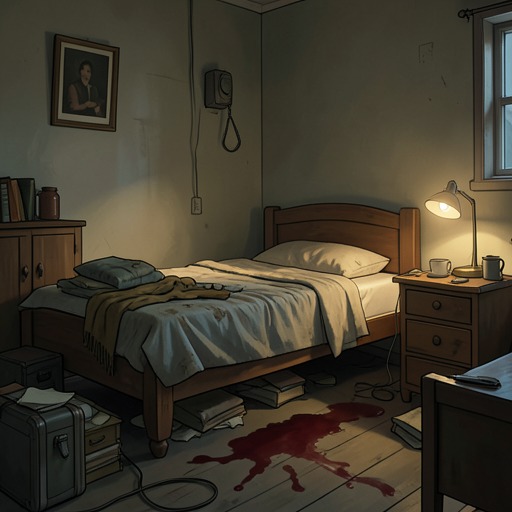
That imbalance appears in small domestic details. In the kitchen, the two women jostle for space while preparing evening meals; on the sofa, Cathy keeps hold of the remote control. Rachel’s small bedroom contains a double bed and a desk with barely enough room to walk between them. It is the only space that feels like hers, yet it is too cramped to make retreat there attractive. She instead remains in the shared rooms, feeling ill at ease and powerless. The flat gives Rachel shelter, but not the independence or sense of control she associates with having a home of her own.
This contrast is sharpened by Rachel’s attachment to the Victorian semi on the railway tracks, the house she once co-owned and still thinks of as home. In Ashbury she is neither homeowner nor tenant, but Cathy’s lodger. The distinction makes her dependence concrete: she has a place to sleep, but her claim on the place rests on Cathy’s consent.
The drinking crisis and threatened eviction
The tension becomes explicit after Rachel drinks heavily and fails to clean up the mess she has left, including vomit on the stairs and clothes in the hallway. Cathy is waiting outside Rachel’s bedroom when she emerges, horrified by what she sees. Rachel apologizes and says she was ill, but Cathy rejects that explanation, identifying the episode as drunkenness and a hangover. She says she cannot live with the situation and gives Rachel four weeks to find somewhere else, then returns to her bedroom and shuts the door.
Cathy’s ultimatum is both a response to a specific disturbance in her home and a use of the power built into their living arrangement. For Rachel, the prospect of losing the room exposes how little security the friendship provides when her drinking becomes impossible to overlook. After cleaning up, she considers asking her mother for help and imagines that moving home would force her to change. The episode thus reaches beyond a quarrel between housemates: it makes Rachel confront the possibility that her current way of living cannot continue, while also showing how difficult she finds it to ask for support.
Apology and an unsettled reprieve
Later, as Rachel settles into her seat, Cathy calls. Rachel lets the call go to voicemail. Cathy says she is checking that Rachel is all right, referring to the incident with the taxi, and apologizes for what she said about moving out. She acknowledges that she overreacted and tells Rachel she can stay as long as she wants. The message softens the earlier ultimatum without erasing it: Cathy’s welcome is restored, but only after the threat of eviction has made Rachel’s dependence unmistakable.
Cathy also asks Rachel to come straight home rather than go to the pub. Rachel says she does not intend to go, despite having wanted a drink after what happened in Witney. She has avoided drinking because she needed to keep a clear head, something she has not had reason to do for a long time. Her decision gives the reconciliation a practical dimension: Cathy’s concern is directed not merely toward the disorder in her flat but toward Rachel’s immediate safety and drinking. The relationship remains unequal and potentially strained, yet the voicemail shows that Cathy’s forcefulness can coexist with concern and that her earlier decision to make Rachel leave is not final.
Role in Rachel’s circumstances
Cathy’s role in Rachel’s life is defined by a double fact: she offers real shelter, and the shelter never becomes Rachel’s own. Their old university connection makes the arrangement possible, but it does not remove its limits. The flat’s everyday geography—the crowded bedroom, contested kitchen space, and Cathy’s control of the remote—gives physical form to Rachel’s dependence. When Rachel’s drinking disrupts the household, Cathy can set a deadline for her departure; when she regrets doing so, she can withdraw it. The relationship’s movement from reluctant lodging to threatened eviction and then renewed permission makes Rachel’s precarious position visible without turning Cathy into either a simple rescuer or an unqualified adversary.