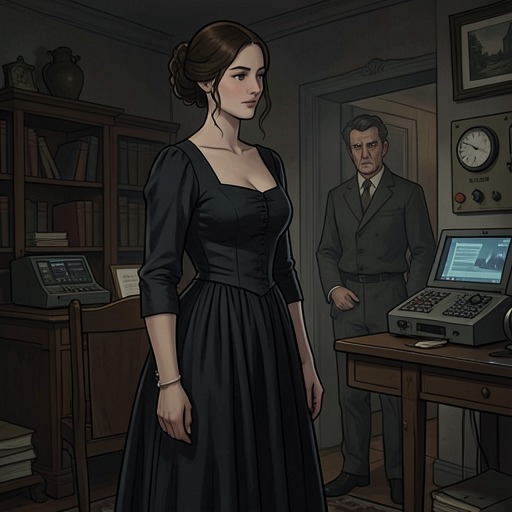
Rachel and Scott’s growing intimacy
The Girl on the TrainRachel Watson and Scott Hipwell’s relationship develops from an investigative alliance into a short-lived intimacy shaped by grief, loneliness, and Rachel’s projections about Megan Hipwell’s life. Scott comes to rely on Rachel as a listener while searching for clues to Megan’s disappearance; Rachel, in turn, welcomes the feeling of being useful and begins to imagine herself in a place that belongs to Megan. Their closeness culminates in an encounter neither can comfortably sustain.
A bond formed through the investigation
Rachel’s connection to Scott begins when she comes forward with information about Kamal Abdic. Scott is grateful that she has spoken to him, and tells her that discussing Megan with someone outside his immediate circle has helped him think more rationally. He recalls a change in Megan after her first appointment with Kamal: she seemed lighter when she returned. The detail gives Rachel a new lead to consider, but it also turns their conversation into an exchange of confidences rather than a simple report of what she has seen.
Scott says he has searched the bedroom and the rest of the house repeatedly for anything that might explain where Megan went or reveal a connection between her and Kamal. He has found no emails or letters, and cannot contact Kamal because the practice is closed and he has no mobile number. His repeated searching and uncertainty leave him with little to act on; Rachel becomes a sounding board while he revisits the same questions. She recognizes that he is speaking less directly to her than simply thinking aloud, but is glad to be of use. Their intimacy first takes the form of attention: he talks, and she listens.
Rachel’s willingness to stand beside Scott is reinforced by her own investigation. After hearing that Kamal had a conviction for domestic violence, alongside details of his refugee childhood and losses in the Balkans conflict, Rachel feels confirmed in her decision to contact Scott and speak to the police. That information does not establish Kamal’s involvement in Megan’s disappearance, but it strengthens Rachel’s conviction that raising concern was justified. Their shared focus on Kamal gives the connection a practical purpose even as it draws Rachel closer to Scott personally.
Company, grief, and unequal knowledge
Scott later asks Rachel for company: he wants someone who knew Megan and liked her, someone who does not accept the hostile public story about her. Rachel agrees, though she knows Scott is drunk. On the train afterward, she drinks too and recognizes the gap between the role he has offered her and her own feelings: she did not know Megan well, and is no longer sure she likes her. The relationship is therefore built on a mismatch. Scott seeks a companion connected to his wife, while Rachel is a partial outsider whose closeness to him is bound up with her own drinking and curiosity.
At Scott’s house, he speaks angrily about his mother’s dislike of Megan, newspaper coverage that suggests Megan deserved what happened, and the police’s failure to protect or find her. Rachel listens as the two drink beers in the kitchen, then sit on the patio watching trains and talking about ordinary subjects such as television, work, and school. The conversation briefly lets them feel like ordinary people rather than a grieving husband and a visitor entangled in a disappearance. Scott smiles at Rachel and touches her hair; in retrospect, she identifies this moment as part of a shift she had wanted, not merely an accidental closeness.
Projection and the breach of a boundary
Rachel later admits to herself that she wanted to be with Scott. She had imagined Megan’s evenings with him and wanted the feeling she associated with that imagined domestic life. But the fantasy is unstable: Rachel recognizes that her imagined version of Megan may be only a construction, or may be the real woman whose body was found after her death. Her wish to occupy Megan’s place sits uneasily beside the facts of Megan’s absence and Scott’s grief. Rachel also confronts the possibility that, for a moment, she had absorbed the public implication that Megan had brought her fate upon herself. Her attraction is thus entwined with a troubling willingness to see Megan through the same distorted stories she resents.
After their encounter crosses into sexual intimacy, Rachel apologizes and Scott withdraws to the bathroom. In the morning, she notices that Megan’s robe, hairbrush, lip balm, and earrings are absent from the bedroom, as are the photographs. She cannot tell whether Scott’s mother removed them, but their absence sharpens her awareness that this is Megan’s home and that Scott’s wife has been dead for less than a month. Rachel feels repelled by Scott and by herself; he avoids meeting her eyes. The intimacy that had seemed to offer closeness instead makes the unresolved presence of Megan impossible to ignore.
Withdrawal and narrative significance
Rachel decides to leave, and Scott does not try to stop her. Their connection has moved from Rachel’s offer of information, to Scott’s reliance on her company, to a private encounter, and finally to mutual unease. It does not become a stable romance or a lasting alliance. The sequence exposes the difference between genuine knowledge of another person and a life imagined from fragments: Scott wants a companion who knew and liked Megan, while Rachel has been constructing Megan’s experience from afar and projecting herself into it.
The relationship also reveals Rachel’s compromised perspective. Her wish to help Scott coexists with a desire for intimacy and with her drinking; she can recognize her own self-deception only after the encounter has made its consequences plain. The next morning, Anna Watson is waiting outside, and Rachel experiences a sharp sense that she has seen Anna run away before. That unresolved recognition points beyond Scott and Rachel’s brief closeness, but the immediate outcome is clear: Rachel leaves his house, unable to make their intimacy feel separate from Megan’s death.