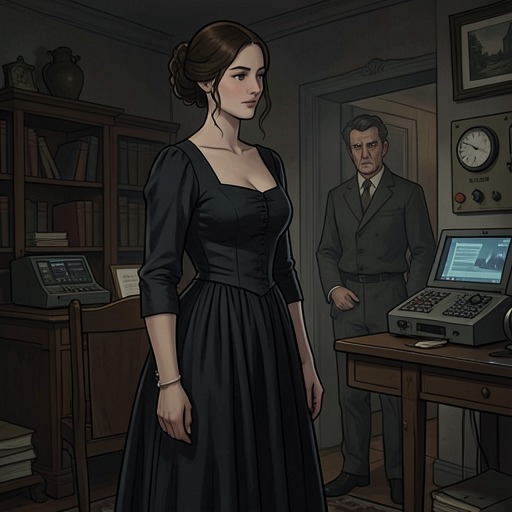
Rachel approaches Scott to investigate Megan’s disappearance
The Girl on the TrainRachel Watson’s approach to Scott Hipwell begins as a choice between retreat and action. Still ashamed of the thoughts she had about Megan Hipwell, Rachel recognizes that Megan is not an imagined figure or a mystery detached from real life: she is a person who has disappeared. Scott’s email gives Rachel a way to step out of speculation and speak to someone directly connected to her absence, but accepting the invitation means entering a situation she fears she cannot control.
The Decision to Make Contact
The decision follows a frightening incident involving Anna Watson and Evie. After Anna takes Evie back from Rachel and threatens to call the police, Tom Watson comes home and calms Anna enough to let Rachel leave. On the drive home, however, Tom grips Rachel’s hand increasingly tightly and threatens to kill her if she ever harms his daughter. The experience leaves Rachel with an immediate need to apologize and ask forgiveness. At her door, she pauses with her fingers around the handle, aware that drinking would briefly make her feel better and leave her worse for hours afterward. She lets go of the handle, returns to the living room, and opens her laptop instead.
The new message is not from Tom, as Rachel had hoped it might be, but from Scott. He says he does not remember Megan mentioning Rachel, though he acknowledges that Megan had many regular visitors at the gallery and he is not good with names. He asks Rachel to telephone him as soon as possible because he wants to hear what she knows. That response offers no confirmation that Scott recognizes her, and it makes her proposed role in the matter uncertain: she is a stranger claiming to have information, not someone Scott has already identified as close to Megan.
From Email to Invitation
Rachel worries that ignoring Scott’s message could make him contact the police. She imagines the reverse situation: if a stranger claimed to possess information and then vanished, she herself would report it. The thought turns the email into pressure to act. She telephones Scott, hesitates when he asks whether she can come to the house, then agrees. He says that people are there at the moment and proposes that evening instead. He gives her the address, which she pretends to write down, and ends the call after thanking her for contacting him.
The exchange establishes the limits of their understanding before they meet. Scott does not know what Rachel might have to offer, while Rachel does not know what sort of reception awaits her. His low voice on the telephone seems to her as though he is speaking with someone else in the room whom he does not want to overhear. That impression, combined with her fear that the police may already be involved, makes the invitation feel less like a routine appointment than a step into uncertain territory. Still, she accepts it rather than withdrawing from contact.
The Journey to Blenheim Road
The evening journey gives Rachel time to reconsider, but she follows through. She leaves Ashbury by train at about half past six and reaches Witney shortly after seven. On foot, she passes the Roseberry Avenue railway underpass without looking at it, unable to bear doing so, then hurries past 23 Blenheim Road, where Tom and Anna live. She keeps her chin down and wears sunglasses, hoping they will not see her. The contrast is pointed: Rachel is going to one house on the street while trying not to be noticed at another.
The walk from 23 Blenheim Road to 15 Blenheim Road is only fifty or sixty paces, but Rachel experiences it as slow and precarious. Her legs feel leaden, her footing unsteady, and she imagines herself slipping from the pavement. The street itself appears quiet and affluent, with parked cars, young families, and people settled indoors around dinner time. This settled domestic setting heightens Rachel’s sense of being out of place. She is approaching a household made vulnerable by a disappearance, carrying information she has not yet explained and unsure how her presence will be received.
The First Meeting
Scott opens the door almost before Rachel has finished knocking. His height, broad shoulders, defined arms and chest, and huge hands make him physically intimidating to her; she imagines that he could crush her neck or ribcage without much effort. He asks if she is Rachel, unsmiling, and she nods. He offers his hand and gestures for her to enter, but she hesitates before crossing the threshold. Her fear is not abstract: she registers his size at close range and feels exposed beside him.
Once inside, Rachel’s arm brushes his, and a flush rises to her face. She notices that he smells of old sweat and that his dark hair is matted against his head, as if he has not showered recently. These details keep the meeting grounded in Rachel’s immediate, bodily impressions rather than in the orderly exchange of information she may have anticipated. The approach has brought her to Scott’s doorway, but the passage ends at the threshold of what she can tell him. Its significance lies in that crossing: Rachel stops treating her knowledge as private speculation and places herself, however nervously, in direct contact with Megan’s husband.