The Hipwell home
The Girl on the TrainThe Hipwell home, at 15 Blenheim Road, is the house shared by Megan Hipwell and Scott Hipwell and a recurring point of contact between private domestic life and public observation. Seen from the railway and entered by Rachel Watson, it unsettles the distinction between what she has witnessed at a distance and what she has actually experienced; its lawn and kitchen become settings for a crucial disclosure and for tense encounters after Megan’s disappearance.
Setting and Architecture
The house is introduced through Rachel Watson’s powerful sense of déjà vu in its living room. She recognizes the fireplace and alcoves, the light falling through slanted blinds, and the view towards the railway. Turning towards the kitchen, she finds a table, French doors, and a garden. The familiarity makes her dizzy and brings the lost hours of the previous Saturday night to mind, but she corrects herself: she has not been inside before.
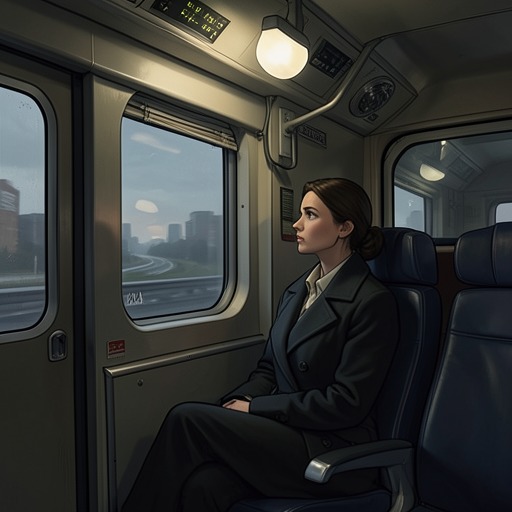
Rachel’s apparent knowledge comes from the train. She has watched the houses from its windows and believes the Hipwell home matches 23 Blenheim Road: a hallway and stairs, a living room opened into the kitchen, a patio, and a garden. She even imagines the upstairs landing, sash window, makeshift roof terrace, and arrangement of bedrooms. The passage carefully distinguishes observation from fact: these interior details are Rachel’s confident projection from a similar house, not proof that she has previously entered this one.
The House from the Railway
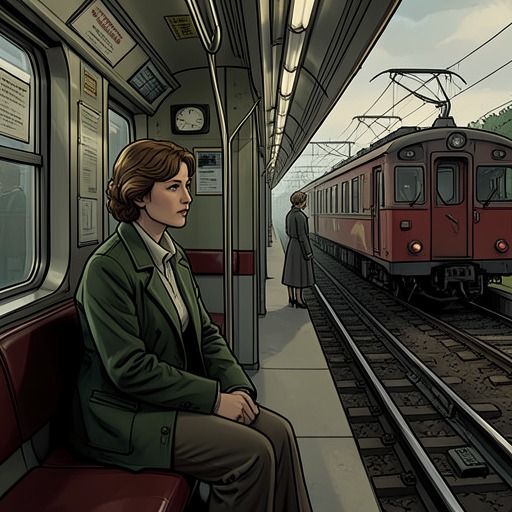
The railway is close enough to make the garden visible to passing passengers. Rachel tells Scott Hipwell that, on the Friday morning before Megan disappeared, she saw Megan on the lawn with someone who was not Scott. When Scott presses her about where and what she saw, Rachel points towards the garden and explains that she takes the train into London from Ashbury every day. The home’s exposed position thus turns an ordinary stretch of lawn into the source of a potentially important clue—and puts Rachel’s reliability, already shadowed by her memory gap, under pressure.
Encounters Inside and Outside
During Rachel’s visit, Scott leads her into the kitchen and offers tea. He prepares it at the kitchen table, spilling boiling water over the counter as he mutters to himself. The sharp smell of antiseptic contrasts with his visibly unkempt state: sweat marks his T-shirt, and his jeans hang loosely. He places the mug opposite Rachel and folds his hands on the table; the silence between them grows until he asks whether she was Megan’s friend. The everyday hospitality of tea cannot make the meeting comfortable, and the passing train’s low rumble is a familiar sound within the strained pause.
The house also becomes the point from which Anna Watson sees Rachel unexpectedly emerge. Walking with Tom Watson, who is pushing Evie’s buggy, Anna spots Rachel at the front door of 15 Blenheim Road. Rachel gives them a strained smile and quickly heads towards the station. Anna, startled, lifts Evie from the buggy, making her cry; Tom calls after Rachel, then takes Anna and Evie home when Rachel does not stop. The brief encounter makes the address a crossroads for the intertwined households, rather than merely the place where Megan and Scott live.
A Home Under Strain
In a later evening visit, Scott admits Rachel to a dark, stuffy house. The living-room blinds are shut and the curtains drawn across the French doors to the garden; Tupperware containers cover the kitchen counters. Scott explains that people have been bringing food. He gestures for Rachel to sit at the table but remains standing, looking away and appearing defeated. The altered atmosphere contrasts with the earlier tea-making scene: the kitchen remains a place where visitors meet Scott, but now the food and closed rooms suggest a household sustained by others while its occupant moves through the motions.
Across these scenes, the house’s significance rests on its thresholds and sightlines: the garden can be watched from a train, its rooms seem familiar before Rachel enters, and its front door suddenly brings Rachel into Anna and Tom’s family outing. The building gives physical form to the novel’s unstable boundary between seeing and knowing, while its domestic spaces hold the consequences of Megan’s absence.