Anita Vanger
The Girl with the Dragon TattooAnita Vanger is the crucial intermediary in Harriet Vanger’s disappearance and return. At first she appears in the investigation as a young family member whose testimony confirms that Harriet would not have left without telling anyone. Later, photographs reveal that Anita’s resemblance to Cecilia Vanger caused Mikael Blomkvist and Lisbeth Salander to mistake one sister for the other. Finally, Harriet explains that Anita was the person who believed her fear, concealed her from Martin Vanger, and enabled her escape from Sweden. Anita’s importance therefore lies less in the amount of time she occupies the narrative than in the protection, mistaken identity, and hidden loyalty organized around her presence.
Identity and Introduction
Anita Vanger is Harald Vanger’s daughter and was initially listed incorrectly as Harriet Vanger’s first cousin. She was studying at university in Stockholm, was almost the same age as Harriet, and had spent the summer at Hedeby Island. The two young women had become close friends, a relationship that gave Anita a personal understanding of Harriet rather than merely a place in the Vanger family genealogy.
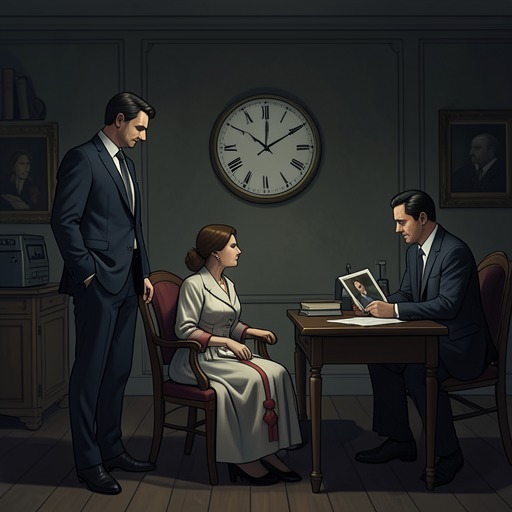
When Detective Inspector Gustaf Morell investigated Harriet’s disappearance, he interviewed Anita among the family members on Hedeby Island. Anita had arrived with Harald Vanger on the Saturday and had expected to see Harriet, but never found the opportunity. She told Morell that she felt uneasy because it was unlike Harriet to leave without informing the family. Henrik Vanger and Isabella Vanger confirmed that Harriet’s behavior was out of character. Anita’s statement thus preserved an important early judgment: the disappearance was not readily explained as an ordinary act of teenage rebellion or an unannounced departure.
The Photograph and the Mistaken Identity
Anita becomes central to the investigation only after Mikael Blomkvist revisits the family albums. The first photograph in the album was the last image taken of Harriet Vanger on the day of the bridge accident, while she watched the Children’s Day parade in Hedestad. For months, the photograph seemed to offer only a distant record of Harriet’s final known appearance. The larger album, however, contained the visual evidence that would redirect the case.
In photographs labeled “Family Council 1966,” Blomkvist noticed Cecilia Vanger seated beside another blonde woman in an identical light-coloured dress. The two women looked so much alike that they could have been twins. The woman in the photograph was Anita, two years younger than Cecilia and later living in London. Because the sisters had rarely, if ever, appeared in the same frame, Blomkvist and Salander had assumed that photographs showing the same apparent woman represented Cecilia alone. The error had endured because no one had thought to ask whether there were two similar-looking sisters.
This discovery transforms Anita from a peripheral witness into the missing visual key. The photographs, police reports, and family memories had preserved the past, but they had also concealed it through misidentification. Anita’s image had been present all along, yet the investigation could not read it correctly until Blomkvist recognized the difference between what the archive contained and what investigators expected to see.
Alliance with Harriet Vanger
Harriet eventually reveals that Anita was the person to whom she turned when Martin Vanger’s threat became impossible to ignore. Harriet had feared Martin for years and had previously tried to push the danger out of her mind when he was away in Uppsala. Seeing him in Hedestad made her understand that she would never be safe for the rest of her life. She considered telling Henrik Vanger, but when he did not have time to speak with her, she wandered restlessly through the village until she encountered Anita.
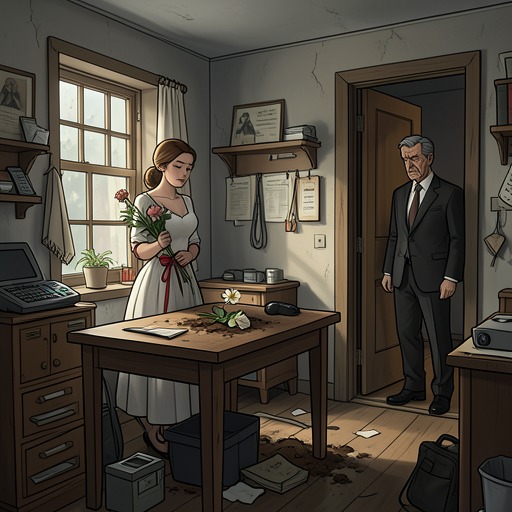
The bridge accident dominated the attention of the island and later became the public explanation around which the disappearance was remembered. Harriet, however, was occupied by a separate emergency and was barely aware of the accident. She went to Anita, who was staying in a guest cottage in the family compound, and remained there throughout the crisis because she was afraid to go outside. Anita obtained clothes for her and helped her preserve the diary in which she had written down what had happened.
Anita’s assistance was not a momentary gesture. Harriet describes her as a loyal friend who helped her make the decision to flee. When the bridge reopened the next day, Harriet escaped from Hedeby Island concealed on the floor of the back seat of Anita’s car, under a blanket. Anita’s practical protection converted friendship into an organized act of rescue: she supplied concealment, clothing, access to transport, and the trust necessary for Harriet to disappear without being delivered back to her family or Martin.
The Long Escape and Its Cost
After leaving the island, Harriet stayed in Anita’s room in Stockholm for several weeks. Anita lent her money and gave her passport to use. Because the two women looked almost exactly alike, Harriet dyed her hair blonde and traveled under Anita’s identity. The resemblance that had confused the investigation became an instrument of escape, allowing Harriet to move through the world behind a borrowed name while protecting her from immediate recognition.
Harriet then spent four years in a convent in Italy, renting a room there for quiet rather than entering religious life. Later she met Spencer Cochran, an older man who had recently completed his degree in England and was hitchhiking around Europe. They fell in love, and the woman publicly known as Anita Vanger married him in 1971. Anita’s identity consequently became part of Harriet’s new existence: Harriet used Anita’s passport and appearance to leave Sweden, while Anita continued to bear the outward consequences of Harriet’s disappearance.
Harriet believes Anita never found a partner because she made that sacrifice for Harriet’s sake, although Anita claimed that she had never found anyone. Harriet interprets Anita’s life as evidence of sustained loyalty rather than a single act of assistance. Anita’s later absence from the main family story is therefore not indifference; it is the condition that made Harriet’s survival possible.
Narrative Role and Significance
Anita Vanger functions as both a hidden person and a hidden distinction. The investigation repeatedly encounters traces of her without recognizing them, making her resemblance to Cecilia a structural source of delay. Her role demonstrates how family archives can be complete in material terms yet false in interpretation: the photographs were available, but the wrong identity was attached to them.
Her relationship with Harriet also provides a counterpoint to the Vanger family’s failures. While the family’s attention is absorbed by the bridge accident and the search for a conventional explanation, Anita responds to Harriet’s private danger. She does not wait for institutional confirmation, and she does not expose Harriet to a family authority who may be unable to protect her. Her action is quiet, logistical, and sustained across decades.
Anita’s significance ultimately extends beyond the mechanics of the mystery. The investigation begins with an archival record of disappearance, develops through police reports and photographs, and reaches the truth through Harriet’s testimony about the friend who made escape possible. Anita is the person who turns resemblance into concealment, friendship into protection, and a missing woman’s silence into a survivable future.