The Disappearance of Harriet Vanger
The Girl with the Dragon TattooThe Disappearance of Harriet Vanger is the central unresolved event around which the Vanger family history, Mikael Blomkvist’s investigation, and the novel’s wider examination of violence and secrecy are organized. On September 24, 1966, sixteen-year-old Harriet Vanger returned to Hedeby Island after watching the Children’s Day parade in Hedestad. A catastrophic collision then blocked the bridge for twenty-four hours, trapping a finite population on the island. Harriet was last seen alive at 2:55 p.m.; by the delayed family dinner that evening she was missing, and she was never found during the searches that followed.
Causes and Background
The disappearance occurred during the Vanger family’s annual dinner, a gathering shaped by business disputes and long-standing family tensions. Harriet had returned to Hedeby Island shortly after 2:00 p.m. and was expected to join the younger members of the family for dinner at five. The day’s decisive change came at 2:15, when Gustav Aronsson’s car collided head-on with an oil tanker on the bridge. The tanker overturned, its trailer hanging over the edge, while a railing pierced the oil tank and heating oil poured across the bridge. Aronsson remained trapped and seriously injured inside his car, and the danger of a spark or explosion prevented rescuers from freeing him quickly.
The accident itself had no direct connection to Harriet, but it created the physical conditions of an island locked-room mystery. Police officers, an ambulance, rescue workers, firefighters, reporters, and sightseers gathered on the mainland side, while residents and family members attempted to help Aronsson from the island. Because the overturned tanker blocked the bridge, Hedeby Island was effectively cut off from the outside world for twenty-four hours. A fireboat eventually ferried people between the small-boat harbour and the old harbour below the church, but stranded islanders could not begin crossing until late Saturday night. The blocked bridge therefore narrowed the possible movements of everyone present and turned ordinary distraction into a mechanism of concealment.
What Happened
At about 2:40 p.m., Harriet was seen in the kitchen drinking a glass of milk and speaking briefly with Astrid, the cook. She and Astrid looked toward the bridge and watched the commotion. At 2:55, Harriet crossed the courtyard and was seen by Isabella Vanger. About a minute later she encountered Otto Falk, the pastor in Hedeby. Falk had been ill in bed when the accident began and was hurrying toward the bridge after receiving a telephone call. Harriet apparently wanted to tell him something, but he waved her away and continued on. He became the last person known to have seen her alive.
The family did not immediately understand that Harriet had vanished. Aronsson was not freed until around five and survived, although he was badly injured. After six o’clock, the immediate danger of fire had passed, but the island remained isolated. The family finally sat down to the long-delayed dinner at about eight. A cousin sent to fetch Harriet reported that she was not in her room. Henrik Vanger initially assumed that she had gone for a walk or had not heard that dinner was being served. Only the following morning, when Isabella went to look for her, did the family recognize that nobody knew where Harriet was and that no one had seen her since the previous afternoon.
The surviving photographs preserve an apparently minor but crucial disturbance. One image taken between 3:40 and 3:45 shows Harriet’s bedroom window open, although it had been closed in the preceding photograph. When Henrik Vanger questioned the people present, nobody admitted to opening it. The picture does not identify who entered the room, but it converts the disappearance from a simple absence into a problem of movement, access, and observation: during the period when the bridge accident commanded everyone’s attention, someone had apparently been inside Harriet’s room.
Investigation and Search
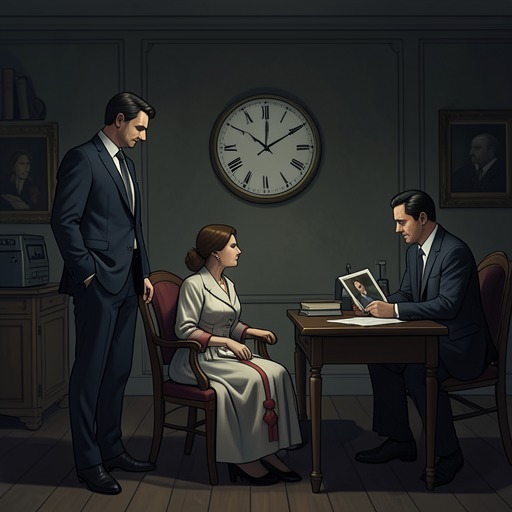
Henrik Vanger reported Harriet missing to the Hedestad Police Emergency Centre on Sunday, September 25, 1966, at 11:14 a.m. The report identified her as Harriet Ulrika Vanger, born January 15, 1950, and stated that she had been missing from her home on Hedeby Island since Saturday afternoon. Detective Inspector Gustaf Morell arrived by boat at 1:42 p.m. and assumed command of the case. He interviewed Henrik Vanger and Isabella Vanger first, followed by Ulrika Vanger, Harald Vanger, Greger Vanger, Martin Vanger, and Anita Vanger, building an official account from the family’s statements.
Morell initially kept open the possibility that Harriet had run away. He ordered an all-points bulletin and asked patrol officers in Hedestad to watch for her. A colleague interviewed bus drivers and railway-station staff to determine whether anyone had seen her leave. As those inquiries produced no useful report, the theory of an accident or other misfortune became dominant.
The major search began two days after the disappearance. Police and firefighters organized a systematic sweep of the island, while a police boat and two volunteer Pettersson boats searched the surrounding waters. The following day, patrols revisited the most rugged terrain and searched the Fortress, an abandoned Second World War bunker system, as well as cubbyholes, wells, vegetable cellars, outhouses, and attics in the village. The official search was called off on the third day. Morell had found no convincing next step, and the record of the investigation reached the furthest point it would ever reach under his direction.
Henrik Vanger continued searching after the organized parties stopped. He crossed the island repeatedly through the autumn and winter, resumed the effort in spring, and eventually hired three experienced woodsmen with dogs. They searched every part of the island and spent three months looking for a grave, yet found no trace of Harriet. The absence of a body made both murder and suicide difficult to establish while leaving the family unable to accept an ordinary disappearance. Harriet seemed to have dissolved into thin air, and the unresolved event became the source of Henrik’s decades-long torment.
Reconstruction and Delayed Revelation
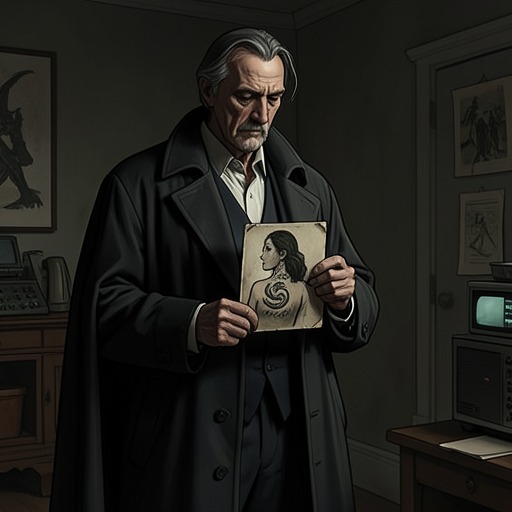
The case remained dormant until the investigation conducted by Mikael Blomkvist reopened its archive of photographs, family records, and testimony. After six months of fruitless thought, Blomkvist recognized that the first photograph in the album was not an image of the bridge accident at all. It showed Harriet watching the Children’s Day parade on Järnvägsgatan in Hedestad, making it the last picture taken of her on the day she disappeared. Its placement among the accident photographs had caused viewers to focus on the later catastrophe and overlook the earlier image of Harriet herself.
A second misreading concerned the women visible in the family photographs. Blomkvist and Lisbeth Salander had assumed that the woman associated with Harriet’s window was Cecilia Vanger. A photograph from the 1966 family council revealed that Cecilia had a blonde sister, Anita Vanger, whose appearance was so similar that the two could have been twins. Because Cecilia and Anita had never appeared together in the same frame, the investigators had mistaken one woman for the other. The error shows how the case was preserved not only through evidence but also through assumptions imposed on evidence: photographs recorded what happened, yet viewers supplied the wrong identity.
The investigation also extends into places that had seemed peripheral to the original search. The Fortress consists of concrete bunkers and trenches from the Second World War, overgrown with grass and scrub; nearby are a boathouse, a wrecked Pettersson boat, marshland, fields, and the road to Östergården. The Vanger family crypt stands by the water near the church, and the discovery of that locked crypt reframes the island’s family history through a darker physical space. These locations make the mystery dependent on visibility, blocked routes, hidden enclosures, and the difference between a place being searched and a place being understood.
Consequences and Significance
The disappearance destroyed the apparent stability of the Vanger family’s annual gathering. The bridge accident provided a public spectacle so absorbing that Harriet’s private crisis could pass unnoticed. Later testimony indicates that she had been afraid of Martin Vanger and was deciding between telling Henrik and fleeing. She went to Anita Vanger, remained with her, and prepared to leave with a diary containing everything that had happened as well as some clothes Anita provided. This testimony changes the event from an unexplained vanishing into an escape shaped by fear, concealment, and an intimate act of protection.
The case also becomes a study in delayed witnessing. Its surviving forms include Henrik Vanger’s recollections, the police report, Detective Inspector Gustaf Morell’s typed investigation, the accident photograph album, the opened bedroom window, and Harriet’s own written account. Each preserves part of the event while leaving a gap: the official search cannot find a body, the photographs encourage mistaken identification, and the people closest to Harriet do not immediately recognize the significance of her fear. The eventual reconstruction therefore depends less on a single definitive record than on comparing records produced at different times and under different pressures.
For Blomkvist, the disappearance is both an investigative problem and a test of whether a seemingly closed historical record can still yield truth. Its locked-room structure is created by infrastructure and collective attention rather than by a sealed chamber: the bridge blocks departure, the tanker commands every gaze, and the island’s familiar buildings conceal as much as they reveal. When the case cracks open decades later, the decisive progress comes from revisiting what everyone had already seen—the parade photograph, the family images, the window, and the geography of the island—and recognizing that the central mystery was sustained by misidentification, silence, and the confident repetition of an incomplete story.