Corleone peace conference
The GodfatherThe Corleone peace conference is the national underworld summit convened by Vito Corleone after the death of Santino Corleone. Its decisive significance lies in the reversal at its center: the wounded and apparently weakened Don does not launch the expected war of revenge, but uses peace negotiations to preserve his Family, protect Michael Corleone, and establish rules governing organized crime across the United States. What appears to be surrender becomes an exercise in political control.
Causes and Political Background
The conference follows the costly 1947 war between the Corleone Family and the Five Families combined against it. The conflict had already damaged both sides, while the murder of Captain McCluskey brought exceptional police pressure. The Corleone Family’s gambling income suffered especially heavily: runners were arrested, gambling banks were raided, and the numbers operation lost money. The opponents also paid a price, but the war had exposed the danger of allowing private violence to disrupt the political protection on which every Family depended.
Santino Corleone’s death made retaliation seem inevitable. Reports from the funeral indicated that Vito Corleone had recovered enough to resume control, and the other Family heads hurried to prepare for a bloody response. Only Tom Hagen understood that Vito Corleone intended something else. The Don sent emissaries to propose not merely a truce but a meeting involving the New York Families and Families from across the country, because the power of the New York organizations affected the welfare of the underworld nationally.
Suspicion initially surrounded the proposal. The Families wondered whether Vito Corleone meant to spring a trap, lull his enemies into complacency, or gather them for a massacre in revenge for his son. He made the offer credible by refusing to mobilize his own forces or recruit allies. More decisively, he employed the Bocchicchio Family as neutral negotiators and arranged hostages for every attending Family. The Bocchicchios were trusted because they never lied or committed treachery, and because an injury to one of their hostages would bring relentless blood vengeance against the party responsible. Their presence made betrayal as dangerous as the peace itself.
Participants and Setting
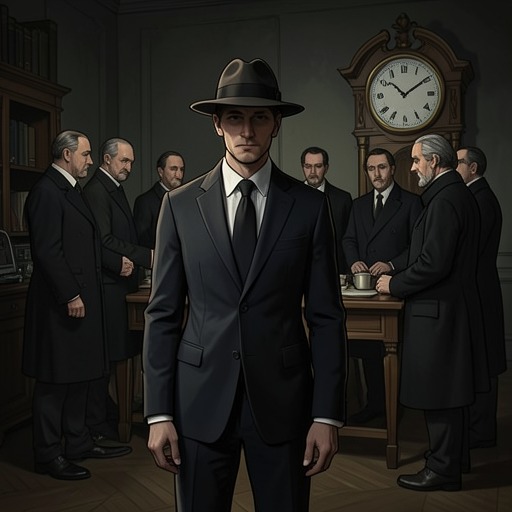
The meeting took place in the private conference room of a small commercial bank whose president owed Vito Corleone a personal debt and whose stock was effectively controlled by him. Security was assumed by handpicked men wearing bank-guard uniforms. The Five Families of New York attended, joined by representatives of ten other Families from around the country; Chicago was excluded as the irredeemably violent exception to the proposed order. Each representative could bring one aide, and most Dons brought their Consiglieres. Tom Hagen, the only non-Sicilian among the young attendants, became an object of curiosity, yet his position beside Vito Corleone demonstrated the authority of the Don’s personal choice over older blood-based tradition.
The gathering preserved the formal atmosphere of a political congress while retaining the customs of the underworld. There was a bar, a buffet, private security, and carefully arranged seating. Hagen served Vito Corleone by bringing him a cold drink, lighting his cigar, and positioning his ashtray, but did so without obsequiousness. The ceremony expressed a hierarchy in which personal loyalty, service, and reputation were as important as written law.
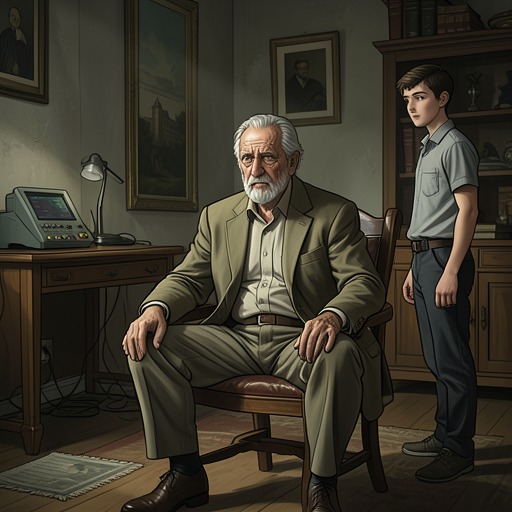
Vito Corleone’s appearance carried the burden of the war. He had been gravely wounded, Santino Corleone had been killed, his organization had been battered, Fredo Corleone was under the protection of the Molinari Family in the West, and Michael Corleone remained hidden in Sicily. Philip Tattaglia, who had also lost a son, acknowledged him only with a formal nod. The other Dons studied Vito Corleone for signs of weakness and struggled to understand why he had requested peace after suffering his most intimate loss.
Negotiation and Settlement
Vito Corleone spoke first as though the disaster had not broken him. He thanked the delegates, declared that he had come to reason rather than quarrel, and presented himself as a man seeking an honorable agreement among men who understood the value of a given word. He described Virgil Sollozzo’s earlier proposal as a drug venture requiring his money and influence. Vito Corleone had refused involvement in drugs while allowing that Sollozzo could pursue the business independently; in his account, Sollozzo’s resentment had brought misfortune upon all the Families.
The Don then offered the conference its central bargain. Philip Tattaglia had lost a son, Vito Corleone had lost a son, and the two Families could consider themselves even. Vito Corleone would forgo vengeance and would not investigate who had betrayed and killed Santino Corleone, provided that Michael Corleone could return safely and without interference from the authorities. His language turned private grief into a public settlement: the loss of a child became the price of restoring commercial and political stability.
The delegates ultimately agreed that the drug traffic would be permitted and that Vito Corleone would provide legal protection for it in the East. The Barzini Family and the Tattaglia Family would conduct most of the large-scale operations. This concession reveals the practical limit of the Don’s earlier opposition to drugs: he did not accept the business as morally harmless, but he accepted its regulation as the cost of peace and of preserving his Family’s influence.
The conference also established a wider constitutional order. Las Vegas and Miami were designated open cities in which any Family could operate, and violence was prohibited there. Petty criminals were to be discouraged, while major executions capable of provoking public outrage required approval from the council. Soldiers were to be restrained from personal violence and private vendettas, and Families were expected to provide one another with services such as executioners and technical assistance in bribing jurors or pursuing other essential operations. Violence was not abolished; it was centralized, rationed, and made subject to collective authorization.
Peace, Threat, and Aftermath
Vito Corleone’s renunciation of vengeance was both moral rhetoric and strategic warning. He presented the Families as a community whose affairs should be managed internally rather than dictated by outside authorities, invoking the idea of cosa nostra, their shared world and common interest. He argued that the era of guns, killings, and massacres should yield to cunning, commerce, and arrangements that would provide a better future for their children and grandchildren. The language of progress did not dissolve the old order; it gave that order a more durable political form.
The Don also made his personal condition unmistakable. He swore that no one would be attacked without just cause and extreme provocation, but warned that any misfortune befalling Michael Corleone would be interpreted as evidence of continuing hostility. Whether Michael were shot by a police officer, convicted by new witnesses, killed in an accident, or struck by an apparently natural disaster, Vito Corleone said that he would blame the ill will of those present. The peace was therefore unconditional in public and conditional in its deepest political meaning: Michael’s safety was the boundary beyond which reconciliation could not survive.
The settlement ended the immediate war and transformed the relationship between Vito Corleone and Philip Tattaglia. The two men embraced and kissed each other’s cheeks while the assembled Dons applauded. Their friendship was not intimate, but the absence of murder was sufficient. Vito Corleone also thanked the San Francisco Don for protecting Fredo Corleone and repaid that service by promising influence over the racing wires, showing how the new peace operated through reciprocal obligations as much as through formal rules.
The conference’s consequences extended beyond the immediate truce. It stabilized an underworld divided into recognized spheres of influence and created a collective mechanism for regulating violence, commerce, and interfamily assistance. Yet the Corleone Family paid for peace with diminished power. After Vito Corleone’s semiretirement and Michael Corleone’s takeover, the Barzini Family became the strongest organization in the New York area and began pressing into Corleone gambling territory. The peace conference thus secured survival while exposing the Family to a quieter, more bureaucratic struggle for dominance.
In retrospect, the conference also clarifies the Corleone system’s development from personal patronage into layered governance. Vito Corleone’s authority had long rested on favors, protection, political contacts, and the expectation that beneficiaries would repay friendship with loyalty. His organization then formalized that authority through caporegimes, soldiers, insulation layers, and the Consigliere’s intermediary role. At the conference, the same logic expands from one Family to a national council: private violence becomes regulated jurisdiction, protection becomes political administration, and peace becomes the means by which power is preserved. The final irony is that the conference’s promise of order does not end coercion; it makes coercion more coordinated, less visible, and more capable of surviving succession.