Enzo
The GodfatherEnzo is a short, strongly built Sicilian baker’s helper whose relationship with Katherine, Nazorine’s daughter, makes him one of the clearest examples of how Vito Corleone’s system of favors binds private lives to the Corleone network. First threatened with repatriation as an Italian prisoner of war, Enzo becomes an anxious suitor pleading for the right to remain in the United States; later, having gained that right through Vito’s intervention, he returns the favor by risking police attention and possible deportation to help protect Michael Corleone’s father.
Identity and Background
Enzo is one of the many Italian Army prisoners of war sent to the United States and paroled to work in the American economy. His parole remains precarious: because he must report back to Governor’s Island, any trouble with the authorities could threaten both his freedom and his hope of staying in America. He works for the baker Nazorine, whose family knows him as a respectful and honorable young man rather than as a dangerous or opportunistic outsider.
His physical description emphasizes compact strength rather than social power. He is very short and strongly built, and when Nazorine confronts him, Enzo places a hand over his heart and speaks almost in tears. The gesture conveys fear, sincerity, and a deliberate appeal to family honor. He insists that he has never taken advantage of Nazorine’s kindness and that his love for Katherine is respectful, even though he admits that he has no legal or social claim that can secure his future.
Love and the Appeal to Vito Corleone
Enzo’s central problem is that the end of the war threatens to separate him from Katherine. Repatriation to Sicily would mean that he could not return to America and could never marry her. Katherine’s attachment is equally urgent: she weeps, threatens to live in Italy, and even says she will run away if her father refuses to keep Enzo in the country. Their romance therefore becomes a family crisis, but Enzo does not try to solve it through force or deception. He asks Nazorine for Katherine’s hand and presents his love as an obligation of respect.
Nazorine brings the matter to Vito Corleone, whom he knows from childhood in Italy. The baker has maintained that friendship through repeated gifts of food and through payments to the bakery union organized by Vito in his earlier years. When the request finally comes, Vito receives Nazorine warmly, offers him a cigar and a glass of Strega, and physically steadies him while he tells the story. The scene treats asking for help as an ordeal requiring courage, while also showing that the old relationship has accumulated enough trust to make the request legitimate.
Vito’s solution is political rather than romantic. He proposes petitioning the district Congressman for a special bill allowing Enzo to become a citizen, explains that the measure should pass Congress, and names the going price as two thousand dollars. He guarantees that the process will be carried out and sends competent people to the bakery to arrange the documents. Enzo’s future with Katherine is thus secured through a chain linking family loyalty, political influence, money, and bureaucratic access.
Debt, Gratitude, and the Hospital Vigil
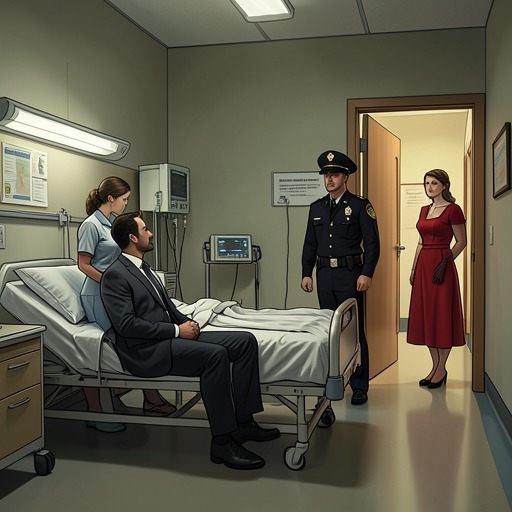
Years later, Enzo appears outside the hospital where Vito has been taken after the shooting. Michael recognizes him only when he approaches beneath the lamplight and identifies himself as the baker’s helper who became Nazorine’s son-in-law. Enzo has come to pay his respects to Vito, but the hospital will not admit him so late. Michael tells him that he will pass along the message and urges him to leave when a car approaches, warning that trouble may be coming.
Enzo understands the danger in terms that are intensely personal. Trouble with the police could jeopardize his citizenship or lead to deportation, yet he refuses to go. He says that if there is trouble, he will stay to help because he owes it to the Godfather. Michael is moved by the response and reconsiders the value of Enzo’s presence. A single man outside the hospital might not deter an attack, but two men under the streetlamp could make Sollozzo’s crew hesitate.
Michael gives Enzo a cigarette and lights it for him. They stand together in the cold December night as the hospital windows glow above them, decorated for Christmas. When a long black car turns toward them and nearly stops, Enzo’s hands shake, while Michael’s remain steady. Enzo is frightened, but fear does not cancel his obligation. His courage is therefore not presented as the absence of terror; it is the decision to remain despite the consequences that his vulnerable legal status makes especially immediate.
Change and Narrative Significance
Enzo changes from a dependent young prisoner of war asking for permission to marry into a protected member of the Corleone circle who can offer protection in return. Vito’s intervention does more than solve a single immigration problem. It converts gratitude into a durable social bond, and the bond becomes visible when Enzo acts without being summoned or promised a reward. His loyalty is not based on formal employment or equal power. It is produced by the memory of a life-changing favor and expressed as a willingness to stand beside the family at its moment of danger.
His small arc also makes the Godfather’s system of favors concrete. Vito’s influence reaches from a baker’s household to Congress, while the resulting debt travels back into a hospital-defense crisis. The exchange is not a simple commercial transaction: Nazorine’s food, union dues, and friendship establish the relationship; Vito supplies political access; Enzo later supplies personal risk. The network operates through recognition and obligation, with the promise that help given in the past can summon courage in the present.
Enzo’s role is brief but structurally important. He links the domestic world of courtship and immigration to the violent main conflict surrounding Vito’s attempted assassination. His presence outside the hospital demonstrates that the Corleone Family’s power is sustained not only by caporegimes, soldiers, labor leaders, politicians, and financial contacts, but also by ordinary people whose lives have been altered by Vito’s generosity. The grateful baker’s helper becomes, for one tense night, a civilian witness to the family’s danger and a willing participant in its protection.