Every man has one destiny
The GodfatherEvery man has one destiny is the fatalistic principle that gives Vito Corleone's life its moral and psychological shape. It turns the killing of Fanucci from a calculated act of self-advancement into a revelation about vocation: Vito believes that circumstances have selected him to become a Don. The same idea later governs his understanding of Santino Corleone and helps Michael Corleone interpret both his father's world and his own place within it. Destiny in this sense is not passive surrender; it is the name Vito gives to the convergence of character, danger, opportunity, and inherited social conditions.
The Insight Born from Fanucci
Vito's belief emerges from his scrutiny of Fanucci. While drinking wine with Clemenza and Tessio, he reconstructs what he knows about the man's violence and history: Fanucci had killed one man, had allowed the other two to buy off their sentences through an indemnity, and had informed to the police. Vito concludes that a genuine Mafia chief would have had all three men killed. Fanucci therefore possesses no great network of protection; his power comes from his own brutality, perhaps supplemented by gunmen hired for particular jobs and paid in cash.
That deduction leaves Vito facing a decision about the course of his life. He can pay Fanucci's tribute and perhaps become a grocery clerk again, eventually opening a shop of his own, or he can act against the man who has been exploiting the neighborhood. Vito chooses the second path and offers Clemenza and Tessio a plan in which they provide the money while he handles Fanucci and the bargaining. The immediate practical calculation becomes, in Vito's later interpretation, the decisive proof that his life had a fixed direction: Fanucci had been brought before him to set him on the path toward becoming a Don.
Destiny as a Family Doctrine
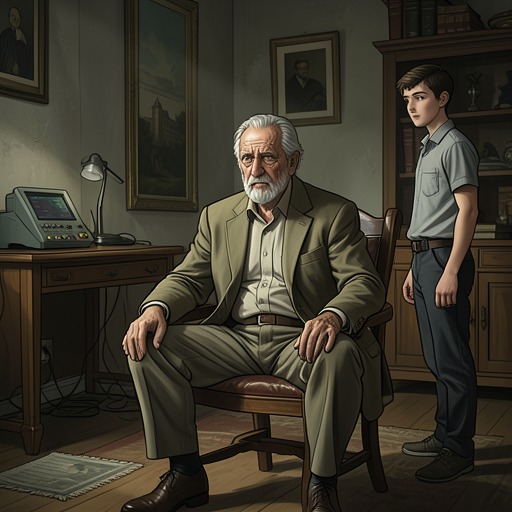
The principle becomes one of Vito's oft-repeated beliefs rather than a private explanation of his own past. When Santino says that he wants to enter the family business, Vito does not treat the remark as merely a boy's joke. He tells Santino that every man has one destiny, while withholding the fact that witnessing Fanucci's murder had already influenced the destiny he imagined for his son. Vito then brings Santino into the organization, asking Genco Abbandando to show him what to do.
Genco recognizes that Vito wants Santino prepared for the family world and uses him mainly as his father's bodyguard, a role through which Santino can learn the subtleties of being a Don. Vito himself takes on a teaching role, giving his eldest son lectures about success and repeatedly warning him against uncontrolled anger. For Vito, destiny does not excuse impulsiveness. A man's appointed course still requires discipline, concealment, and judgment; threats and unconsidered rage expose the weakness that an enemy should be allowed to overestimate.
The doctrine also reveals Vito's divided attitude toward choice. He teaches that a man has one destiny, yet he tries to shape the manner in which Santino will fulfill whatever course lies before him. Destiny determines the broad direction, while training determines whether a man will meet it intelligently or destroy himself through temper. The belief therefore combines fatalism with a practical ethic of self-command.
Michael and the Burden of Inheritance
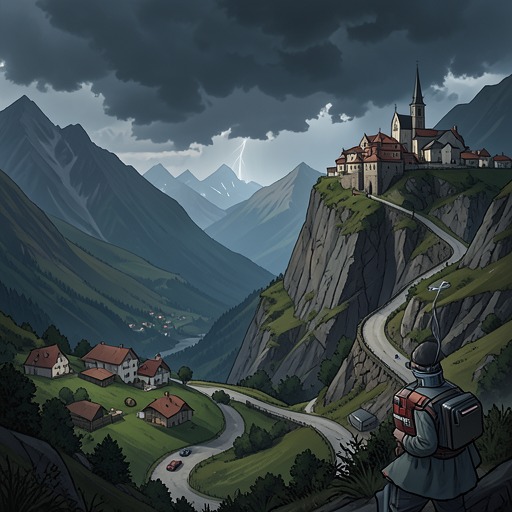
The principle acquires a different force for Michael Corleone. During five months of exile in Sicily, Michael comes to understand his father's character and destiny, as well as the men and family structures surrounding him. He learns to see Luca Brasi, Clemenza, his mother's resignation, and the wider Sicilian order as versions of lives shaped by forces that people either accept or resist. In that setting, Vito's repeated statement becomes intelligible to him rather than merely mysterious or authoritarian.
Michael's education is inseparable from the society he encounters. The town of Corleone, whose name Vito took when he emigrated to America, has lost its male population through vendettas and emigration, and the province is controlled by Mafia authority. Justice has failed to arrive through official institutions, so people turn to the local capo-mafioso for food, employment, protection, and emergency assistance. Yet Michael also discovers that the Mafia has become the illegal arm of the wealthy and an auxiliary of the legal and political structure, imposing its own taxes on every kind of business.
This contradiction deepens the concept. The Mafia presents itself as a substitute for absent justice, but it also reproduces fear, privilege, and exploitation. Michael understands for the first time why men such as his father might choose theft and murder over membership in a legal society whose poverty, degradation, and authority seem intolerable. Destiny is thus not only personal inheritance; it is the pressure exerted by a historical and social environment in which the available paths are already morally damaged.
Destiny, Loyalty, and Historical Choice
Vito applies the belief even when events contradict his wishes. During World War II, he builds peace among powerful underworld organizations and protects the internal authority of each group while arranging spheres of influence and enforcement. The resulting order allows the Corleone Family to profit from black-market food and gasoline stamps, travel priorities, war contracts, and scarce industrial materials. Vito also uses doctors and war-industry exemptions to keep eligible young men in his organization from entering the Army.
Michael refuses this assistance and volunteers to serve his country. Several other young men do the same; one explains that the country has been good to him. Vito angrily answers that he has been good to the man, revealing the conflict between national belonging and personal allegiance. Nevertheless, because he has excused Michael, he must excuse the others. The episode shows that Vito's theory cannot eliminate competing claims of loyalty. A man may seem destined for the family, yet another community can claim his service and redirect his life.
After the war, Vito knows that his world must change and fit itself more closely to the larger society. His confidence that profit can survive this transformation rests on earlier personal affairs in which his system of assistance demonstrated its power. Destiny therefore does not mean that institutions remain fixed. Vito imagines a determined course for individuals while adapting the family organization to changing historical conditions.
Meaning and Limits of the Principle
Every man has one destiny joins intimate biography to social explanation. Vito reads his rise through the encounter with Fanucci, Santino's formation through his father's intervention, and Michael's understanding through exile in Sicily. Each case links a person's character to a surrounding order: violence, family obligation, failed government, immigration, and competing forms of loyalty all narrow the field of possible action.
The belief also carries an irony. Vito treats destiny as proof that his ascent was meant to happen, but the ascent depends on a deliberate murder and on the exploitation of a world where legal protection is unreliable. In Sicily, Michael sees that the same structure that offers protection has become an instrument of the rich. The doctrine can therefore dignify necessity without making it innocent. It explains how men become what their circumstances permit, while leaving open the question of whether recognizing a destiny is wisdom, self-justification, or both.
For Vito, however, the principle remains indispensable. It gives order to a violent past, supplies a language for preparing his children, and helps him absorb the fact that even a carefully governed family cannot command every allegiance. In the novel's moral architecture, destiny is neither supernatural decree nor simple personal preference. It is the pressure of history and social structure experienced as a single life-course, then passed from father to son as both inheritance and warning.