Mafia as an alternative government
The GodfatherMafia as an alternative government is the novel’s central model of parallel justice: a private authority that supplies protection, material assistance, employment, political influence, and punishment where official institutions appear indifferent, corrupt, or inaccessible. Its power rests not only on violence but on personal allegiance. Those who seek its help must acknowledge friendship and accept a debt that may later be redeemed through service. The system therefore resembles a government in its functions while remaining familial, informal, and coercive in its enforcement.
Definition and Social Basis
The system is introduced through Amerigo Bonasera’s crisis. For years he had trusted American law and order, and that trust had enabled him to prosper. After his daughter was brutally attacked, he went to the New York Criminal Court expecting justice. The two young men pleaded guilty, yet the judge suspended their three-year sentence, allowing them to walk free that day. The official process had recognized the crime without satisfying the victim’s sense of redress. Bonasera left the courtroom feeling that the legal order had made fools of him and decided that he and his wife must seek justice from Don Vito Corleone.
Don Vito Corleone’s authority depends on precisely this gap between formal judgment and experienced justice. At the wedding of Constanzia Corleone, the Don is described as a man to whom everybody comes for help and who never offers an empty promise or claims that stronger forces have tied his hands. The petitioner need not be a close friend and need not possess the means to repay him; the essential requirement is to proclaim friendship. Once that allegiance is declared, the Don takes the petitioner’s trouble to heart and permits nothing to stand in the way of a solution.
The exchange is personal rather than bureaucratic. The reward expected by Don Vito Corleone is friendship, the respectful title of Don or Godfather, and the acknowledged right to call upon the petitioner later for a small service. Gifts such as homemade wine or peppered taralles are presented as signs of respect rather than prices for a transaction, but they also make the debt visible. The system converts gratitude into an enduring obligation, binding the recipient to the authority that helped him.
Parallel Justice Against the Courts
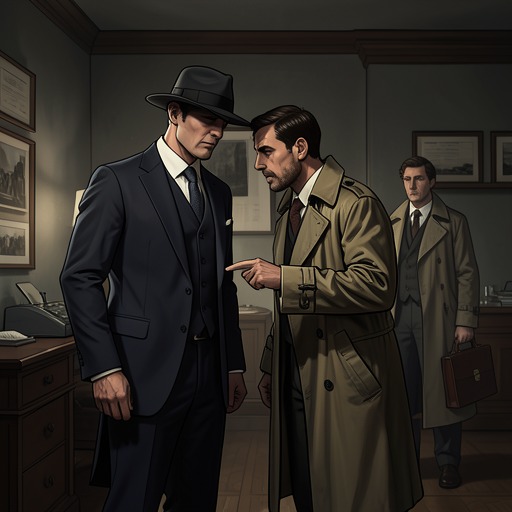
Bonasera’s interview with Don Vito Corleone shows both the attraction and the discipline of this alternative order. The Don refuses to treat the request as a simple paid assassination. He reminds Bonasera that the undertaker had never sought his counsel, had not invited him into his home, and had deliberately avoided becoming indebted to him. Bonasera had chosen the police, courts, banks, and the identity of the good American because he believed those institutions could protect his family without requiring personal loyalty.
The Don interprets that choice as a rejection of friendship. He reproaches Bonasera for arriving on the wedding day and asking for murder while offering money instead of respect. The difference is not merely financial. In the Don’s view, money cannot substitute for allegiance because the authority of the parallel system is built through reciprocal recognition. Bonasera wants the result of the Don’s power without accepting the relationship that gives that power its moral and political meaning.
Don Vito Corleone initially tells him that the court has already given him justice and urges him to accept the judge’s decision, visit his daughter in the hospital, and bring flowers and candy. The irony exposes the weakness of the official verdict: the law has pronounced an outcome, but the wounded family has received no restoration. When Bonasera continues to ask for justice, the Don explains that legal institutions make people wait, charge them ruinous interest through banks and lawyers, and submit them to judges who can sell their judgment. By contrast, the Don claims that his purse would have been available immediately and that those who had harmed Bonasera’s daughter would have been made to suffer.
Bonasera finally accepts the relationship by asking Don Vito Corleone to be his friend. The resolution is therefore a conversion, not simply a commission. A man who had trusted the state crosses into a system whose justice is faster and more intimate but also depends on silence, hierarchy, and the Don’s personal decision. His nightmare afterward, in which the Don unloads bullet-riddled corpses at the funeral parlor and commands him to bury them quickly, reveals the violence concealed within the promise of protection.
Welfare, Patronage, and Political Power
The alternative government extends beyond revenge. Don Vito Corleone helps poor people obtain home relief, finds jobs for young men, gets people out of jail, lends urgently needed money, and intervenes when landlords demand rent from tenants without work. His assistance is delivered with encouraging words so that charity does not humiliate those who receive it. The organization also supports imprisoned members’ wives and children, welcomes released prisoners with food and wine, and provides money for a period of rest before they return to work. Such generosity creates loyalty while demonstrating that the Family can perform social functions more directly than the surrounding institutions.
This network turns personal gratitude into political influence. When Italian residents are uncertain whom to support in elections for state, city, or congressional office, they ask Don Vito Corleone for advice. Party leaders consequently consult him as a political power. He strengthens that influence by helping talented boys from poor Italian families attend college; some later become lawyers, assistant district attorneys, and judges. The system thus enters the official order through the people it sponsors, cultivating future professionals who can serve as allies within the courts and government.
The resulting authority is both paternal and strategic. The Don appears as a neighborhood protector, social worker, lender, political adviser, and arbiter, but every service enlarges the organization’s capacity to command. His care is not pure Christian charity: members understand that loyalty and silence will be rewarded, while defection will destroy the basis of their protection. The same system that feeds families and opens doors also creates a disciplined constituency whose obligations reach beyond ordinary law.
Historical Roots and Internal Contradictions
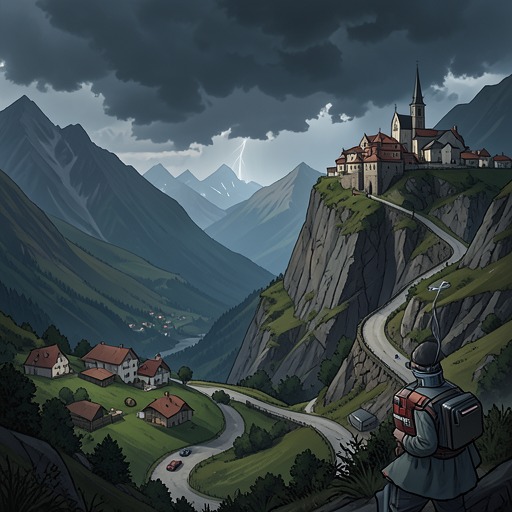
Michael Corleone learns in Sicily that the idea of Mafia authority arose from a history of failed or oppressive government. In the account given by Dr. Taza and Don Tommasino, the word originally meant a place of refuge before becoming associated with a secret organization formed against rulers who had crushed the country and its people. The Inquisition, landowning barons, princes of the Catholic Church, and police identified with those powers made official authority appear predatory rather than protective.
Under such conditions, people learned to conceal anger, avoid threats, and refuse to expose themselves. When they needed redress, they turned to the rebel underground rather than the authorities. The Mafia’s law of silence, Omertà, grew from this social order: betrayal of an offender’s name to the police became an unforgivable crime, and silence functioned almost as a religion. The local capo-mafioso served as protector, district captain, provider of food, and finder of employment. The alternative government was therefore born from a genuine need for safety and recognition.
Michael also learns the darker development that Dr. Taza does not explain. In Sicily the Mafia had become the illegal arm of the rich and an auxiliary police force for the legal and political structure. It imposed its own taxes on businesses and developed into a degenerate capitalist structure that was anti-communist and anti-liberal. The protective myth survived, but the organization’s position had changed: it no longer merely defended the powerless against authority; it could become another authority extracting payment from everyone.
The same contradiction appears in the United States. When the repeal of Prohibition threatens Don Vito Corleone’s empire, he does not abandon the system. In 1933 he sends emissaries to Salvatore Maranzano, who controls gambling, loans, bookmaking, illicit gambling houses, and Harlem’s numbers racket. The Corleone proposal offers an equal partnership: Don Vito Corleone would provide organization, police contacts, and political connections as a protective umbrella for expansion into Brooklyn and the Bronx. Maranzano rejects the offer, and the conflict helps trigger the 1933 war that reshapes New York City’s underworld. Protection has become an instrument of territorial expansion and organized power.
Crisis, Enforcement, and Consequences
The alternative government reveals its emergency character most clearly when the Corleone Family is attacked. After the shooting of Don Vito Corleone, Santino Corleone treats the assault as a challenge to the Family’s power and concludes that Virgil Sollozzo could not have acted without support from at least one of the five New York families, particularly the Tattaglia Family. He faces the choice between settlement on Sollozzo’s terms and full-scale war. His response is to reject further meetings and demand Sollozzo, even if the decision means entering the war and placing armed men throughout the streets.
The organization’s ability to act outside ordinary procedures depends on its infrastructure. Tom Hagen arranges Michael Corleone’s false passport, seaman’s card, passage on an Italian freighter, and refuge with a Mafia chief in Sicily. Salvatore Tessio prepares an untraceable car with false plates, while Peter Clemenza modifies the small gun Michael will use. These preparations show an authority capable of moving people, weapons, money, and information across borders with a speed unavailable to formal justice.
Yet the Family’s discipline is unstable when personal fury overtakes judgment. After Constanzia Corleone calls home in terror, Santino Corleone’s anger becomes physically visible as he hears that Carlo Rizzi has abused her. The crisis transforms family protection into a demand for retaliation. Later, Don Vito Corleone argues before the assembled leaders that reason must restrain violence. He refuses vengeance for his dead son and declares that the families must move beyond guns, killings, and massacres toward business, because the older order is too hard for their children and grandchildren. His speech presents modernization as a strategic attempt to preserve power by changing its outward form.
The same logic governs Michael Corleone’s later decisions. Tom Hagen explains to Kay Adams that Michael Corleone had to kill Salvatore Tessio and Carlo Rizzi because treachery could not be forgiven within the Family. Even though Michael had liked Tessio and loved his sister, allowing either man to remain free would have endangered the Family and its dependents. The explanation makes the system’s moral structure unmistakable: private affection is subordinate to institutional survival, and execution is represented as duty to family rather than personal hatred. Mafia as an alternative government therefore offers order where the state fails, but it preserves that order through obligations that can override law, intimacy, and individual mercy.