Michael Corleone's exile in Sicily
The GodfatherMichael Corleone's exile in Sicily is the decisive middle passage of his transformation. Forced onto an Italian freighter after the murder of Virgil Sollozzo and Captain McCluskey, he leaves New York believing that escape itself is a relief, but Sicily converts that escape into an education. There he sees the world from which his father came, experiences marriage and sudden bereavement, and reaches the terrible recognition that his destiny is bound to the family he once tried to stand outside.
Flight and the Sicilian Threshold
Michael leaves New York in disguise after stating that he has seen the dead men's brains. His clothes are changed in the car, and twenty minutes later he is aboard an Italian freighter bound for Sicily. When the ship puts to sea two hours afterward, he watches the lights of New York City burn behind him and feels an enormous relief. The sensation recalls being carried away wounded from an island invaded by his Marine division: the battle continued, but he was no longer inside it. The comparison gives his exile an immediate double meaning. He is escaping the police and the family war, yet he is also retreating from a violence that has already begun to define him.
After five months in Sicily, Michael understands his father's character and his own destiny in a way that was impossible in America. He comes to understand men such as Luca Brasi and Peter Clemenza, his mother's resignation to her role, and the contempt for legal authority that governs the Sicilian world. He also understands the hatred directed at anyone who breaks Omertà, the law of silence. The exile therefore functions not merely as concealment but as an initiation: Michael studies the family system at its source and recognizes the beliefs that support it.
A Protected Life Inside Mafia Order
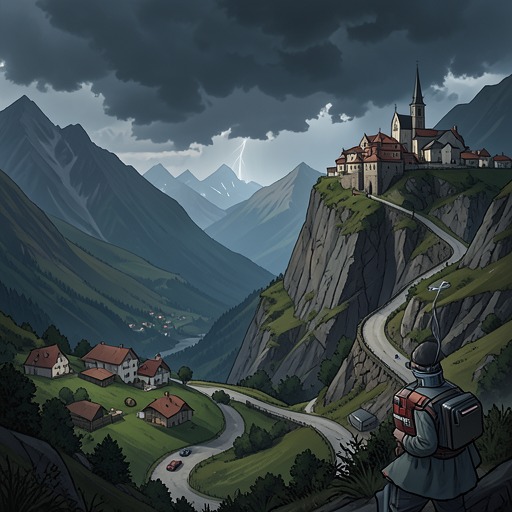
Michael is taken from a ship docked at Palermo into the interior of the island, to a province controlled by a local Mafia chief indebted to Vito Corleone. The province includes the town of Corleone, whose name Vito Corleone adopted when he emigrated to America. The town is impoverished and marked by vendettas; the men of Michael's extended family have either been killed or emigrated, while the women have died of old age. The place makes the phrase “A man has only one destiny” concrete. Michael is not simply visiting an ancestral landscape; he is seeing a community in which violence, migration, and inherited identity have narrowed the available paths of life.
His protector is Don Tommasino, an old-fashioned Mafia chief who works as the gabbellotto for a noble family's vast estate. Don Tommasino protects the estate from poor peasants who might invoke the law to claim uncultivated land, controls local water rights, and blocks government dams that would undermine his profitable water economy. His authority is therefore part protection, part coercion, and part private government. Yet he refuses involvement in drug traffic and prostitution, placing him at odds with younger Mafia leaders influenced by American gangsters. Sicily teaches Michael that Mafia rule is not a single, timeless code: it changes with markets, cities, and the appetites of new men.
For security, Michael's identity is concealed and he is confined to the walled estate of Dr. Taza, Don Tommasino's uncle. The protection is effective precisely because it restricts him. Under Don Tommasino's authority he has nothing to fear, but he cannot move freely or openly claim his name. Even at a distance from New York, his safety depends on the same structure of secrecy and personal obligation that governs his father's organization.
Marriage, Desire, and Recognition
In Sicily Michael marries Apollonia Vitelli, and the marriage briefly gives exile the shape of a new life rather than a temporary hiding place. Apollonia's virginity carries a special social value in the primitive social order Michael observes, and the early marriage becomes an intense period of sensuality and possessive masculine confidence. The experience is unlike anything he had known before. Apollonia, in turn, brings brightness to the formerly masculine atmosphere of the villa, sends her mother away after the bridal night, and presides over the communal household with youthful charm.
The domestic world around the couple is sheltered but not peaceful in any absolute sense. Don Tommasino dines with them each night, while Dr. Taza tells old Mafia stories in the garden among statues and blood-red flowers. The evenings combine wine, family ritual, history, and guardedness; the doctor represents legend, while Don Tommasino represents living power. Michael's marriage thus joins private intimacy to the political culture he is learning. His love does not carry him beyond the Mafia world. It places him more deeply inside its protections and vulnerabilities.
The Bombing and the Collapse of Exile
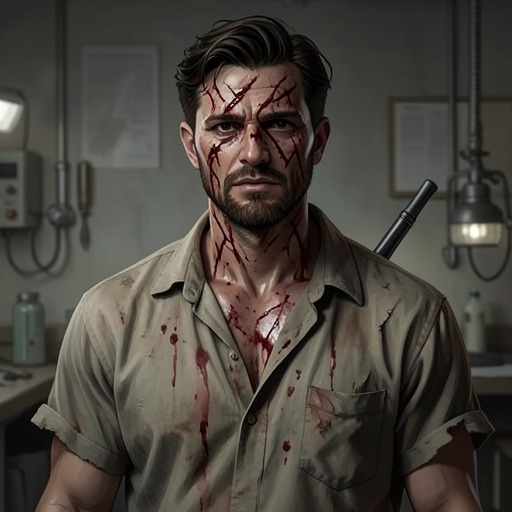
The value of the Sicilian refuge reverses abruptly when Apollonia's car is bombed. Michael survives but is gravely injured; Apollonia and Calo are dead, and an old woman in the kitchen is remembered as having escaped with only a bloody nose. Fabrizzio, who brought the car from the garage, has vanished. The attack reveals that Michael himself was the true target and that the attempt was disguised as an attack on Don Tommasino. Exile, which had promised distance from the American conflict, proves unable to shield him from its reach.
Michael remains unconscious for nearly a week. When he awakens, Don Tommasino tells him that everyone believes him dead and that the search has stopped, making the false report of his death a form of protection. Michael has been moved to a special farmhouse in the mountains, where he can recover beyond the immediate reach of Palermo. The news that he is considered dead changes the strategic situation, but it cannot restore what has been lost. His wife is dead, his companion Calo is dead, and the marriage that had made Sicily seem habitable has ended in a single act of treachery.
The first clear objective Michael expresses after recovering is revenge against Fabrizzio. He offers the finest pastures in Sicily to whoever captures him, turning grief into a public demand within the island's own economy of loyalty and punishment. At the same time, his request to Don Tommasino is more revealing than the threat: he asks his protector to tell Vito Corleone to bring him home because he wishes to be his father's son. The statement marks the emotional completion of the exile. Michael returns not as the young man who rejected his father's assistance, but as someone who has accepted the identity and obligations he once resisted.
Return and Narrative Significance
It takes another month for Michael to recover from his injuries and two additional months for the necessary papers and arrangements to be completed. He is flown from Palermo to Rome and then from Rome to New York, while no trace of Fabrizzio is found during that period. The delay emphasizes that return is logistical as well as emotional: exile ends through protection, documents, and family arrangements rather than through a simple decision to leave.
The Sicilian exile also illuminates the wider system surrounding Michael. In America, Vito Corleone's authority is built through favors to poor Italian families, political influence, and a network that operates as an alternative government. He later seeks peace among underworld organizations across the United States so that each can preserve its internal authority. The same logic appears in Sicily through Don Tommasino's control of land and water: protection is offered personally, while legal institutions are displaced or obstructed. Michael's exile gives him the comparative knowledge to recognize this continuity.
Its deepest consequence is that Michael's private catastrophe becomes the foundation of his public identity. Vito Corleone later declares that the family must manage its own affairs and that he will seek a safe return for his youngest son, but Michael's return is no longer a restoration of his former life. The exile has shown him the cost of belonging, the meaning of Omertà, and the fatal persistence of inherited destiny. He comes home alive, widowed, and newly committed to being his father's son; the refuge has ended, but the transformation it imposed has not.