Nazorine
The GodfatherNazorine, the pudgy, flour-dusted baker, is a small but revealing figure in the world of Vito Corleone. His appeal on behalf of his daughter Katherine and her beloved Enzo shows how the Godfather’s authority operates at the intimate level of family survival: a private romantic crisis becomes a legal and political problem, and Vito’s friendship supplies the machinery to solve it. Nazorine’s history with Vito also helps explain how the Corleone organization grew from neighborhood loyalty into a structured power system.
Identity and Family Crisis
Nazorine is presented as an Italian baker, physically marked by his trade and temperament: he is pudgy, crusty, and still covered with flour while his household argues around him. His wife is Filomena, his daughter is Katherine, and Enzo is his baker’s helper, a short, strongly built Italian prisoner of war from Sicily. Enzo has been paroled to work in the American economy and lives under the constant threat of being sent back to Italy when the war ends. For him, the family’s argument is not comic at all; repatriation would make marriage to Katherine effectively impossible.
The relationship is treated as honorable despite the household’s earthy humor. Enzo insists that he has not abused Nazorine’s kindness and that he loves Katherine with respect. Katherine, already convinced that she will never find another man as handsome or tender, threatens to flee to Italy if her father refuses to keep Enzo in America. Filomena cuts through Nazorine’s anger and tells him to hide Enzo with relatives on Long Island. Nazorine, meanwhile, understands that the immediate question is not merely whether the couple loves one another, but whether Enzo can remain in the United States and become an American citizen.
The Request to Vito Corleone
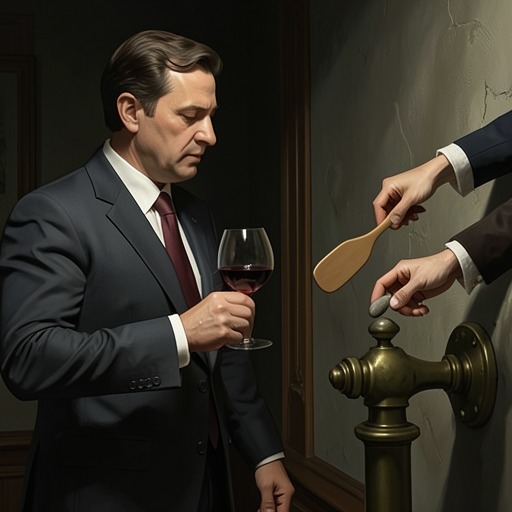
Nazorine knows that ordinary procedures cannot protect the young couple quickly enough. He concludes that only Vito Corleone can arrange the necessary intervention. This judgment is part of the larger reputation surrounding Vito: people come to him with troubles and are not dismissed with the claim that nothing can be done. In return, the petitioner must openly acknowledge friendship and accept that the favor creates a debt, sometimes marked by a modest gift such as homemade wine or baked food.
Nazorine’s own relationship with Vito is older than the present emergency. The two played together as children in Italy and grew up as friends. Nazorine’s Easter pies, Christmas pastries, and other baked gifts have continued to announce his respect over the years. He has also cheerfully paid dues to the bakery union Vito organized in his earlier days, asking in return only for the opportunity to buy black-market OPA sugar coupons during the war. His request therefore appears not as a random demand upon a powerful stranger, but as the claiming of rights within a long-standing exchange of loyalty, gifts, and assistance.
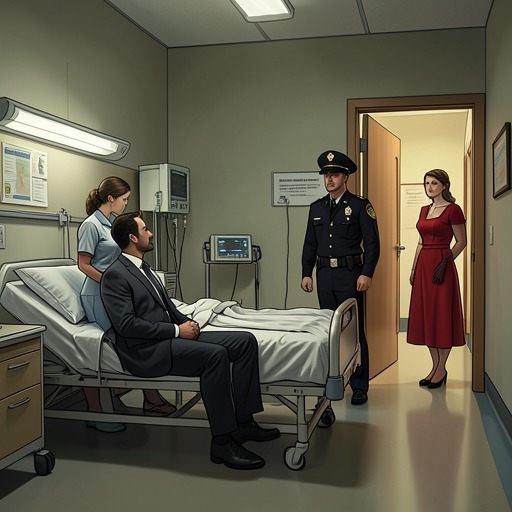
At the wedding of Constanzia Corleone in August 1945, Vito receives Nazorine with an embrace, gives him a Di Nobili cigar and a glass of yellow Strega, and places a hand on his shoulder to encourage him. The gesture recognizes the difficulty of asking for help even when the petitioner has a legitimate claim upon friendship. Nazorine tells the story of Katherine and Enzo as the story of a pure love threatened by the end of the war, presenting Vito as the couple’s last hope.
Vito’s answer converts personal sympathy into an administrative plan. A Congressman from the district will be petitioned; the Congressman will propose a special bill allowing Enzo to become a citizen; and, Vito explains, the bill will pass Congress. The service costs two thousand dollars, which Nazorine accepts without surprise because a special Act of Congress does not come cheaply. Vito guarantees performance, sends competent people to the bakery to arrange the documents, and walks Nazorine to the door. The scene demonstrates that the Godfather’s power lies not only in threats but also in his ability to connect a local family to lawyers, politicians, paperwork, and influence.
The Earlier Lesson in Protection
Nazorine’s importance extends backward into Vito’s formative experience. When Nazorine was still a baker’s helper preparing to marry, he and his fiancée saved three hundred dollars to furnish their rented tenement apartment. They paid a furniture wholesaler for a sturdy bedroom set, two bureaus and lamps, and a living-room suite with a heavy stuffed sofa and armchairs covered in rich gold-threaded fabric. The wholesaler accepted the money, promised delivery, and then declared bankruptcy the following week, leaving the warehouse sealed and the creditors facing years of legal delay.
Nazorine’s lawyer told him that nothing could be done until the court settled the case and all creditors were satisfied; Nazorine might wait three years and recover only ten cents on the dollar. The episode gave Vito a practical lesson in the difference between formal law and effective justice. Nazorine’s grievance was real, but the legal system offered only delay and an uncertain fraction of restitution. Vito’s intervention showed that a person with connections could produce an immediate result where official procedure produced helplessness. The experience helped put Vito on what he considered the right track: protection could be offered as a personal deed, then remembered as a bond.
Nazorine within the Godfather’s System
Nazorine’s story clarifies the operating logic of Vito’s system of favors. The baker contributes labor, food, union dues, and visible respect; Vito stores those acts as social credit and eventually redeems the relationship when Nazorine faces a crisis. The exchange is neither presented as a simple commercial transaction nor separated cleanly from power. Vito charges for the political operation, but the possibility of obtaining it at all depends on friendship and accumulated obligation. Money pays for the machinery; loyalty grants access to it.
This pattern mirrors Vito’s broader construction of the Corleone organization. He protects Italian families running small speakeasies, acts as godfather to a neighbor’s child, pays a handsome gift, and establishes a system of monthly payments to officials through a lawyer with contacts in the Police Department and the judiciary. When the lawyer worries about expense, Vito insists that everyone should be placed on the list, even officials who cannot help immediately, because friendship must be demonstrated before it is needed. Nazorine’s long wait for the moment to claim his favor is therefore part of a wider strategy in which relationships are accumulated like securities.
As the organization expands, Vito formalizes the network. Clemenza and Tessio become caporegimes, their men become soldiers, Genco Abbandando becomes Consigliere, and layers of insulation separate Vito from operational acts. The same system that can quietly arrange a citizenship bill can also transmit orders through Tom Hagen, Peter Clemenza, and Paulie Gatto without exposing the Don directly. Nazorine’s appeal occupies the humane face of this structure, while the organization’s hierarchy reveals the disciplined architecture beneath that face.
Narrative Significance
Nazorine is not a central strategist or combatant, but his episodes make the abstract idea of Vito’s authority concrete. The baker arrives with flour on his clothes, a family argument behind him, and an impossible future in front of his daughter. He leaves with a political route, a price, and the assurance that documents will be prepared. His presence shows why Vito is called Godfather by people who are not merely frightened of him: Vito remembers old friendships, receives humble gifts, understands the courage required to ask, and makes himself indispensable by solving problems that official institutions leave unresolved.
At the same time, Nazorine’s history exposes the moral ambiguity of that benevolence. Vito’s protection feels like justice because it answers a genuine wrong and rescues a vulnerable family from separation. Yet the solution depends on influence outside ordinary legal equality, and the debt remains available for future use. Nazorine therefore embodies the social foundation of Vito’s rule: the Godfather’s power grows through acts that look personal, generous, and even tender, while each act enlarges the network of people who owe him loyalty and can be summoned when the organization needs them.