Nino Valenti
The GodfatherNino Valenti is a talented singer whose life is defined by the distance between artistic ability and public opportunity. Introduced as a handsome but already bloated, slightly drunken young man, he performs with exuberant physicality and coarse humor at Connie Corleone’s wedding. Yet behind the comic performance lies a neglected career, an old friendship with Johnny Fontane, and a talent that Vito Corleone recognizes before either man fully acts on it.
Identity and Early Appearance
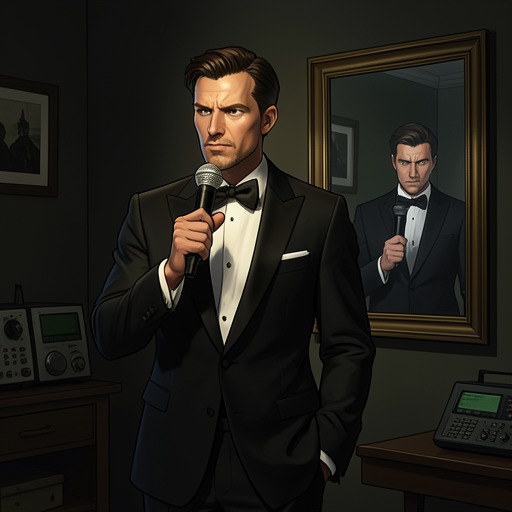
Nino first appears during a break in the wedding band’s performance. He picks up a discarded mandolin, puts one foot on a chair, and sings a coarse Sicilian love song while the guests answer the final word of each stanza. His face is handsome but swollen by continual drinking, and he is already a little drunk. He rolls his eyes as he delivers the obscene lyrics, while the women shriek with delight and the men join the refrain.
The performance makes Nino immediately legible as both entertainer and spectacle. His drunkenness does not prevent him from singing effectively; instead, it becomes part of the scene’s communal energy. The guests respond to his bodily showmanship, the mandolin, and the song’s double meanings as if Nino’s performance temporarily restores the wedding to an older Sicilian social world. His talent is present, but it is embedded in a setting that treats it as amusement rather than as the beginning of a professional future.
Friendship with Johnny Fontane
Johnny Fontane and Nino had been inseparable as boys. They sang together, went out with girls together, and remained companions until Johnny began to become famous through radio and then went to Hollywood to make movies. Johnny phoned Nino only a couple of times after leaving and promised to obtain a club singing date for him, but never did so. The broken promise is not presented as an open quarrel; it appears instead as the quiet abandonment that accompanies Johnny’s rise.
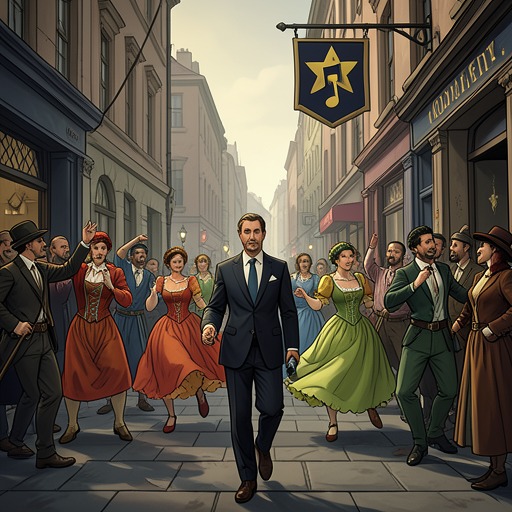
At the wedding, Johnny’s recognition of Nino immediately revives their old affection. Nino greets him with a cheerful, mocking, drunken grin, and Johnny embraces him on the bandstand. Johnny then joins Nino on the mandolin song, placing a hand on his shoulder and turning the performance into a gift for the bride and the whole crowd. Their shared singing briefly collapses the difference between the famous movie star and the struggling friend left behind. The guests remember them as boys who sang together before anyone imagined that Johnny would become a singer capable of holding the devotion of fifty million women.
The reunion also exposes the moral cost of Johnny’s success. Nino still loves his friend, but his circumstances have narrowed into disappointment. He drinks too much, works hard driving a gravel truck, and sings on weekends for a few dollars. He never complains publicly about Johnny’s failure to help him. That silence makes the neglect more severe: Nino does not demand repayment, so Johnny can allow the debt to remain invisible.
Vito Corleone’s Judgment and Johnny’s Response
Vito Corleone sees Nino’s situation more clearly than Johnny does. He tells Johnny that Nino drinks out of disappointment, yet continues working and singing without speaking against him. When Johnny dismisses Nino as insufficiently talented for the big time, the Don’s criticism turns the issue from talent into responsibility. Nino is not merely an unsuccessful performer; he is an old friend whom Johnny has allowed fame to make irrelevant.
Vito Corleone also understands that Nino would be unsuited to organized crime. Johnny later realizes that the Don had known Nino could never become a racketeer: Nino would get into trouble or be killed by one of his own wisecracks. The Don’s deeper insight was that Nino was an artist. Rather than issuing a direct command, Vito Corleone lets Johnny understand that helping Nino would make him happy. The favor therefore operates through implication, gratitude, and personal obligation, characteristic of the Godfather’s system of favors.
Johnny eventually acts on that obligation in a form that joins friendship with commercial judgment. In a recording studio, he assembles musicians he has known since childhood and works with the conductor Eddie Neils, who accepts the session as a favor despite a crowded schedule. Nino sits nervously at the piano and drinks rye, but Johnny knows that Nino sings as well drunk as sober and that the recording requires little formal musicianship from him. Eddie Neils arranges old Italian and Sicilian songs, including the duet Nino and Johnny performed at the wedding. Johnny intends the record primarily as a Christmas gift for Vito Corleone, while also suspecting that it may sell in large numbers.
From Gravel Truck Driver to Movie Star
Johnny’s more decisive opportunity for Nino comes through film. The author of the book in which Johnny had starred travels west with a new novel, and Johnny recognizes the second book as a suitable project for himself. The story has a forceful plot, sexual appeal, and a role designed for Nino. The character talks like Nino, behaves like Nino, and even looks like him; Nino would not need to manufacture a screen persona but could simply appear as himself.
Johnny moves quickly into production and discovers that he knows more about filmmaking than he had expected. He hires an executive producer who has difficulty finding work because of the blacklist and gives him a fair contract rather than exploiting his vulnerability. When the producer says that a union representative must be paid fifty thousand dollars to resolve problems involving overtime and hiring, Johnny debates whether he is being cheated and then asks to meet the union man himself. These decisions show Johnny using the authority and practical knowledge acquired through fame to create an opportunity that Nino could not create alone.
The result is a dramatic reversal in Nino’s social and artistic position. The movie opens a few weeks before his death and becomes a smash hit, establishing him as a major star. The success confirms Vito Corleone’s judgment: Nino’s apparent failure had not proved a lack of ability, but reflected the absence of a path suited to his talent. His drinking, poverty, and stalled career are transformed into the biography of a performer finally placed in the right medium.
Death and Narrative Significance
Nino dies of a cerebral hemorrhage during the year in which his film becomes successful. His death therefore arrives at the instant of public recognition, allowing achievement and loss to occupy the same narrative moment. The tabloids place the death on their front pages because the film is a hit and because Johnny is handling the funeral arrangements. One sensational report claims that Johnny blamed himself for not forcing Nino to seek medical care, though the article frames this as the conventional remorse of a sensitive but essentially innocent bystander.
Johnny’s responsibility is represented more convincingly through the longer history between the two men. He did not cause Nino’s death, but he had once promised help and failed to provide it. By making Nino a recording partner and then giving him a film role, Johnny finally fulfills the obligation that Vito Corleone had identified. The achievement is genuine, but it cannot undo the years in which Nino drove a gravel truck, sang for a few dollars, and drank from disappointment.
Johnny handles the funeral privately, limiting attendance to family and close friends. Lucy Mancini and Jules Segal attend, while no member of the Corleone Family goes to the California funeral except Freddie. Vito Corleone wants to attend but is confined to bed for a month after a slight heart attack, so he sends a huge floral wreath; Albert Neri is sent west as the Family’s official representative. Nino’s death thus remains connected to the network that helped produce his success, even as the funeral reveals how unevenly that network is present at the end.
Nino’s arc joins comic performance, neglected friendship, artistic recognition, and untimely death. At the wedding he is the drunken singer who can command a crowd with a mandolin; in Johnny’s plans he becomes the performer whose natural manner can carry a film; after the film’s success he becomes a major star whose career is established only retrospectively. His story gives concrete form to Vito Corleone’s ability to read people beneath their present circumstances, while also showing that a favor may arrive too late to make its reward an uncomplicated happiness.