Shooting of Don Vito Corleone
The GodfatherThe Shooting of Don Vito Corleone is the turning point at which the apparently stable authority of Don Vito Corleone becomes visibly vulnerable. In a crowded New York street, two gunmen ambush him after he stops to buy fruit, shooting him repeatedly before fleeing. He survives, but the attack converts the Corleone Family’s system of protection, favors, and carefully insulated commands into a crisis of succession, retaliation, and family mobilization.
Causes and Background
Don Vito Corleone’s power rests on more than personal reputation. He is known as the man to whom the powerless come when law and official institutions fail them, and his assistance creates obligations of friendship that can later be redeemed. His organization has been deliberately divided into layers: Tom Hagen serves as Consigliere, Peter Clemenza and Salvatore Tessio command separate groups of soldiers, and operational orders pass through intermediaries so that the Don remains insulated from direct action. That structure protects him from both the law and betrayal, but it also depends on reliable information and loyal subordinates.
The attack occurs against this background of expanding pressure. Don Vito Corleone has built peace among powerful underworld organizations by negotiating spheres of influence and enforcing agreements across cities including Los Angeles, San Francisco, Cleveland, Chicago, Philadelphia, Miami, and Boston. His influence has therefore become both political and criminal: he can help families obtain work, intervene with landlords and courts, and mobilize contacts beyond New York City. The shooting is consequently not an isolated street crime. It strikes at the visible center of a system that presents itself as a more dependable government for its own community.
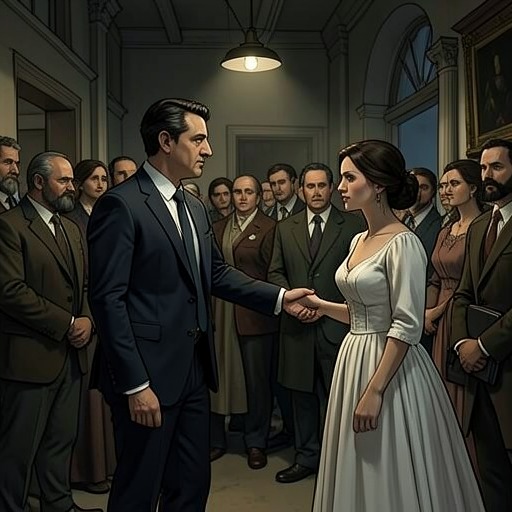
The immediate danger is also connected to the family’s response to Amerigo Bonasera. After Bonasera’s faith in law and order collapses when the men who attacked his daughter avoid the punishment he expected, he decides that he and his wife must seek justice from Don Vito Corleone. That decision reveals the moral exchange underlying the Don’s authority: legal institutions have failed to satisfy Bonasera, while the Don’s private justice promises a result. The shooting places that authority under direct challenge just as the family’s obligation to answer Bonasera’s plea is being activated.
The Ambush
On the afternoon of the attack, Don Vito Corleone finishes reviewing papers at the office of his olive oil company. He notices that Paulie Gatto has again called in sick and remarks that it is the third such absence that month, suggesting that a healthier driver may be needed. Don Vito Corleone then asks Frederico Corleone to have the car brought around. When Tom Hagen cannot be reached at either his office or the house in Long Beach, the Don leaves the building with his son.
The scene initially carries the appearance of an ordinary habit. Don Vito Corleone sees a fruit stand near the corner and turns aside to choose large out-of-season peaches and oranges. He points out the fruit he wants, accepts a paper bag, and pays with a five-dollar bill. As he turns back toward the parked Buick, two men step from around the corner. He understands immediately what is about to happen.
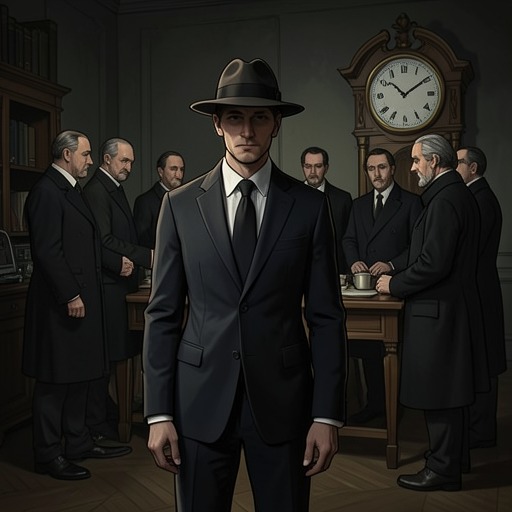
The gunmen wear black overcoats and low black hats intended to prevent identification. They have not anticipated the Don’s alertness. He drops the fruit and runs toward the car with startling speed, calling for Fredo. Only then do the two men draw their weapons. The first bullet strikes him in the back; two more hit his buttocks and knock him into the street. As the assassins move in to finish him, Frederico Corleone emerges from the car. The gunmen fire twice more, striking Don Vito Corleone in the arm and the calf of his right leg. The wounds bleed heavily, and he loses consciousness.
Frederico Corleone has heard his father call him by his childhood name and the first shots that follow. He is so shocked that he does not draw his gun, although the assassins could have killed him as well. They panic, apparently aware that he is armed and conscious that too much time has passed, and disappear around the corner. Frederico Corleone remains alone beside his father’s bleeding body, while bystanders scatter into doorways or huddle on the ground.
The aftermath becomes a public spectacle. A crowd gathers around Don Vito Corleone until police cars force a path through it. A Daily News radio car arrives, a photographer records the wounded Don and the surrounding scene, and an ambulance follows. Frederico Corleone sits in physical shock, unable to answer a detective’s questions. The detective takes his gun from its shoulder holster, identifies him from his wallet, and places him in an unmarked car, which the Daily News vehicle follows.
Immediate Consequences
News of the shooting reaches Michael Corleone while he is with Kay Adams. In a hotel lobby, Michael Corleone asks Kay Adams to buy the newspapers while he obtains the room key. She is staring at a photograph when he approaches: the image shows his father lying in the street with his head in a pool of blood, while Fredo Corleone sits nearby weeping. The newspaper headline reports that Vito Corleone has been shot, critically wounded, and operated on under heavy police guard, with a bloody mob war feared.
Michael Corleone’s reaction marks the event’s deepest personal consequence. He does not initially experience grief or fear but a cold rage, followed by guilt when he realizes that his father was near death while he was dining, attending the theater, and making love to Kay Adams. The shooting therefore breaks through his previous distance from the family’s world. The son who had imagined becoming a mathematics professor is forced to recognize that his father’s survival and the family’s future are now inseparable from his own choices.
The attack also exposes failures inside the protective chain. The Don’s organization depends on layers of insulation, yet the gunmen reach him in a familiar public routine, and Paulie Gatto’s repeated absences acquire new significance in retrospect. The evidence does not establish every operational detail of the conspiracy here, but the event makes clear that the family’s defenses have been penetrated. Luca Brasi’s unexplained absence becomes an additional source of alarm for Tom Hagen, Michael Corleone, and Santino Corleone, indicating that the shooting belongs to a wider assault rather than a solitary attempt.
From Private Justice to Family War
The shooting intensifies the logic already set in motion by Bonasera’s appeal. Bonasera had trusted American law and order, prospered through that trust, and then found himself consumed by fantasies of buying a gun and killing the two men who had harmed his daughter. His decision to kneel before Don Vito Corleone represents a transfer of justice from the state to the Godfather. Once Don Vito Corleone is attacked, that alternative authority itself requires defense.
The value shift is stark: the Don who seemed nearly untouchable becomes a bleeding body in the street, and the family that depended on his controlled personal rule is left exposed. His authority has not disappeared, but it can no longer operate as before. The shooting turns the family’s carefully managed economy of favors and debts into an emergency in which loyalty must be proved through action, information, and retaliation.
The later war of 1947 between the Corleone Family and the Five Families is costly to both sides and is complicated by police pressure following the murder of Captain McCluskey. The conflict damages gambling operations, brings arrests and raids, and forces the Corleone Family to surrender some parts of its numbers business. In that larger history, the shooting is the initiating rupture: it converts competition over power into open violence and makes the family’s survival dependent on a response broader than Don Vito Corleone’s personal diplomacy.
Long-Term Significance
The shooting ultimately becomes a crisis of succession. Don Vito Corleone’s authority had been organized around personal trust, paternal protection, and a command structure designed to prevent any order from being traced directly to him. His wounding demonstrates both the strength and the limitation of that model: the buffers can conceal responsibility, but they cannot prevent a determined enemy from striking at the head of the organization.
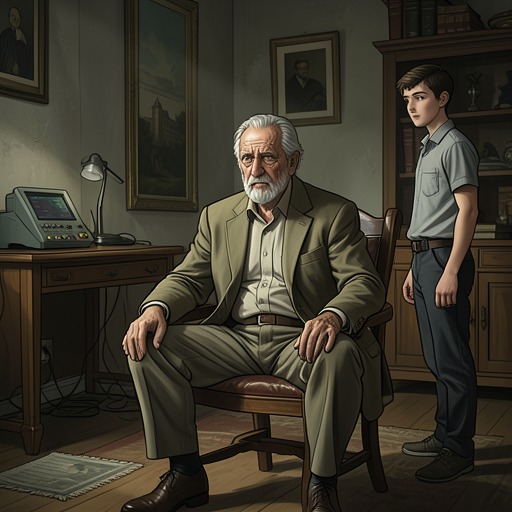
The family later enters a less congenial period when Don Vito Corleone announces his semiretirement and Michael Corleone takes over the Family business. The succession is not automatically hereditary; powerful caporegimes such as Peter Clemenza and Salvatore Tessio might otherwise have expected to become Dons or to establish independent Families. The earlier shooting is what makes this question unavoidable. Once the old Don is physically diminished, the family must decide whether his authority can be inherited, institutionalized, or challenged.
By the end of the story, Michael Corleone has secured a position from which the Corleone Family becomes unchallengeable. After a year of political maneuvering, he closes the New York operation and relocates the family’s center of gravity toward Las Vegas, while Peter Clemenza leads his own Family, Rocco Lampone serves as Corleone caporegime, Albert Neri controls security for the family’s Nevada hotels, and Tom Hagen remains part of Michael’s Western Family. The shooting therefore has consequences far beyond Don Vito Corleone’s wounds. It is the violent interruption that makes the old order unstable and clears the narrative path toward Michael Corleone’s national dominance.