Sicilian Mafia social order
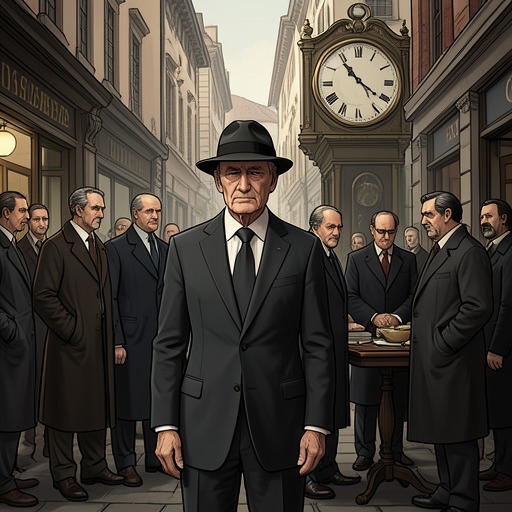
The GodfatherSicilian Mafia social order is a parallel social and political order built around protection, personal loyalty, enforced silence, and private justice. Its decisive significance is that it does not appear merely as criminal organization: it becomes an alternative government for people who distrust or fear the official one, while gradually reproducing the very hierarchy, extraction, and violence from which it claims to protect them.
Origins in Sicily
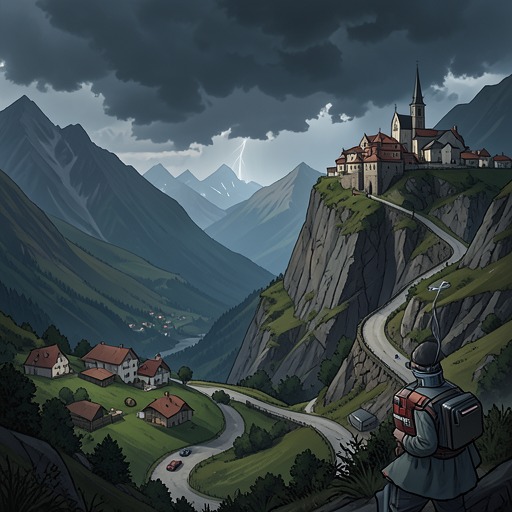
In the world of Vito Corleone’s childhood, the Mafia is described as more powerful than the official government in Rome. Vito’s father becomes involved in a feud with a villager who appeals to the local Mafia. When Vito’s father refuses to submit and kills the Mafia chief in a public quarrel, Mafia gunmen answer by killing him with lupara blasts. They then decide that his twelve-year-old son is old enough to become a future avenger, forcing Vito into hiding and exile. His escape to America, and his adoption of the name Corleone after his native village, place the social order of Sicily at the beginning of his personal and institutional history.
The Sicilian system grows out of a history of domination. The Inquisition, landowning barons, princes of the Catholic Church, and police identified with those powers have subjected rich and poor alike to arbitrary authority. In that setting, the word Mafia is explained as having originally meant a place of refuge before becoming the name of a secret organization formed to resist rulers who had crushed the country and its people. The system’s appeal therefore rests on a contradiction: it is born as an underground defense against oppression, yet its power depends on making itself indispensable through fear.
Protection, justice, and silence
Because official justice is not trusted to arrive, people turn to the local capo-mafioso in emergencies. He functions as a social worker, district captain, provider of food and employment, and protector. This is the social basis of the Mafia’s authority: a person who cannot obtain help from the state can seek a patron who will intervene directly and decisively. The same logic appears in New York when Amerigo Bonasera, after spending years trusting American law and order, sees the legal system fail to punish the men who attacked his daughter. His hatred leads him to abandon confidence in the courts and seek justice from Don Vito Corleone.
The order also depends on Omertà, the law of silence. A population that has learned that expressing anger or issuing threats can provoke immediate reprisal protects itself by refusing to become vulnerable through speech. The gravest Mafia offense is informing the police about the identity of an assailant. Even a woman whose husband, child, or daughter has been murdered or assaulted is expected not to name the culprit. Silence is therefore more than an operational rule; it becomes a collective ethic, described as a religion of the people. It preserves the underground community while preventing victims from appealing to the official authorities.
Don Vito Corleone carries this reciprocal structure into America. Anyone may come to him for help, whether or not the person is already his friend or can repay him materially. The petitioner must instead proclaim friendship, after which the Don takes the trouble to heart and accepts the respectful title of Don or Godfather. Gifts such as homemade wine or peppered taralles acknowledge the resulting debt. The arrangement appears charitable, but it creates a durable obligation: the recipient understands that the Don may call upon him later for a small service. Protection is thus exchanged for loyalty, recognition, and future access to the protected person’s labor or influence.
Organization and controlled violence
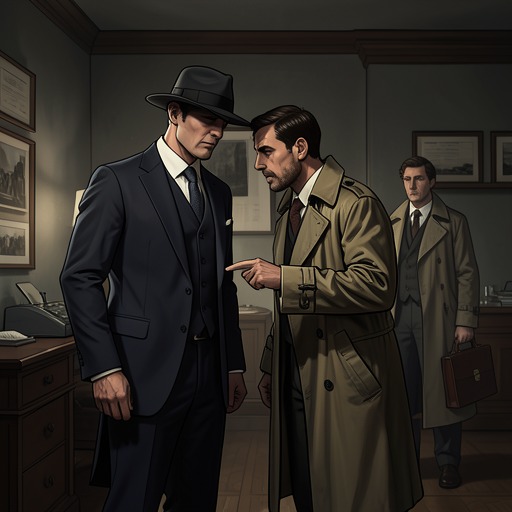
The social order becomes durable because it is organized rather than merely charismatic. In the Corleone Family, Vito Corleone divides authority among Genco Abbandando as Consigliere and Peter Clemenza and Salvatore Tessio as caporegimes, with soldiers beneath them. He separates operational layers so that orders travel through buffers and no single subordinate knows the entire chain. An instruction concerning the punishment of the men who attacked Amerigo Bonasera’s daughter passes privately from the Don to Tom Hagen, from Hagen to Clemenza, and from Clemenza to Paulie Gatto. The final executors do not know who originated the order or why it was issued. The structure protects the center by making responsibility difficult to trace and by allowing a compromised link to disappear.
The appointment of Tom Hagen as Consigliere also reveals how tradition can be adapted without being abandoned. The position had conventionally been reserved for a full-blooded Sicilian who understood Omertà, yet Don Corleone chooses Hagen because he has been raised as part of the family and possesses the Don’s complete confidence. Hagen becomes counselor, right-hand man, auxiliary brain, close companion, and keeper of nearly every secret. The appointment changes the traditional rule while preserving its essential demand: absolute faithfulness.
Vito’s earlier expansion follows the same pattern. He protects Italian families who operate small speakeasies, develops police and judicial contacts, and creates a monthly list of officials receiving payments. When an attorney worries about the expense, Vito insists that every potentially useful official be included because he believes in showing friendship first. As the organization grows, he gives the caporegimes defined territories and restricts their opportunities to conspire together. Salvatore Tessio receives a free hand in Brooklyn, while Clemenza’s activities in the Bronx remain more closely supervised because Clemenza is regarded as braver, more reckless, and crueler. Security is therefore achieved through both personal trust and deliberate separation.
From neighborhood patronage to alternative government
The Great Depression enlarges Don Corleone’s authority because official institutions leave honest workers without work and force proud families to accept humiliating charity. His men continue to walk with money in their pockets and without fear of losing their jobs. When an employee is imprisoned, his family receives a living allowance; if he remains silent, he can expect a welcome, food, money, and support when he returns. This generosity protects the organization as much as it helps the household. A prisoner understands that silence preserves his family’s welfare and his own future, turning material care into a mechanism of discipline.
Don Corleone’s influence consequently moves beyond crime into social and political representation. He helps people obtain relief, find employment for a son, escape jail, borrow urgently needed money, or resist landlords demanding rent from unemployed tenants. He also helps talented boys from poor Italian families attend college, anticipating that they may become lawyers, assistant district attorneys, or judges. The people he assists later seek his advice about candidates for state, city, and congressional offices, making him a political power consulted by practical party chiefs. His organization is not simply outside the state; it cultivates contacts within the state and prepares a network of educated officials who may owe their opportunities to him.
The repeal of Prohibition threatens this empire, but Vito responds by seeking an equal partnership with Salvatore Maranzano, who controls gambling, shylocking, bookmaking, illicit poker houses, and Harlem’s numbers racket. Vito offers police and political protection in exchange for expansion into Brooklyn and the Bronx. When Maranzano rejects the proposal, conflict follows, and the later order is shaped by the need to prevent renewed war. By 1939, Vito has traveled among underworld organizations in Los Angeles, San Francisco, Cleveland, Chicago, Philadelphia, Miami, and Boston, building an agreement that preserves each organization’s authority over its own city while enforcing peace and defining spheres of influence.
World War II demonstrates the reach of this alternative government. With the underworld at peace, the Corleone Family participates in black-market food and gasoline stamps, travel priorities, war contracts, and the acquisition of scarce materials for clothing firms. It also arranges for eligible organizational members to avoid military service through medical advice or draft-exempt industrial positions. The Don’s world is protected and economically prepared even while men who trust official law and national duty die abroad. His own son, Michael Corleone, refuses such assistance and volunteers for the United States military, exposing a conflict between family obligation and civic allegiance.
Contradictions and historical development
The Sicilian model is not static. Don Tommasino represents an older Mafia order: he serves as a gabbellotto, protecting a noble estate from poor peasants’ claims, controlling local water rights, and blocking government dams that would make water cheaper. He refuses involvement in drug trafficking and prostitution, unlike younger Mafia leaders in Palermo influenced by American gangsters. His authority combines land protection, economic control, and violence, but it still retains boundaries that distinguish it from the newer, more openly commercialized form of organized crime.
Michael Corleone’s exile allows him to recognize the roots of his father’s character and destiny. In Sicily he learns why men choose thieves and murderers rather than legal society: poverty, fear, degradation, and official cruelty make submission intolerable to a person of spirit. Yet Michael also discovers that the Mafia has become the illegal arm of the rich and an auxiliary police force for the legal and political structure. It imposes its own taxes on every kind of business, including small enterprises. The Robin Hood image remains socially powerful, but the system has become a degenerate structure that protects property and hierarchy as readily as it protects the poor.
This contradiction returns in Don Corleone’s public appeal for peace after the death of Santino Corleone. He declares that the families should manage their own affairs and resist outside meddlers, while promising that no one will be attacked without just cause and utmost provocation. He renounces vengeance for the common good and accepts commercial sacrifice to end the war, but simultaneously reserves the right to arrange Michael’s safe return by finding the real culprits, changing official testimony, or persuading authorities of his son’s innocence. The language of collective peace therefore contains a private claim of sovereignty: family justice is presented as legitimate because the state is portrayed as an external power serving its own interests.
Legacy and transformation
The order survives its Sicilian origins by becoming increasingly bureaucratic, territorial, and political. Its organization uses ranks, buffers, territories, informants, police contacts, and negotiated agreements, while its emotional vocabulary remains that of friendship, honor, family, and debt. This combination lets it appear personal even when it operates on a large scale. Loyalty is intimate, but enforcement is systematic; charity is genuine in its effects, but inseparable from future obligation; peace is valuable, but maintained through the credible threat of violence.
By the end of the novel, Michael Corleone’s victory and political maneuvering make him the most powerful Family chief in the United States. The Corleone Family becomes unchallengeable, with Clemenza heading his own Family, Rocco Lampone serving as Corleone caporegime, Albert Neri directing security for the Family-controlled hotels in Nevada, and Tom Hagen joining Michael’s Western organization. Michael closes the New York operation and divides his life between the Long Beach headquarters and a new home in Las Vegas before bringing the family East for a final visit. The Sicilian social order has not disappeared; it has migrated into a more expansive, disciplined, and commercially oriented structure whose authority now reaches across cities and into the sphere of legitimacy.