Virgil Sollozzo
The GodfatherVirgil Sollozzo, known as “the Turk,” is a narcotics entrepreneur whose attempt to secure the Corleone Family’s money, political protection, and distribution network precipitates the first great rupture in the family’s power. He presents himself as a disciplined businessman seeking a place in a changing economy, but his refusal to accept Don Corleone’s decision turns negotiation into conspiracy, war, and assassination. His death at Michael Corleone’s hands marks the moment when Michael ceases to be merely the family’s civilian son and becomes an active instrument of its violence.
Identity and Position
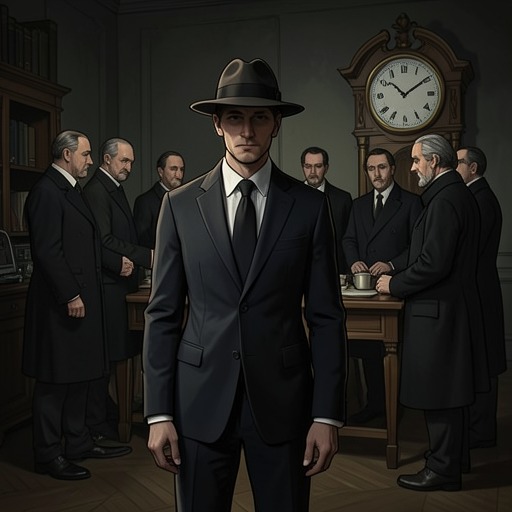
Virgil Sollozzo is described as powerfully built and medium-sized, with a dark complexion, a prominent nose, cruel black eyes, and an impressive dignity. His appearance could pass for that of a true Turk, which supports the nickname by which he is widely known. The title also reflects his history: he has spent considerable time in Turkey, is reputed to have a Turkish wife and children, and has connections to the poppy-growing regions from which his narcotics operation begins.
He is not simply a subordinate of the Tattaglia Family. He is described as his own boss, a competent operator with two prison terms behind him, one in Italy and one in the United States. His reputation includes an earlier facility with a knife, though the narrative distinguishes his violence as businesslike rather than random. He is also presented as a family man with an American wife and three children. That domestic identity does not make him harmless; it explains the terms on which he accepts danger. He will endure a criminal charge if he knows that his family will receive enough money to live securely.
The Narcotics Proposal
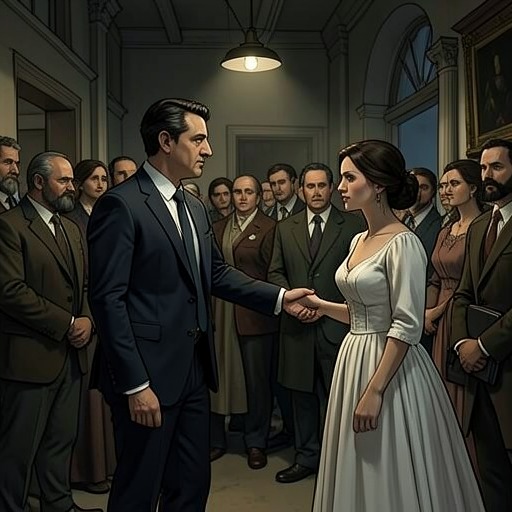
Sollozzo approaches Don Corleone after the wedding of Constanzia Corleone, seeking at least one million dollars in financing and some form of immunity from law enforcement. His network reaches from Turkey, where the poppy is grown, through Sicily, where the product can be processed into morphine or heroin, and finally into the United States, where the unresolved problems are importation, distribution, and initial capital. The Tattaglia Family vouches for him and may share in the profits.
The proposal is attractive because the profits are enormous, but it threatens the structure that has made Don Corleone powerful. Sollozzo wants money and protection in exchange for a share of an enterprise whose risks are not confined to the narcotics trade itself. Don Corleone’s political friends tolerate gambling as a relatively harmless vice, but would withdraw their support if his organization became publicly identified with drugs. Sollozzo’s business therefore demands not only investment but a redefinition of the family’s public and political position.
Don Corleone refuses. He explains that narcotics could damage his other interests and that he will not endanger the livelihoods of his family members merely out of greed. The refusal is carefully framed as a judgment about risk rather than a moral condemnation of how Sollozzo makes his living. Yet the distinction offers Sollozzo no practical escape: without the Corleone Family’s cooperation, his operation lacks the money and protection needed to enter the American market.
The timing of the refusal is itself significant. Before the meeting, Don Corleone makes clear that Sollozzo can no longer be postponed and must be seen during the week. After the wedding, the Don agrees to see him whenever Tom Hagen chooses. Hagen understands that the answer will be no and that the Don expects this answer to cause trouble. Sollozzo is thus introduced not as a sudden criminal apparition but as a pressure already gathering beneath the family’s ceremonial order.
Alliance, Betrayal, and War
Sollozzo does not treat the refusal as the end of a negotiation. When he later speaks to Michael Corleone in Sicilian, he claims that the conflict with Don Corleone was strictly business and that he respects the older man. At the same time, he calls Don Corleone old-fashioned and says that narcotics is the coming business, with untold millions available to everyone willing to participate. His language turns opposition into an accusation of historical backwardness: the Don is not merely cautious, but an obstacle to progress.
He also reveals the breadth of his support. He says that all the New York families have given him silent backing and that the Tattaglia Family has become his partner. In his account, the Corleone Family would stand alone if the quarrel continued. He proposes a truce in which the Tattaglia Family will forgo justice for Bruno Tattaglia while Sollozzo continues his narcotics business without asking for Corleone assistance, only for noninterference. The offer presents coercion as compromise: Sollozzo seeks to preserve the gains created by violence while making Michael responsible for accepting the new balance of power.
Sollozzo’s confidence depends on his estimate of the Corleone succession. He regards Don Corleone’s illness as decisive, judges Santino Corleone incapable of matching his father, and dismisses Tom Hagen as inferior to Genco Abbandando. His strategy therefore aims at the family’s leadership structure as much as at its business interests. The attack on Don Corleone is intended to remove the one figure whose authority can block the narcotics alliance, while the subsequent pressure is designed to force the remaining family into an agreement.
The wider consequence is the Five Families War. The conflict becomes expensive for both sides, while the murder of Captain McCluskey brings unusual police pressure upon every organization involved. The Corleone Family’s gambling and numbers operations suffer raids, arrests, and financial losses. After Sollozzo’s death, Tom Hagen plants newspaper stories connecting Sollozzo and McCluskey and documenting the captain’s receipt of large sums of cash. The police come to regard McCluskey as a rogue officer involved with murder and drugs, weakening the public justification for the alliance that Sollozzo had helped create.
The Assassination
Sollozzo’s final scene takes place in a restaurant where he meets Michael under police protection. He speaks rapidly in Sicilian, insisting that the dispute is business and offering his version of a peace settlement. Michael listens while Captain McCluskey eats veal and spaghetti, but the pressure of the moment has made Sollozzo’s words meaningless to him. The conversation has ceased to be a negotiation; it is the brief interval before a decision already made.
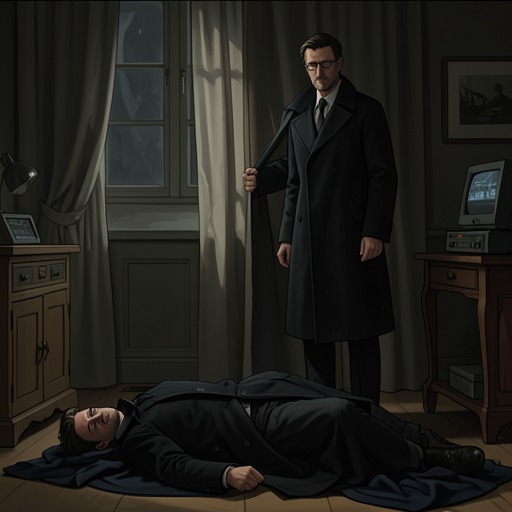
Michael’s gun has been hidden in the restaurant bathroom and placed within reach before the meeting. As Sollozzo leans toward him, Michael unbuttons his jacket and moves his right hand to the weapon at his waistband. When a waiter turns Sollozzo’s attention aside, Michael shoves the table away, thrusts the gun almost against Sollozzo’s head, and fires. The shot kills Sollozzo immediately, striking between the eye and ear. The violence is sudden, close, and irreversible, converting Sollozzo’s demand for a modern business alliance into the act that permanently changes the Corleone Family’s history.
Michael then turns the weapon on McCluskey. The first shot wounds the captain in the throat; the second passes through the top of his skull. Sollozzo’s death cannot be separated from the killing of the corrupt police officer, because McCluskey’s protection had made the meeting possible and his presence had made any ordinary response politically dangerous. By killing both men, Michael removes the immediate threat but also becomes a fugitive whose action guarantees his exile from the United States.
Narrative Significance
Sollozzo functions as the figure through whom the old and emerging economies collide. Don Corleone’s power rests on gambling, political friendships, labor contacts, favors, and a reputation for controlled judgment. Sollozzo offers a more dangerous expansion based on narcotics, international supply, enormous profits, and the willingness to reorganize alliances through force. His proposal reveals that the family’s system of protection cannot remain insulated from changing markets and rival coalitions.
His relationships are consequently transactional but embedded in wider networks. The Tattaglia Family provides political and organizational backing; the other New York families supply silent support; police protection makes his meeting with Michael possible; and the Corleone Family remains the missing source of capital and legitimacy. His failure shows that influence is not the same as control. Sollozzo can assemble partners, threaten the Corleones, and invoke peace, but he cannot compel Don Corleone to lend his name to a business the Don considers too dangerous.
Sollozzo also serves as the immediate catalyst for Michael Corleone’s transformation. Michael had returned from military service, entered Dartmouth College without consulting his family, and tried to live outside his father’s world. Sollozzo’s attempt to eliminate Don Corleone and control the family forces Michael into the hospital, into the negotiations, and finally into murder. The assassin’s death is therefore both Sollozzo’s defeat and the success of his deepest unintended effect: he creates the crisis that draws Michael irreversibly into the Corleone Family.
The character’s final irony is that he claims to represent progress while reproducing the most primitive logic of power. He speaks of markets, future profits, and efficiency, yet his proposal depends on intimidation, alliance, hostage-like pressure, and the removal of an obstacle by violence. The narrative does not make him a simple embodiment of evil; it gives him competence, dignity, family obligations, and a coherent business argument. But those qualities make his collapse more revealing. Sollozzo is a serious man operating in a serious world, and that world treats every negotiation as a test of whether a rival can still be permitted to live.