Anita Cavanagh’s alcohol misuse
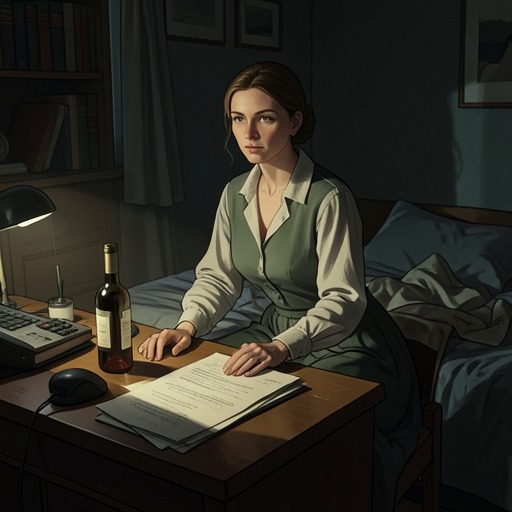
The GodmotherAnita Cavanagh’s alcohol misuse is a recurring, partly concealed means of coping with domestic exhaustion and the life she feels she has surrendered. The novel presents it not as an isolated lapse but through repeated acts of planning, concealment, and return: a drink taken alone before noon, another poured after the children are settled, and a later attempt to obtain vodka without Rachel Elliot knowing. Each offers a brief interval of relief, while leaving intact the pressures from which Anita wants escape.
Pattern and Immediate Circumstances
Anita’s drinking appears amid the noise and disorder of caring for the twins. While trying to write a witty feature about London leisure centres, she watches them paint the kitchen walls as well as their paper; the rain and a muddy garden compound the sense of being hemmed in. She looks forward to nursery school as a release from the relentless mornings. When the children begin painting one another, Anita checks the clock and decides that a drink before noon will do no harm. She goes to the utility room, takes a tumbler from the dishwasher, and pours wine from a box kept above the washing machine. Alone beside the spinning laundry, she takes several quick sips and savours a few seconds’ peace.
The respite is temporary. After the twins have been bathed and are splashing among plastic vehicles, Anita returns to the kitchen and refills her glass before calling Rachel. She describes the painting episode and admits that, without Rachel, she thinks she would lose her mind. Her guilt about leaving the children unattended in the bath makes her talk rapidly; as she speaks, Rachel’s imagined composure prompts Anita to take another gulp. The scene connects drinking to both the practical grind of childcare and the self-consciousness Anita feels beside a friend she regards as successful, kind, and steady.
Concealment, Friendship, and Relapse
When Anita visits Rachel on another occasion, she refuses an embrace and explains that she has a severe head cold. She says whisky and painkillers are the only things keeping her going and attributes the week-long illness, uncertainly, to chickenpox. Rachel keeps her distance at first, then wonders whether the illness is an excuse for self-medication. She notices that Anita’s handkerchief looks unusually clean and suspects that drinkers, particularly those who have lapsed, can be cunning; nevertheless, affection softens her suspicion, and she offers supper and a drink if Anita wants one. The scene leaves the explanation unsettled: Rachel suspects concealment, but the narration does not establish that Anita’s illness is fabricated.
The evening’s drinking gathers momentum. Rachel, who had not intended to drink heavily, crosses into the same indulgence and finds Anita an especially effective drinking companion. Anita can reach a state of happy intoxication and remain there for a while before falling into a less happy drunkenness. They finish one bottle of wine and open a second. That shared ease is shadowed by how quickly alcohol becomes part of their exchange: friendship supplies companionship, but also a setting in which drinking continues rather than being challenged.
The argument that follows turns to Rachel’s private hopes about having a child. Anita warns that motherhood can consume independence and leave a woman torn between work and the compulsion to stay home. Rachel answers sharply, and the two friends wound each other before apologising and embracing. Anita says she wants to protect Rachel from being crushed; Rachel, regretting her own cruelty, resolves to keep future hopes private until they become real. As Anita leaves, she says she is going to buy cigarettes and will take a taxi home. At the same time, she plans to buy something stronger and take a couple of swigs before bed. Her thanks for vodka’s famous undetectability makes the concealed purpose plain, even as the reconciliation between the friends appears sincere.
Pressures Behind the Drinking
The narrative places Anita’s drinking within a longer history of accommodation and disappointment. Her early ambition was to rise from writing for Campaign to greater journalistic work, but her relationship with Giles Cavanagh repeatedly took precedence. She chose to accompany him abroad rather than accept regular work in London, first out of infatuation and later from fear that he would leave her. As a freelance writer without a speciality who was often away, she gradually received less work. The account links her present frustration to a career diminished through choices made to sustain the marriage, rather than presenting it as a problem detached from her circumstances.
Motherhood deepens that sense of constraint. Anita was desperate to fill the disappointment left by her faltering career when she had her first child, but found motherhood both consoling and unexpectedly enslaving. The first baby’s colic lasted four months, while Giles could continue travelling to dangerous assignments at short notice. Anita decided to have a second child partly because she had suffered as an only child herself; the unexpected pregnancy with twins brought Giles home to work for a time, but it also contributed to an enduring contest over whose burden was greater. A large mortgage on their dilapidated Camden maisonette left little room for paid help or other comforts. These details make the small private drink legible as an attempted pause within a life structured by care, financial limits, and marital resentment.
Significance and Limits of Relief
Anita can describe the costs of motherhood with force, but her account is complicated by her attachment to her children. She says she loves them and would die for them, even while warning Rachel that a child could take away independence and produce guilt whenever a mother leaves. Her experience is therefore not a simple rejection of maternal love: affection and exhaustion coexist, as do gratitude for her family and the feeling of being ensnared by its demands. Alcohol enters that contradiction as accessible, hidden relief, not as a solution.
The drinking also complicates the friendship that might otherwise help Anita regain perspective. She turns to Rachel for support and values her objectivity, but drinks alone before making the call, then later drinks alongside her. Rachel’s suspicion about the supposed cold and Anita’s concealed plan to obtain vodka show that the friends’ intimacy does not eliminate secrecy. Across these episodes, Anita’s private drinking moves from a hurried midday refuge to an undisclosed intention after a shared evening. The recurrence suggests a coping pattern, while the novel stops short of supplying a clinical diagnosis or claiming that every mention of alcohol has the same cause.