Charlotte
The GodmotherCharlotte, the first child of Anita Cavanagh and Giles Cavanagh and the goddaughter of Rachel Elliot, is a lightly depicted but significant presence in the family lives around her. Her birth coincides with a turning point in Anita’s ambitions, while her relationship with Rachel gives the novel a tender, practical view of godmotherhood: it is expressed not only in affection, but in offers of time and care.
Identity and Family Background
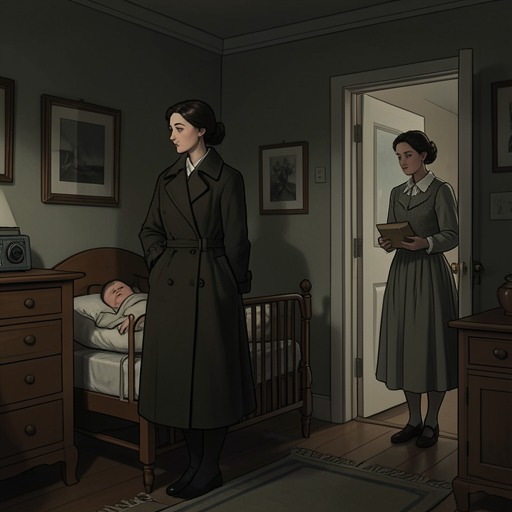
Anita had Charlotte at thirty-three, after her journalistic career had dwindled as she repeatedly chose to accompany Giles rather than take regular work in London. Motherhood consoled Anita for that disappointment, but also brought demands she had not anticipated. Charlotte’s colic, with three-hour bouts of crying that continued for four months, made the early months exhausting. Anita’s experience of raising her first child informs the novel’s unsentimental attention to care: love and consolation coexist with fatigue and a sense of being tied to the work of childcare.
Charlotte later becomes an older sister when Anita and Giles have twins. Their arrival deepens the pressure on a household already shaped by Anita’s curtailed career and the parents’ competing claims about who is suffering more. The twins’ care occupies much of Anita’s daily life, while Giles’s ability to travel for work highlights the unequal distribution of family responsibilities. Charlotte’s place in this family is therefore established both through her own early infancy and through the changing demands of a growing household.
Relationship with Rachel Elliot
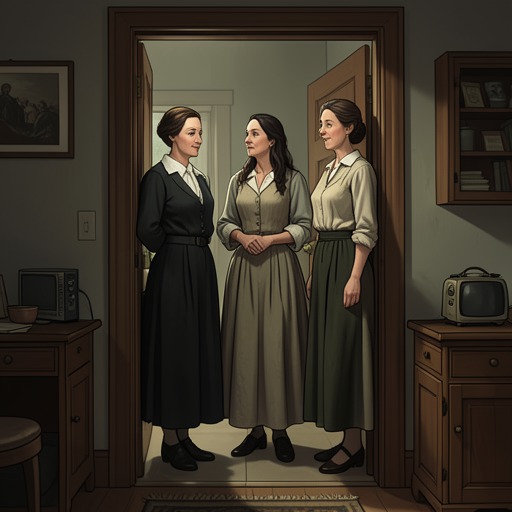
Rachel is Charlotte’s godmother, and the bond is shown through their ordinary interactions rather than ceremonial occasions. When Anita tells Rachel that work has begun to come in again but that she needs reliable childcare, Rachel tentatively offers to help. She makes clear that she may not be ready to take on the twins, but would like to spend more time with Charlotte. The offer turns Rachel’s affection into a concrete form of support for her friend and her goddaughter.
In a later scene, Rachel is returning Charlotte after an outing to the cinema. Rachel jokes that she is not accustomed to monsters and asks whether Charlotte will hold her hand if the film is frightening. Charlotte answers with practical reassurance: the monsters are not real, but people dressed up. The exchange reverses the expected roles for a moment, with the child calmly explaining make-believe to the adult, and conveys the ease and warmth between them.
Childhood in the Domestic World
Charlotte also appears in a brief domestic incident involving Mrs Hershey, a neighbour. She reports that Mrs Hershey is asleep, explaining that she has poked her but received no response and can hear her snoring. An adult tells Charlotte to tiptoe back to bed. The small episode presents her through a child’s matter-of-fact account of what she has noticed; the scene does not elaborate on the circumstances, but gives her a distinct moment of observation and speech.
Elsewhere, Anita’s difficult days with the twins place Charlotte within a household where childcare is constant and privacy scarce. The kitchen-painting episode, for example, concerns the twins rather than Charlotte: they cover the paper and reachable parts of the walls with paint while Anita struggles to work. That distinction matters to Charlotte’s limited characterization. The story makes her part of the family context surrounding these pressures without assigning her actions or experiences that belong to her younger siblings.
Narrative Role
Charlotte’s appearances connect Anita’s account of motherhood with Rachel’s role as a friend and godmother. Her birth marks the start of Anita’s experience of the demands of parenting; Rachel’s offer to help with her care shows friendship becoming practical assistance; and their later cinema outing gives that relationship a light, affectionate scene. Charlotte is not given an independent plot arc in the available episodes. Instead, she serves as a child with small, specific moments of her own, and as a point of connection between two adult women negotiating work, family life, and care.