Joy Dalton
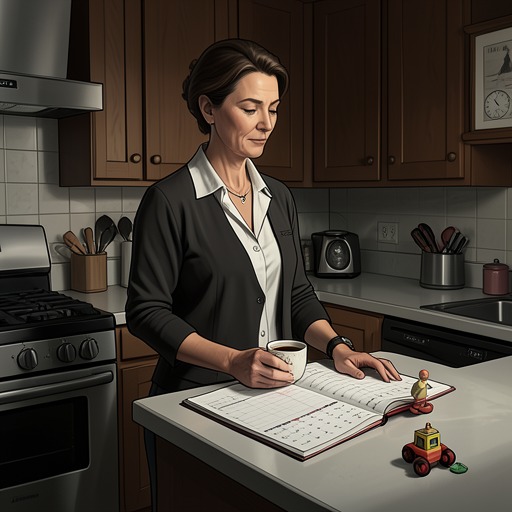
The GodmotherJoy Dalton is Rachel Elliot’s longtime friend, a mother of three, and Leo’s mother and Rachel’s godson’s parent in a family that has relocated from London to France. Her reunion with Rachel at Leo’s christening gives the novel a close view of the comforts and strains of family life: Joy presents the move as a long-worked-for success, while Rachel notices how little she now knows of her friend and how unexpectedly intimate the baby feels in her arms.
Friendship and the Christening
Joy and Rachel’s friendship began at an old-fashioned boarding school, where they shared the experience of having fathers in the armed forces. By the time Rachel visits for Leo’s christening, however, the friendship has thinned into occasional dinners and evenings at the theatre. The distance is partly practical—Joy now lives in France, while Rachel’s home and work are in Chelsea—but Rachel also feels that her friends’ marriages have diminished the intimacy she can sustain with them. At the christening, Joy’s gratitude for Rachel’s journey and for her agreement to become Leo’s godmother affirms the history between them even as Rachel privately wonders whether she still knows Joy well.
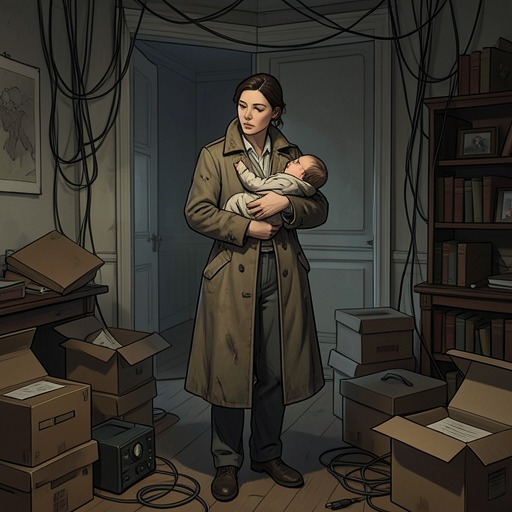
When guests urge Rachel to hold the baby, the yellowing silk and cobwebbed lace of his christening clothes arrive with him as he is passed around the room. Rachel approaches the bundle warily, as though she has been asked to speak a foreign language. But Leo grips one of her buttons with hungry force, and Rachel lets the tug continue. When Joy takes him back, his fingers hold on until they are pulled free. The small physical exchange unsettles Rachel’s assumptions: she is surprised by the force of the contact and by her own response to it.
Building a Life in France
Joy describes the move to France as the fulfilment of a shared ambition. Her husband had had enough of London’s architectural scene; in France, he can work for himself, converting barns, and has already built useful local connections and acquired more work than he can manage. Joy is enthusiastic about his plans for their house and expects friends and relatives to visit. She also reports that the children are adjusting to their school: one is already speaking like a local, while another is taking longer to find his feet. Leo, she jokes, is content so long as he is fed and kept dry.
Joy’s cheerful account ranges across the family’s prospects, from work and the house to the children’s adjustment. Rachel notices that Joy has described everyone’s happiness but her own. That gap does not prove that the move has failed; Joy presents it as something she and her husband have wanted and worked toward for years. Instead, the moment shows the difference between Joy’s confident account of the family’s new life and Rachel’s awareness that a catalogue of practical successes cannot disclose everything a person feels.
Winter, Children, and Correspondence
In a later letter, Joy thanks Rachel again for coming to Leo’s christening and writes that Christmas is approaching. The family has now experienced a French winter, whose persistent rain reminds the British residents of home. Joy says that there is a sizeable English community nearby. Although the family has not abandoned its resolution to integrate with French neighbours, she admits that there is comfort in sharing familiar complaints with people who miss the same things and know how to make decent tea. The children dislike the local milk, using it as an excuse to heap sugar on their cornflakes.
The letter’s most immediate strain is Leo’s appetite and care. Joy says he is enormous and demanding, wakes her at least three times a night, and refuses formula, leaving her to wander around with her buttons undone. She admits that this is beginning to get her down, particularly as winter sets in. Her lightly comic speculation that late-born children may be more difficult—and may also be geniuses—does not erase the exhaustion; it gives her a way to write about it to Rachel. The letter therefore extends the christening scene’s contrast between the abstract idea of a happy family and the bodily, repetitive work of caring for a baby.
Narrative Role
Joy’s scenes are framed through Rachel’s attention: the baby’s grip, Joy’s practised ease as she rocks him, and the brightness with which she explains the family’s decision to move. These details make Joy more than a marker of domestic life. Her circumstances give Rachel a point of comparison as Rachel begins reconsidering her own priorities and the possibility of having a child. Joy’s story is not presented as a simple answer to Rachel’s doubts. The move is a genuine ambition fulfilled, but its practical realities include isolation from familiar comforts, a wet winter, and interrupted sleep; the friendship is real, but time and distance have made it less intimate. Through that combination, Joy’s family life helps bring Rachel’s unclassifiable dissatisfaction—and her changing response to motherhood—into focus.