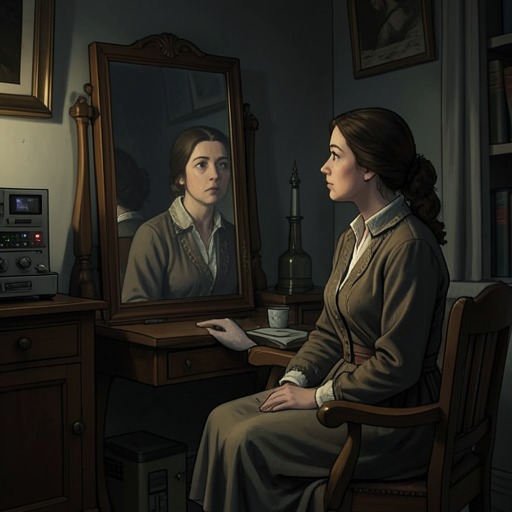
Nathan Kramer
The GodmotherNathan Kramer is a divorced economist whose relationship with Rachel Elliot turns on a question she frames as practical and he experiences as profoundly personal. Initially drawn to Rachel’s confidence, he later discovers that her determination to become a mother has not included serious consideration of what the decision would mean for him or for their relationship. His refusal makes that gap impossible to ignore.
Identity and Background
Nathan has recently emerged from a difficult marriage to a fellow economist. He and his former wife were both forceful personalities, and their egos clashed too strongly for the marriage to succeed. They still meet for lunch when business brings her to New York. The encounters remain civil, but seeing her stirs a physical response in him; memories of the domestic strain that ended their marriage temper the attraction. His history therefore includes both an ongoing connection to his former wife and a clear recollection of why their life together became untenable.
Nathan is attentive to confidence in others. He likes powerful women whose bearing reflects self-assurance, a preference that helps explain his immediate interest in Rachel. Yet his past also gives that preference a complication: he is attracted to strength, while remembering how two strong egos could become a source of conflict in marriage. The evidence presents this as his experience of one particular relationship, not as a settled judgment about confident women generally.
Meeting Rachel and Renewed Interest
Nathan first catches Rachel’s attention at a gathering in Washington, D.C., where she has come for her nephew Craig’s christening. She is eager to leave the family visit and return to her newly painted Chelsea flat, but Nathan’s arrival proves an unexpected pleasure. He approaches her directly, confident enough to introduce himself to the woman he considers the most attractive at the party. Rachel responds with interest, though she remains cautious.
That caution has a history. Rachel has had several sexual relationships, but none has been long-term since Robbie Dexter, whom she left nine years earlier. She is busy with work and wary of the self-reproach that can follow intimacy. Nathan, meanwhile, presents himself as newly available after his marriage and is visibly attracted to her. Their first encounter thus begins with mutual interest, but not identical ease: he treats the attraction as an opening to pursue, while she measures it against her independence and past experience.
The Relationship in Practice
At a later meeting, Nathan is jet-lagged, hungry, and trying not to drink before a planned dinner and a trip to Berlin the next day. Rachel has called to explain that she is running late, but he remains annoyed as he waits and reads the front page of the New York Times. When she arrives, alert and self-possessed, his irritation gives way to renewed attraction. Her late arrival is connected to office politics, and she suggests they have a drink before dinner.
The episode shows the importance Nathan places on Rachel’s presence: the practical inconvenience has not disappeared, but seeing her changes his response. It also echoes his stated preference for women whose confidence is apparent in their body language. His interest is not simply an abstract appreciation of her independence; he is eager to be near her and wants the cool greeting she gives him to become more intimate. At the same time, his memory of the failed marriage remains a counterweight to romantic momentum, a reminder that attraction alone does not settle what a relationship can sustain.
Rachel’s Request and Nathan’s Refusal
The sharpest test comes when Rachel asks Nathan to help her have a child. She has decided that she wants to become a mother as soon as possible and presents him with a specific proposal: she wants the act of conception, but intends to raise the child alone. She assures him that she would seek neither money nor parental commitment and offers to put those promises in writing. Her approach is earnest and considered from the standpoint of the life she wants to build, but it treats Nathan’s involvement as something that can be cleanly separated from the consequences of conception.
Nathan initially misunderstands the announcement as news that Rachel is already pregnant. When she corrects him and explains the proposal, he objects to being included in it. His central concern is not merely that she wants a child; it is that she appears to expect their relationship to continue unchanged after he fathers one. He tells her, in effect, that she has not considered his feelings or what the decision would do to their connection. Rachel is overwhelmed by the force of the criticism and recognizes its truth: she has not really thought about him in making the plan.
Nathan leaves rather than accept the arrangement. As he goes inside, he says that he is sorry she has done this, and his departure makes the immediate consequence plain: the request has altered the relationship, despite Rachel’s assurance that she would manage parenthood independently. The scene does not resolve the broader question of Rachel’s wish for motherhood; it establishes that Nathan will not treat his role as a consequence-free favor.
Character and Narrative Significance
Nathan’s part in the story brings the relational consequences of Rachel’s plan into focus. Rachel believes she can contain the consequences through advance assurances and a written agreement. Nathan’s response exposes what that practical framing leaves out: the personal meaning of becoming a biological parent and the likely effect on an existing relationship. His objection is grounded in the history between them, not only in an abstract disagreement about parenthood.
He is also drawn with a tension that links his attraction to his caution. He seeks confident women, approaches Rachel because of her self-possession, and responds strongly to her arrival even after feeling inconvenienced. Yet the memory of a marriage undone by clashing egos makes him alert to the possibility that closeness carries costs neither party can simply dictate away. When Rachel’s plan asks him to accept a lasting consequence while remaining emotionally uninvolved, he refuses. The encounter marks a decisive limit in their relationship: Rachel’s desire is real, but it cannot make Nathan’s participation impersonal.