Pre-digital era
The GodmotherThe Pre-digital era is the technological and social backdrop Amanda Brookfield identifies for writing The Godmother, a period remembered through its limited communications technology and the continuing pressures faced by women at work and at home. In her 2023 foreword, she uses the distance between the novel’s composition and its rereading to contrast changed technology with problems that, in her view, have endured.
Communication and Technology
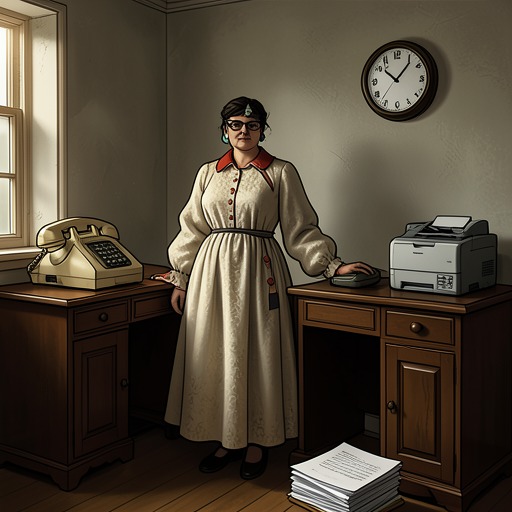
Brookfield recalls writing the novel more than twenty-five years before the foreword, when people used fax machines instead of email. Mobile phones were not yet commonplace: they were cumbersome office gadgets used by only a few. These details define the period through everyday working practices rather than through a precise calendar date, emphasizing how much the means of communication had changed by the time of her retrospective account.
Work and Writing
The period also shaped the novel’s professional setting. Brookfield drew on her own experience in advertising after university, describing it as a fun, well-paid career that was also highly stressful in a male-dominated workplace. She wrote the novel as her fifth, while in her mid-thirties and raising two very young children. Her account places creative work, paid employment, and young-family responsibilities alongside one another, without suggesting that any of them could be neatly separated.
Retrospective Perspective
Rereading the novel in 2023 made the passage of time feel like encountering a person once known: Brookfield felt affection for the work while also seeing its flaws. Yet she was struck that the difficulties confronting Rachel at work, in relationships, and in society had not really changed. In particular, she identified persistent expectations that women should avoid making a fuss and refrain from asserting themselves while also managing domestic and professional responsibilities. The Pre-digital era therefore functions not only as a marker of technological change but as a point of comparison that exposes the slower pace of social change.