Rachel Elliot
The GodmotherRachel Elliot’s defining conflict is between the self-sufficiency she has built and a desire for motherhood that first disrupts, then complicates, her confidence in that life. A formidable advertising executive who expects to control her choices, Rachel discovers that neither a successful career nor a carefully drafted timetable can make private longing predictable. Her changing answer is not a neat resolution: by the end of the available account, she is still unsure whether she wants to be a mother at all.
Identity and the First Disquiet
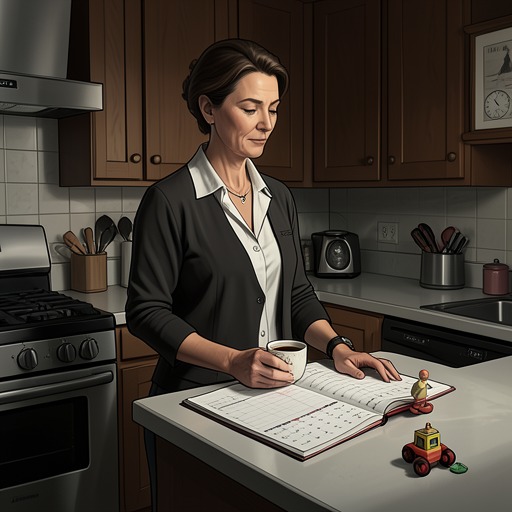
At thirty-nine, Rachel is a board director of an international advertising agency, earns more than a hundred thousand pounds a year, and has a luxurious flat in Chelsea, a soft-topped Audi, and a named parking space in the directors’ car park. She has successful campaigns and satisfied clients, as well as lovers, hobbies, friends, and good health. This abundance is not presented as false; it is precisely what makes the dissatisfaction that emerges so difficult for her to accommodate. Rachel is accustomed to regarding her life as evidence that she has made the right choices, and initially treats doubt as an unwelcome intrusion into a well-run system. At the christening of Joy Dalton’s baby, Leo, Rachel is asked to hold him as his godmother. The bundle is passed toward her with the awkwardness of an unfamiliar ritual, and Rachel watches Leo’s small hand close around the button of her suit jacket. She does not mind the tug. The moment unsettles the assumptions she has held about herself: she has long resisted the unspoken judgment that remaining single and pursuing a career instead of having children is a failure, and remembers that friends once openly pitied or questioned her choices. Now, as they have stopped expecting her to change, she finds that a new, difficult-to-name feeling is arriving from within rather than being imposed by them.
Motherhood Becomes a Plan
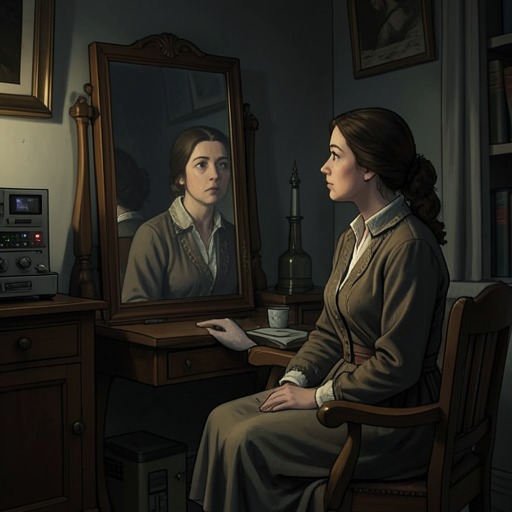
Rachel first tries to make the question answerable through logistics. After having sex with Nathan Kramer, she is acutely conscious of the condom as a barrier between sex and conception. When her period arrives, she feels reassured: she takes it as evidence that she could still have a child if she chose to, and tells herself that she is not yet forty, has money, and has a partner. Yet she also recognizes that her relationship with Nathan rests on limited common ground, including mutual respect and a shared love of chocolate-chip ice cream. The prospect of motherhood therefore exposes a mismatch between her new urgency and the relationship she has available. She turns desire into a schedule: Bermuda in November, pregnancy by December, a baby the following autumn, and three months of maternity leave. Later, she tells Nathan directly that she wants a child as soon as possible and asks him to provide the means of conception. She says she would raise the child alone, seek neither money nor parental commitment, and put the arrangement in writing. Nathan initially mistakes her request for news that she is already pregnant; Rachel corrects him and emphasizes that she knows he does not want children and that they do not have that kind of relationship. Her proposal makes her determination explicit, but its contractual language also shows her effort to contain a life-changing desire within terms she can control. That control does not hold. In Bermuda, an episode of acute anxiety leaves Rachel gasping in the dark, unable at first to attach her fear to any solvable problem. She identifies its source only broadly: getting older, less certain, and more alone. A week later, in Friday-night traffic on the way to a Christmas event for Mallarmé and McKenzie Cartwright, she thinks she has fallen out of love with herself. Motherhood has become a relentless thought, but the freedom to shape her life—once treasured as a privilege—now feels empty when she no longer knows what she wants from it.
Work, Vulnerability, and the Attempt to Regain Control
Rachel’s distress unfolds alongside a professional crisis. After the events at the Mallarmé weekend, she drives back to London through icy rain and goes straight to Alan Jarvis’s office, intending to turn the previous night’s horror to her advantage. The confrontation is part of a wider dilemma involving Cliff Weybourne; later, Rachel is still weighing her options at work and considering what to do about Cliff. She accepts a promotion to avoid burning bridges, but that decision does not settle her future. Instead, she describes her life as being on hold, with trips to Devon and time with Robbie Dexter offering relief from the pressure. At the same time, Rachel helps organize a breakaway advertising agency. She attends hurried, secret meetings with Jimmy and other prospective colleagues, approaches clients about the move, and hopes to take at least part of the Mallarmé account with her. A creative duo has verbally agreed to join, three media buyers have shown interest, and premises have been found. She even asks whether she could work part-time; Jimmy says the group would do anything to have her. These details show Rachel continuing to act decisively in business even while private certainty eludes her. Yet she struggles to concentrate on a campaign image of a tube of skin-tinted moisturizer lounging in sunglasses and a lilac bikini. The contrast between the demands of work and the question of what her life is for has become difficult to ignore.
Robbie Dexter and the Imagined Future
Robbie’s return connects Rachel’s present uncertainty to an earlier version of herself. During a sleepless night in Bermuda, she remembers him as part of the vibrant, confident person she once was. When he re-enters her life, he is thrilled but also frightened by the possibility of renewed pain. Rachel’s visits to Devon become important enough that, without them and without Robbie, she thinks she might have gone insane. Their renewed relationship offers closeness, but it also becomes entangled with her attempt to solve the question of motherhood. Their future begins to look workable: when Rachel considers leaving her agency, she tells Robbie about Jimmy Chartsworth’s offer, and Robbie encourages her to take it, despite disappointment, saying they can work things out. A troubling episode involving Polly Drayton and an old photograph also unsettles Rachel; Robbie explains that the photograph dates from when he and Polly were together and says he has burned it. They talk the matter through and make peace. But later, while recovering from an injured ankle, Rachel recognizes that she has mistaken an imagined future for a secure one. She thinks she has been trying to fill an emptiness that may have little to do with Robbie and perhaps not much to do with motherhood. Her effort to strategize life as though it were a work challenge has led her astray. This recognition does not erase her affection for Robbie; it changes what she understands their relationship can prove.
Change and Narrative Significance
Rachel’s uncertainty is sharpened by her connection with Will Raphael. During a portrait session, Will calls attention to the guardedness she presents to others, while she struggles to remain indignant and dignified. At that point, Rachel is already unsettled by the promotion, Cliff, and the question of whether Robbie can fit into her routines and her London life. Later, during a moment of comfort from Robbie, she recalls Will’s hands and deliberately pushes the memory away. The contrast helps expose the difference between the future she has been trying to construct and feelings that do not fit neatly into that construction; it does not, by itself, resolve what she will choose. At the last encounter represented here, Rachel arrives at a man’s door after her car will not start and asks to use a phone. She says she is still cross and no longer knows whether she wants to become a mother. She had thought she did, but is now unsure; she adds that she has four godchildren and a cat. The statement returns her to the christening, where Leo’s hand first unsettled her, while refusing to turn that early moment into a promise of motherhood. Rachel’s arc therefore rests not on achieving a predetermined goal but on losing confidence in the idea that a goal can be fixed in advance. Her career has trained her to plan, negotiate, and manage outcomes; her intimate life reveals the limits of those methods. By the end, uncertainty remains, but Rachel is able to name it rather than disguise it as a timetable or a settled decision.