Rachel Elliot’s maternal longing
The GodmotherRachel Elliot’s maternal longing overturns the settled identity she has built as a single, successful advertising executive. What begins as an unfamiliar sadness around other people’s children becomes a deliberate decision to pursue motherhood without a husband. Her plans expose both the force of that desire and the limits of treating pregnancy, work, and parenting as matters that can be arranged by will alone.
Identity and the beginnings of change
At thirty-nine, Rachel appears to possess the life she once intended to create: she is a board director at an international advertising agency, earns more than one hundred thousand pounds a year, lives in a luxurious Chelsea flat, and has successful campaigns, clients, friends, lovers, and hobbies. Her competence and independence are not incidental to her identity; she takes pride in a life that seems organized and under her control. Yet an unclassified sense of pointlessness begins to trouble her, making the achievements that once secured her confidence feel less conclusive.
Her godson Leo gives this unease a physical and immediate focus. While he sleeps in her lap, his hand closes around a button on her jacket and his fingers grasp hers. Rachel is surprised by the strength of the response, and the moment unsettles her assumption that babies are not her concern. Her status as a single woman without children has long drawn unspoken judgment and, earlier, direct comments from friends who wondered whether she would change her mind. As she approaches forty, that social expectation seems to recede just as her own desire begins to surface.
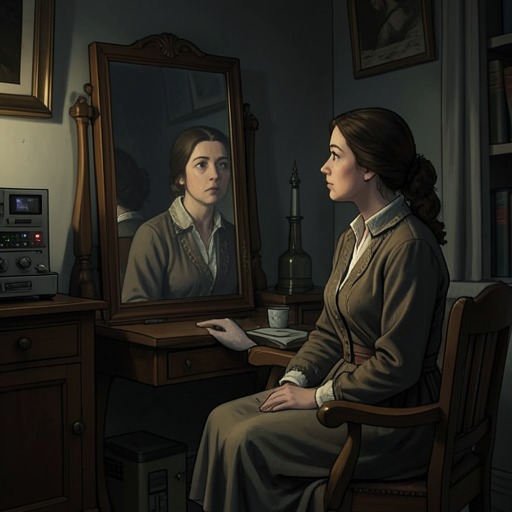
The change also reaches her sense of her body. Alone in a hotel room, Rachel looks at her thin figure, which she had treated as proof that she knew how to care for herself and remain in control. Now she sees her abdomen as an empty space and imagines it filled. Her memory of Leo’s weight lends bodily substance to a longing she cannot yet explain. The contrast is sharp: pregnancy had once seemed to her an alarming loss of control, but her own thinness now makes her sad.
From professional certainty to a decision
Rachel’s growing dissatisfaction is not limited to thoughts of motherhood. On a deliberately extended weekend, she expects to enjoy elegant meals, a swimming pool, and time alone. Instead, the prospect of dining and sleeping by herself feels oppressive. The carefully chosen room, attractive in a brochure, becomes empty once she is living in it. The solitude that had represented a reward begins to resemble a refined form of punishment, suggesting that the life she planned can no longer satisfy her simply because it is comfortable and self-directed.
A period reassures her that she is not yet too late, and Rachel begins converting desire into a schedule. Her first calculations are exact: a work trip to Bermuda in November, conception by December, a baby the following autumn, three months of maternity leave, and a return to work by the next January. She considers how the flat might be rearranged, with a nursery in the study and space for a nanny. The arithmetic expresses confidence in her financial resources and planning skills, but she recognizes that she is already assuming Nathan Kramer’s cooperation, although he has made clear that he does not want children.
Rachel eventually states the choice plainly: she wants a child but not a husband. In her diary she records that she has decided to have a child and plans to ask Nathan to help when they meet in Washington, during a stopover connected to the Mallarmé Skincare Products plc shoot in Bermuda. She is confident that her home and finances can accommodate a baby, and she wants to move from deliberation to action. The diary also reveals her unease: she has avoided writing the decision down, fears the permanence of committing it to a page, and crosses out part of her account rather than pursue the feelings behind it.
Relationships and competing accounts of motherhood
Anita Cavanagh is both Rachel’s close friend and a warning about the burdens that can accompany motherhood. Anita once hoped to build a substantial journalism career, but gradually subordinated work to her relationship with Giles Cavanagh, first out of infatuation and later from fear that he would leave. Her career opportunities diminished as she followed him abroad and was seldom available for freelance work. After Charlotte’s birth, prolonged colic and the demands of infant care intensified her sense of entrapment; later, Giles’s return to home-based work during the twins’ early years did not resolve their mutual resentment or the imbalance Anita felt between his career and her domestic responsibilities.
Anita therefore responds to Rachel’s plans with forceful discouragement. She warns that a child could cost Rachel her independence, figure, time, and freedom to work, and argues that hiring a nanny would not remove the emotional conflict of wanting both to leave and to stay. Rachel experiences this advice not as neutral caution but as a rejection of her hopes. Their exchange also makes visible the gap between Anita’s lived experience of parenting and Rachel’s still largely planned version of it: Anita speaks from exhaustion, while Rachel resents being told that motherhood would destroy the life she has made.
Other women’s circumstances sharpen the stakes. Naomi Fullerton tells Rachel that her husband, Graham, wants a divorce after fifteen years and four children. Naomi had a good degree and a media-planning career but gave up work to help build the life Graham wanted; after the marriage breaks down, she describes the children she loves as a burden that leaves her financially dependent. Her story does not simply confirm Anita’s warnings, but shows how care responsibilities and lost earnings can narrow a woman’s choices long after the decision to have children. Rachel’s resources distinguish her situation, but cannot make the underlying conflict disappear.
Parenthood as a negotiated and concealed choice
Rachel first asks Nathan to provide the means for her to have a child, while promising that she would raise the child independently and make no claim on him for money or parental commitment. She understands that Nathan does not want children and that their relationship is not a shared plan for family life; she nevertheless believes a clear agreement can separate conception from partnership. Nathan’s response becomes a point of estrangement between them, revealing the limits of her attempt to make an emotionally consequential choice entirely contractual and self-contained.
Later, Rachel rekindles her relationship with Robbie Dexter and begins imagining a future with him. During a visit, she secretly conceals that she has stopped using her diaphragm, reasoning that at nearly forty every cycle matters and that she could manage alone if a future with Robbie failed. She does not tell him, and the deception weighs on her during their intimacy, even as she fears that disclosure would damage their reunion. Her conduct makes the longing more urgent than a private wish: she is willing to pursue pregnancy before she and Robbie have agreed to share that possibility. The belief that she can both secure motherhood and keep the relationship intact is therefore placed under strain by her own secrecy.
Limits and significance
The novel repeatedly places Rachel’s plans beside evidence that reproductive choices are shaped by more than individual resolve. A magazine article headed The WHY IS THIS SO RARE? fertility article introduces concerns about increasingly difficult conception and growing demand for infertility treatment. The subject turns Rachel’s timetable into a source of uncertainty: the schedule she has drafted assumes that pregnancy will follow when she decides it should, while the article points toward biological unpredictability.
Will Raphael’s later disclosure that he can never have children adds a personal and decisive complication. He explains that he has congenital absence of the vas deferens and had learned of the condition during his marriage to Ginnie. The revelation changes what Rachel can assume about a future with him, but the evidence presented here does not establish how she ultimately responds or whether she has a child. Her maternal longing is thus defined by an unresolved tension: she has moved from dismissing motherhood to organizing her life around the possibility, yet partnership, fertility, work, and the realities of care resist being controlled as neatly as her calendar and household plans suggest.
Rachel’s arc also places social pressure on unmarried women to marry and have children beside the opposing demands that women preserve careers, income, and independence. Her wish to become a mother without a husband challenges the expectation that family must follow a conventional partnership, while Anita’s and Naomi’s experiences show the unequal costs that can accompany caregiving. The desire is neither a simple rejection of Rachel’s independence nor proof that she has outgrown it. It reveals that the life she had treated as complete no longer answers every need, and that pursuing a new future requires confronting uncertainties her former confidence could keep at a distance.