Social pressure on unmarried women to marry and have children
The GodmotherSocial pressure on unmarried women to marry and have children is presented as a persistent judgment of Rachel Elliot’s life, not simply as a series of matchmaking attempts. Her family and acquaintances treat marriage and motherhood as expected markers of a woman’s future, so her single status becomes something to explain, lament, or correct. The pressure grows more pointed as Rachel approaches forty, even while her professional success makes plain that she has built a substantial life on her own terms.
Expectations and the Single Woman
Rachel experiences the norm both through direct remarks and through what people stop saying. Friends such as Joy once openly pitied or questioned her single life, showed fascination with it, and teased her about possible partners and having a baby later in life. By the time Rachel is thirty-nine, those suggestions have largely ceased. She suspects that people have stopped expecting her to change, or even wanting her to, because they consider her age to have narrowed the possibility. Their silence is not quite acceptance: it carries the implication that the opportunity has passed.
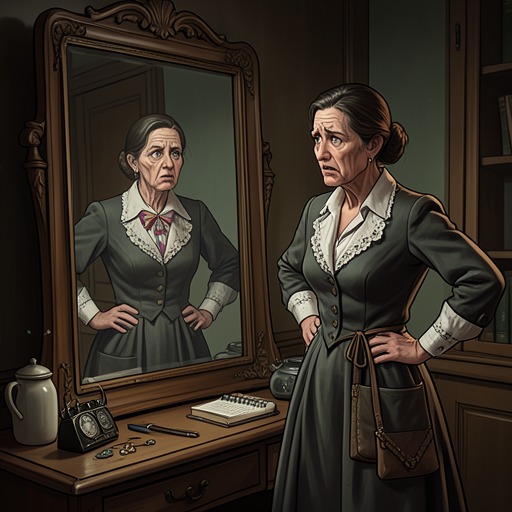
That implication makes Rachel’s childlessness feel socially legible as a failure, despite being connected to a life she has actively chosen. She resents the unspoken criticism that she has committed a social wrong by remaining single and cultivating a career rather than having a family. The judgment turns a private circumstance into a public verdict, reducing the question of what Rachel wants to an assumption about what a woman ought to want and when she ought to have achieved it.
Family Matchmaking and Blame
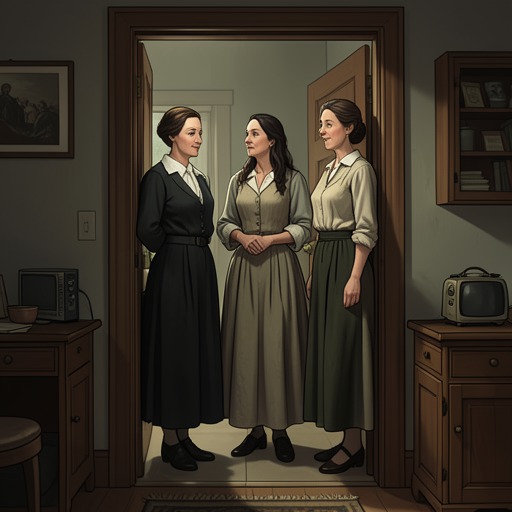
Margaret’s efforts give the pressure a domestic form. When she invites Luke Berenson to Sunday lunch, she does so with Rachel in mind, although she worries that Rachel will recognize the intention. This is not an isolated scheme: other sons, brothers, and cousins have previously been brought to meals ostensibly to enjoy Margaret’s cooking but, in practice, to be considered as prospective husbands for Rachel. The repeated invitations make matchmaking less a single embarrassing incident than a family method of managing a daughter whose life does not fit its preferred pattern.
Rachel can dismiss the clumsiness of the arrangements, but not the belief behind them. Her parents seem to assume that she is single because no man has been able to take her on. They also look back regretfully on her youthful relationship with Robbie Dexter, treating it as the best chance she wasted at twenty-five. Their interpretation shifts responsibility away from the limits of their own expectations and onto Rachel, as if her life were evidence of a personal deficiency rather than a path she has made.
Henry’s comment at lunch makes that judgment especially stark. After suggesting Rachel could have done better in advertising, he folds his napkin neatly and attributes her thwarted potential to having children. Margaret joins in with affectionate-sounding maternal despair about children going their own way. Rachel answers with sharp irony, but the exchange exposes the double bind in the family’s view: her career is treated as a disappointment, while the family also frames children as the reason for compromised opportunity. Rachel is expected to marry and become a mother, yet motherhood is invoked as a constraint when her professional achievements are discussed.
Career, Age, and the Desire for Motherhood
The contrast between Rachel’s independence and the assumptions surrounding her is unusually concrete. She is a board director at an international advertising agency, earns more than one hundred thousand pounds a year, and has a luxurious flat in Chelsea, a soft-topped Audi, and a named parking space. These achievements do not protect her from the notion that her life is incomplete. Instead, they intensify the tension between the life she has successfully built and the social belief that career cannot substitute for a husband and children.
The novel does not present Rachel’s desire for a child as merely an effect of other people’s pressure. She reaches her own decision, recording in her diary that she has decided to have a child, but that choice emerges amid the very assumptions she resents and the growing awareness of time. When Anita reacts as though Rachel would not want a child, Rachel challenges her assumption and insists that the possibility is hers to consider. Their exchange also reflects how experience can change a person’s position: Anita, who had once supported abortion rights, now speaks from her life as a mother. The contrast is not a simple division between women who conform and women who resist; it shows how motherhood can alter the terms through which women understand reproductive choice.
Rachel’s request to Nathan Kramer makes her effort to claim that choice explicit. She tells him she wants a child as soon as possible and asks him to provide the means of conception, while stressing that she intends to raise the child independently and does not seek his continuing parental or financial involvement. Her proposal separates motherhood from marriage and attempts to define its terms for herself. At the same time, its urgency shows how difficult it is to exercise that freedom outside the pressures of age, partnership, and other people’s expectations.
Private Choices and Unequal Conditions
Rachel’s later relationship with Robbie reveals another strain between stated independence and the circumstances in which she pursues motherhood. During their reunion, she secretly stops using her contraceptive cap, reasoning that at nearly forty every cycle matters and that she could manage alone if a future with Robbie disappeared. She does not tell him what she has decided. Her concealment is not presented as a settled, uncomplicated triumph of agency: guilt intrudes on their intimacy, and she fears that disclosure might damage the renewed relationship before it has had time to develop. The episode shows that wanting a child, wanting a partner, and wanting control over the timing of pregnancy do not necessarily align neatly.
Questions of reproductive possibility further unsettle any idea that desire alone determines the outcome. While injured and confined at Robbie’s home, Rachel reads a fertility article headlined “WHY IS THIS SO RARE?” about increasing problems with conception and the growing use of infertility treatment. Later, Will Raphael tells her that he cannot have children because of congenital absence of the vas deferens, a condition he learned about during his marriage to Ginnie. His disclosure makes fertility a material condition within a potential relationship, not simply a question of whether two people share romantic feelings or conventional plans.
Significance
Across these episodes, marriage and motherhood operate as expectations imposed from outside and desires that Rachel also genuinely examines for herself. The distinction matters: the novel neither treats her career as proof that she has no maternal longing nor casts that longing as automatic submission to family pressure. Her diary decision, her request to Nathan, and her secrecy with Robbie are different attempts to navigate the gap between social permission and personal choice.
The pressure is therefore shown less as one command than as a narrowing frame: relatives interpret singleness as failure, acquaintances measure Rachel against age and fertility, and intimate relationships introduce their own uncertainties. Rachel’s professional independence gives her resources and a life she values, but it cannot guarantee either freedom from judgment or control over conception. By placing family matchmaking beside her self-directed, sometimes conflicted decisions, the novel portrays motherhood not as the simple completion of a single woman’s life, but as a choice made under social expectations and unpredictable conditions.