The conflict between women’s careers and raising children
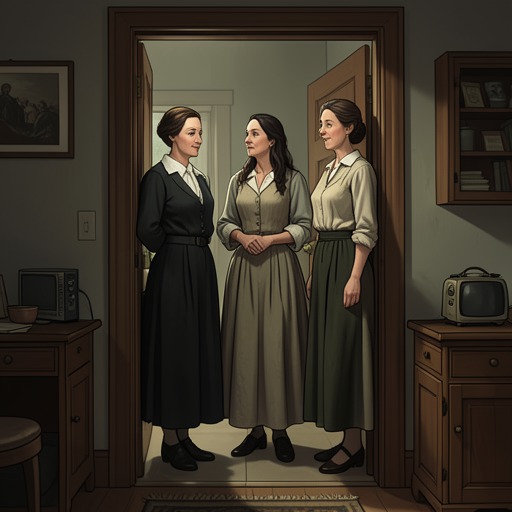
The GodmotherThe conflict between women’s careers and raising children shapes the choices and relationships of Rachel Elliot, Anita Cavanagh, and Naomi Fullerton. Rather than presenting motherhood as a simple counterweight to professional ambition, The Godmother sets the women’s different arrangements of work and care beside one another: a woman can build a career, devote herself to family, or try to sustain both, but none of those paths guarantees freedom from strain. Through their experiences, the novel questions the expectation that women should manage domestic life and professional life at once without complaint.
Work, ambition, and the promise of control
Rachel’s career in advertising gives her a well-paid, stimulating place in a male-dominated and stressful industry. The author’s foreword describes Rachel as a capable, single heroine ready to meet challenges, and notes that she initially believes she can obtain what she wants through force of will. That confidence informs her thoughts about having a child: she imagines that motherhood without a partner could be straightforward, reasoning from what she has heard about husbands who contribute little to family life. Her impressions come partly from Anita’s account of managing more easily when Giles Cavanagh is abroad than when he is at home and must be asked to help.
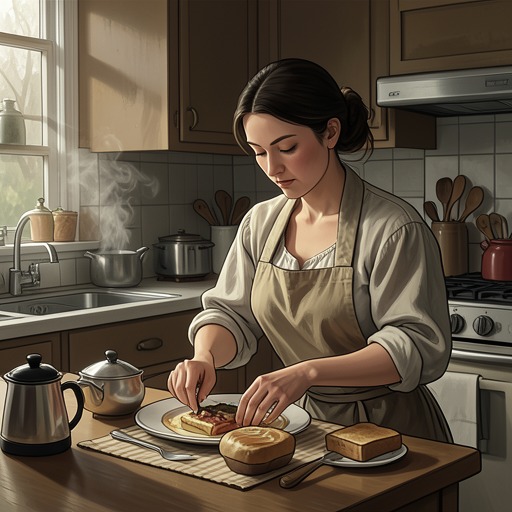
Rachel’s apparent certainty also rests on selective examples. She sees Naomi and Graham Fullerton’s family as a model of settled mutual satisfaction, observed over years of visits. Naomi left a respected media-buying career to build a household and raise four daughters, including Jessica, Rachel’s godchild. The children, clothes, house, and garden all appear carefully ordered. Rachel recognizes that Naomi has made a career of family life and admires the scale of that achievement, but does not believe she herself could find happiness in the same self-effacing domestic routine. The contrast is not simply between a career and idleness: Naomi’s household depends on sustained work, though that work takes place within the family rather than in her former profession.
Anita’s divided labor
Anita’s history shows how professional plans can narrow through relationship choices and care obligations. A journalist with ambitions to advance beyond her work for Campaign, she increasingly puts Giles’s career first: she chooses accompanying him abroad over regular London work, at first because she is in love and later because she fears that refusing could cost her the relationship. As a freelance writer without a settled specialty who is often away, she sees demand for her work diminish. Her choices preserve the partnership but carry an accumulating professional cost.
When Anita has Charlotte at thirty-three, motherhood offers consolation for career disappointment but also brings an unexpected intensity of care. Charlotte’s colic lasts for four months, with three-hour crying sessions, while Giles remains able to travel to conflict zones at short notice. Anita experiences the contrast as entrapment: her days are organized around feeding and broken nights, while his work continues to take him away. She chooses to have another child because she does not want Charlotte to grow up without siblings, then learns she is expecting twins. Giles responds by arranging a period of home-based work that lasts into Eddie and Laura’s second year. This brings him closer to infant care, but does not settle the marriage’s competing claims; Anita sees them locked in recurring arguments over whose hardship is greater. A large mortgage on their dilapidated Camden maisonette leaves little room for paid help or other comforts, and the family manages only two weeks a year at an English beach.
The everyday setting makes that divided labor visible. While the twins paint their kitchen walls as well as their paper, Anita tries to write a feature about London leisure centres and looks ahead to the five mornings a week when nursery school might give her time alone. The scene places paid writing inside, not outside, the demands of childcare: her work competes with the children’s needs in the same house, and even completing an assignment depends on finding time amid interruption. Rachel, by contrast, has built a reputation for working late and must fit a meeting with Anita around a crowded diary. Their friendship provides emotional support, but their different circumstances can also make each woman’s experience difficult for the other to read.
Motherhood as a choice and a constraint
Rachel’s decision begins privately, as she writes in her diary that she has decided to have a child. She has delayed recording it, wary of fixing a consequential choice on the page, and knows that telling other people may be harder than making the decision itself. When she raises the possibility with Anita, she is met not with uncomplicated encouragement but with a warning: Anita emphasizes exhaustion, changes to Rachel’s body, lost independence, the pull between work and home, and the guilt mothers may feel when they leave their children. She insists that employing a nanny would not make that conflict disappear. Her account is grounded in experience, yet Rachel hears it as a refusal to support her hopes; their exchange turns the strain of motherhood into a sharp disagreement between friends.
Rachel’s proposed arrangement with Nathan Kramer expresses her effort to separate becoming a mother from becoming a wife or relying on a co-parent. She asks whether he would help her conceive, stresses that she wants to raise the child on her own, and offers to put in writing that she would make no later claim on his money or parental commitment. The request makes her determination concrete, but also reveals the limits of planning: she tries to define the future through a carefully bounded agreement, while the proposal unsettles the assumptions of their relationship. Her imagined independence is a genuine aim, not evidence that the practical burdens of parenting have been solved.
The cost of ideal arrangements
Naomi’s story complicates the picture Rachel has formed from the Fullertons’ orderly home. When Naomi later visits Rachel’s office, she reveals that Graham wants a divorce after fifteen years of marriage and four children. She had given up a good degree and a media-planning job to help build the life Graham wanted. Although she loves her children, she describes family life as binding her to financial dependence: without the ability to earn a substantial income, she expects to rely on a husband she can no longer love until their youngest daughter, Helen, finishes university, eighteen years away. She has left Suffolk with the children and is staying with her parents in London while she decides what to do.
That reversal exposes the risk in treating a successful family arrangement as proof that sacrifice is secure or lasting. Rachel had admired Naomi’s household as a chosen form of achievement, but Naomi’s circumstances show that unpaid domestic labor does not necessarily protect the person who performs it when a marriage ends. The apparently settled division of roles can leave one partner with fewer financial options and a long period of continued responsibility for children. The novel thereby distinguishes Rachel’s unwillingness to make Naomi’s choices from any claim that Naomi’s work at home was trivial.
Workplace pressure and the wider pattern
The same gendered pressure appears in Rachel’s professional life, though it is not presented as a direct consequence of her decision about motherhood. After Cliff Weybourne assaults her, Rachel reports what happened to Alan Jarvis. In the ensuing meeting, she gives an account focused on the events and her efforts to defend herself, while Cliff recasts the encounter as mutual flirtation and misunderstanding. Alan proposes that both sides acknowledge a misunderstanding and put it behind them rather than affirming Rachel’s account. His response makes the workplace another setting where a woman is expected to absorb difficulty and avoid making a fuss.
Rachel later resigns with immediate effect. She tells Alan that he should have supported her when she reported Cliff, and says that she could have gone to the police and accused him of covering up for a criminal. The episode does not equate workplace harassment with the labor of raising children; instead, it widens the book’s account of the pressures surrounding women’s independence. The foreword emphasizes that the difficulties Rachel faces at work, in relationships, and in society have not fundamentally disappeared, particularly the pressure on women not to assert themselves while still being expected to excel both at work and at home. Across Rachel, Anita, and Naomi, the conflict is therefore not a single choice between career and children, but a set of unequal demands whose costs are distributed through work, marriage, money, and care.