Will Raphael
The GodmotherWill Raphael is a photographer whose persistent but initially rebuffed approaches to Rachel Elliot become a relationship marked by mutual attraction and deliberate restraint. He enters her life through an offer of photography lessons, later makes a portrait of her, and ultimately explains that his resistance to their relationship stems from his inability to have children—a disclosure that bears directly on Rachel’s powerful desire for motherhood.
Identity and Introduction
Will is introduced indirectly, through messages left for Rachel at McKenzie Cartwright. Steve Betts, an advertising director, had recommended him as a photography teacher. Melissa remembers his voice as friendly and deferential, but Rachel had intended to call him back only when work seemed quiet enough for a hobby. By the time she notices his message, the opportunity has already become an obligation she feels she has neglected.
Rachel eventually finds Will’s number under the pot holding her pens and pencils. She calls intending to decline the lessons, but reaches his recorded message instead. After identifying herself as Steve Betts’s colleague, she apologizes for not calling sooner and says she has changed her mind because work leaves her no time for photography or anything else outside it. Her call resolves the practical question while sparing her a personal conversation, a relief that also leaves her slightly disappointed in how awkwardly she has spoken.
Will does not let the matter rest at that first refusal. He calls back to challenge her change of mind, and later sends a fax asking why she has changed it. Rachel disposes of the fax without responding. The unanswered exchanges establish a pattern that will recur between them: she tries to close off contact before it becomes personal, while Will asks her to explain what she is avoiding.
Encounters and Growing Interest
Their first later encounter takes place in a professional social setting. Cliff Weybourne identifies Will as a talented photographer and brings him over to meet Rachel. His presence is unwelcome to her partly because Cliff is involved in the same advertising-world damage control that has already made her uncomfortable. Anita Cavanagh, by contrast, greets Will eagerly. The scene places him within Rachel’s work and social circles at once, rather than keeping him confined to the photography lessons she declined.
At another meeting, Will sees Rachel before she sees him. He watches her struggle to put too many newspapers into a high letterbox, bend repeatedly to retrieve the ones she drops, and then drive toward the bottle banks. When he approaches the fence to make himself recognizable, he teases her about recycling and her conscience. The detail of this encounter matters: their contact begins not with a formal appointment but with an ordinary task, observed at a distance and turned into an opening for conversation.
Later, at a crowded gathering, Rachel tries to lose herself in the room before Will can catch up with her. She has just come from the relative intimacy of her stay in Devon and finds the surrounding crowd alienating. Will notices that she has been avoiding him and asks her about it. Rather than sustain the denial she initially prepares, Rachel admits that she feels unsuited to the party and perhaps should not have come. His directness draws an unusual candour from her, though it does not immediately make her comfortable.
Portraits, Attraction, and Boundaries
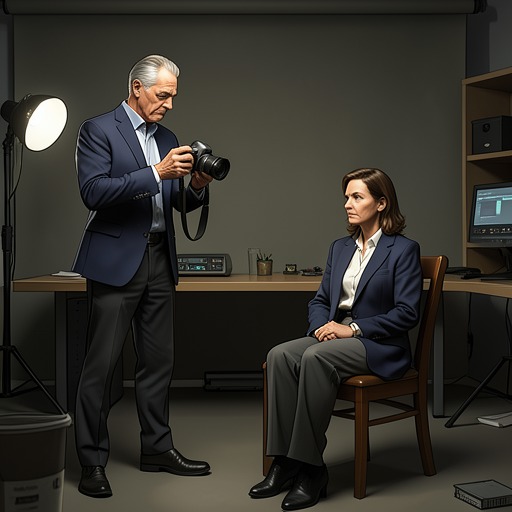
Photography gives Will a way to express interest that is both personal and controlled. He has made portraits of Rachel and borrowed a dark leather chair for a sitting, imagining how its shape would frame her fair hair and skin. His thoughts dwell on the contrast between the chair’s enclosing comfort and Rachel’s seeming fragility; he regards the finished photographs as proof that the image worked without manipulation. The portrait therefore records not only his photographic work but the attention he has paid to how Rachel might appear within it.
His attraction is not merely implied. When Anita, drunk on vodka, flirts with him in the chair he had borrowed for Rachel’s portrait and accuses him of preferring Rachel, Will agrees that he does. The moment is comic and uncomfortable: Anita performs a sexualized version of confidence, while Will is annoyed by her behaviour and by the way she occupies the chair associated in his mind with Rachel. His admission confirms the feeling that Rachel has tried to keep at a distance, without suggesting that he intends to press her into a relationship.
Will also gives Rachel a photograph of Cliff Weybourne, but frames it as something she may pass to the friend Cliff attacked, only if that friend wants it. The picture shows Cliff in a party hat and striped boxer shorts, smoking a joint and sitting beside a scantily dressed woman. Rachel recognizes its potential as material for revenge and is astonished by what it reveals. Will’s offer connects his photographic access to the conflict surrounding Rachel and her friend, while leaving the decision about using the image to them.
Rachel’s Other Commitments and Will’s Restraint
In conversation, Rachel tells Will that her life is comfortable but that she is considering a major change. She explains that she has resumed her relationship with Robbie Dexter, an old love with whom she now has a chance to try again. She also acknowledges that the dream of motherhood remains present within her. Rachel has not told Robbie about Will or about agreeing to sit for a photograph; embarrassment and concern about Robbie’s jealousy have kept the subject from him. Her guardedness thus reflects the pressures of an existing relationship as well as her discomfort with Will’s attention.
Will later writes that he believes it would be unwise for their relationship to develop further because both have other commitments that should take priority. He also addresses the gossip that photographers become intimate with their models, rejecting that assumption while making clear that he is pleased with Rachel’s portrait. His letter is apologetic and affectionate, but its central movement is withdrawal: he acknowledges their connection while setting a boundary around it.
The same letter answers Rachel’s question about Polly Drayton. Will says that he met Polly, who described herself as a friend of Robbie Dexter, when she was in considerable distress. He tried to help and understood that she had been sent safely home to her family. The account is carefully limited to what Will knows; it does not claim that he understands Polly’s wider circumstances. He closes by recognizing Rachel’s ability to know what she wants from life and wishing her happiness, a generous sentiment that reinforces both his regard for her and his decision not to pursue the relationship.
Infertility and Significance
When Will eventually tells Rachel why he has tried not to see her, he explains that he cannot have children. He identifies the cause as congenital absence of the vas deferens and says he learned of it during his marriage to Ginnie. He describes the condition as one of the many things that depressed her about him and about life. The disclosure gives a concrete reason for the resistance Rachel has encountered: Will is not simply unwilling to acknowledge his attraction, but believes that a relationship with him would carry a painful limit.
The timing makes the revelation especially consequential. Rachel has already told Will that motherhood remains a quiet but persistent dream, even as she considers a life change and tries again with Robbie. His confession therefore brings her private longing into direct contact with his infertility and the history of its effects on his marriage. In the available scenes, the disclosure is not followed by a resolution; its importance lies in changing what their mutual attraction means. Will’s role is to make intimacy possible and then complicated: he sees Rachel closely, gives form to that attention through photography, tries to honour the commitments surrounding them, and finally reveals the fact that makes her hopes for a shared future uncertain.