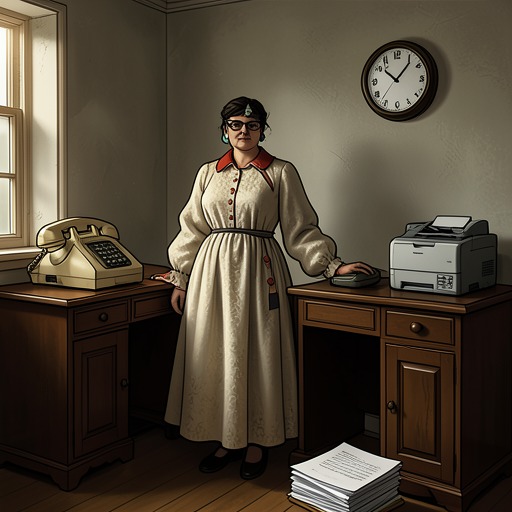
Will's letter to Rachel
The GodmotherWill's letter to Rachel is Will Raphael's carefully composed reply to Rachel Elliot, and its importance lies in the collision between its tender manner and its firm refusal of a future together. In a single page, Will explains his silence, sets a boundary around their relationship, answers Rachel's questions about a photograph and Polly Drayton, and wishes Rachel well. Its emotional force comes not from an argument or confrontation but from the composed finality of words Rachel has been waiting to receive.
Arrival and Physical Form
Rachel comes home carrying the envelope and imagines that Will has finally written. She believes it may have arrived with the second post, and the possibility revives hope she had begun to abandon. Before opening it, she deliberately slows the moment: she props the envelope against a jar of spaghetti, pours a glass of wine, refills Hamish's saucer of milk, and carries the letter into the sitting room. She chooses a Chopin piano concerto to accompany the occasion, connecting the anticipated reading with her wish to learn piano as part of the second half of her life. That future-facing plan makes the letter's own verdict about what she may want especially charged.
The letter's presentation briefly seems to encourage her expectation. Will's handwriting is conspicuously beautiful, made with a thick nib, and gives Rachel's name and address a grandeur she finds flattering. This contrasts with the illegible signature on his Christmas card. The envelope contains only one page, but Rachel delays no longer: she runs a finger under the flap and reads, her stomach tightening as she takes in the words. The physical care and emotional suspense of the arrival give way to a message whose polished appearance cannot soften its substance.
Will's Explanation and Refusal
Dated Friday, April 18, the letter begins with Will apologizing for not replying sooner. He rejects the explanation Rachel had apparently suggested—that he was confined to an intensive care ward—and instead gives a personal reason: he believes it would be unwise for them to develop their relationship further. He says that both of them have other commitments that should take priority. The refusal is framed as judgment about what is wise and proper, rather than as indifference, but it nonetheless closes off the development Rachel had hoped for.
Will then addresses other people's assumptions about his affection for Rachel. He attributes speculation about their relationship to gossip and to a belief that photographers have intimate relations with all their models. He says that this is not the case, while adding that he is happy with the picture. The passage therefore distinguishes his appreciation of the portrait from the intimacy others have inferred from it. Its qualification does not retract the boundary he has just set; instead, the photograph becomes part of the letter's effort to answer Rachel without encouraging her to read the image as a promise.
Polly and the Unanswered Questions
Will also responds to Rachel's query about Polly Drayton. He says he made Polly's acquaintance a little while earlier, after she identified herself as a friend of Robert Dexter. He describes finding her in considerable distress by coincidence and doing what little he could to help. As far as he knows, she was safely sent home to her family. This account supplies Rachel with Will's version of how he encountered Polly and what happened afterward, while making clear that his knowledge of Polly's eventual whereabouts is qualified.
The letter's treatment of Polly is restrained: Will reports the meeting and the journey home rather than expanding it into an intimate story. He presents his help as limited, and his account does not claim more certainty than he has. In the letter's sequence, this explanation follows the discussion of gossip and the photograph, before Will turns back to Rachel herself. The combination answers the questions he recognizes in her letter, but it does not displace the central message that he does not intend to pursue their relationship.
Closing and Rachel's Response
Will closes by telling Rachel that knowing what she wants from life is a rare gift, and that he hopes things work out as she plans. He says she deserves to be very happy, then signs himself both apologetically and affectionately. The ending preserves warmth in the language even as the letter denies the possibility Rachel wants. Its courteous wishes and intimate sign-off leave a tension between the tenderness of the address and the practical distance of the decision.
Rachel's response makes that tension visible. After reading, she curses, screws up the letter, and hurls it across the room; it bounces once and stops beside the glass door of the cabinet holding her music system. She tells herself that Will can go to hell, but wishes she believed it and could despise him as much as the feelings surging inside her. The rejection has not erased her attachment; it has made her angry both at Will and at her own continuing response to him. Half an hour later, while still brooding and cross with herself, she receives a phone call from her mother. The letter thus remains present as a discarded but emotionally unresolved object: its refusal is clear, while Rachel's feelings are not settled by it.