Amy Loughren Discovers Cullen’s Use of Canceled Pyxis Orders
The Good Nurse: A True Story of Medicine, Madness, and MurderAmy Loughren’s discovery of Charles Cullen’s canceled Pyxis orders transformed a confusing record into a possible account of how drugs could disappear without appearing as withdrawals. By comparing the medication history with her knowledge of intensive-care nursing, and then testing the system through an accidental order of her own, she identified a pattern that pointed toward deliberate access rather than ordinary mistakes. The discovery offered investigators a new lead, but not proof; when the recorded pattern stopped, unexplained patient events continued.
The Gall Case and the Pyxis Records
Tim Braun and Danny Baldwin asked Amy to focus on Reverend Gall, whose death was already central to their investigation. A State Medical Examiner’s report identified an overdose of digoxin as the cause of death. The Pyxis record showed that Cullen had withdrawn digoxin the day before Gall suffered a fatal cardiac event. That timing could have been coincidence in isolation. Amy saw the significance in the larger pattern, and spent weeks working through the records before she could fully make sense of it.
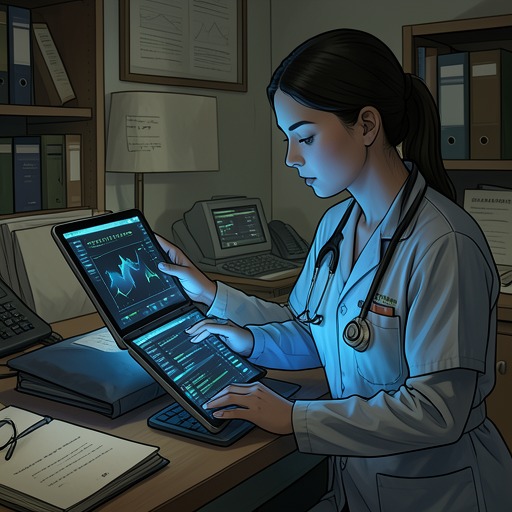
The detectives had chiefly searched the medication histories for familiar drug names and dates. The rest of the entries had seemed like noise, in part because many of the drug names were unfamiliar to them. Amy could read the records differently: she knew the drugs and understood ICU practice. From that clinical perspective, Cullen’s requests made little sense. Night after night, he ordered rarely used drugs in quantities that seemed excessive, including medications his patients did not appear to need.
The entries also showed Cullen ordering and then canceling those drugs. A canceled order was not, by itself, remarkable; any nurse could make an occasional mistake. What drew Amy’s attention was the repetition. Cullen appeared to make the same sort of error night after night, sometimes several times within an hour. To Amy, the frequency and consistency suggested a system rather than a scatter of ordinary slips.
A Cancellation Becomes a Clue
The way Amy moved from suspicion to a practical explanation began with a mistake of her own. Near the end of a Sunday-night shift, exhausted from combining hospital work with her confidential-informant duties, she entered the wrong medication order into Pyxis. She pressed Cancel just as the drug drawer opened. The screen marked the order canceled, and the record showed that she had not taken the medication out.
Amy checked the result again, repeating the process a few times. What had looked like a minor error now demonstrated a gap between what happened physically and what the electronic record showed: a drawer could open even though the canceled transaction registered no withdrawal. She called Tim Braun and, the following day, spread the paperwork across a desk to demonstrate the mechanism to him and Danny Baldwin.
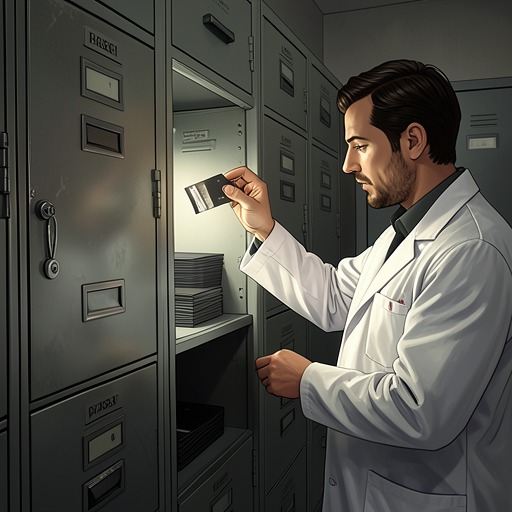
She then applied that insight to Cullen’s history. The records showed him calling up drugs and canceling the orders repeatedly. If the drawer opened before cancellation, Cullen could potentially have taken a medication without the transaction recording it as a completed withdrawal. Amy’s explanation connected a routine-looking computer action to the otherwise puzzling appearance of drugs in circumstances where the official record did not account for them.
The digoxin entries made the pattern especially consequential. Between the start of Cullen’s employment at Somerset Medical Center and June 27, he had called up and canceled digoxin at least twenty-seven times, including eight times in February alone. None of the other nurses on the unit had ordered even a fifth as many. The disparity gave the detectives a specific pattern to investigate, while the repeated cancellations offered a possible method by which Cullen might have obtained drugs without leaving an ordinary withdrawal record.
A Lead, Not Yet Proof
The explanation was persuasive, but circumstantial. Investigators could not establish from the historical records alone that Cullen had actually taken medication through canceled orders. They considered setting up a camera at the Pyxis system, but the available record undermined that plan: after the twenty-seventh digoxin request, four days after Gall’s death, Cullen’s digoxin requests stopped, including the cancellations. Meanwhile, inexplicable laboratory results continued. The disappearance of one kind of record did not settle whether Cullen had stopped, changed his method, or was not responsible for the later incidents.
For Amy, that gap had a personal cost as well as an investigative one. She could not tell whether she was failing to explain the events or helping turn her friend’s mistakes into evidence of murder. Her clinical insight had exposed a plausible way the records could be misleading, but the mechanism could not establish who had used it on any particular occasion. The lead sharpened the investigation without resolving the question of responsibility.
Beyond the Medication Cabinet
Amy’s review of the canceled orders did not account for every possible source of drugs. In a later recollection, she returned mentally to her shifts with Cullen and reconsidered his customary position at the end of the L-shaped hallway, far from the nursing station and close to the elevator doors. She had assumed that he took the portable Cerner computer there to work quietly. Now she wondered whether the location gave him a different advantage.
From that spot, Cullen could be among the first—and sometimes the only—people to see the pharmacy runner arrive. Amy remembered him taking the runner’s delivery tote and carrying the medications to the unit, a helpful gesture she had once understood as considerate busywork. The recollection offered an alternative route around the Pyxis: Cullen might have received drugs directly during delivery, without using the dispensing system at all. The canceled orders therefore became part of a wider change in Amy’s understanding. The computer record could conceal access, but it could not describe every path by which medication entered the unit.