Amy Loughren’s cardiac illness
The Good Nurse: A True Story of Medicine, Madness, and MurderAmy Loughren’s cardiac illness turns the intensive-care nurse’s knowledge of failing bodies back upon her own. She recognizes that her heart is in danger while continuing to work, and the condition shapes both her growing reliance on Charles Cullen and the physical and moral pressures she faces as suspicion gathers around him. Its consequences are not confined to the hospital: a collapse forces her away from work, while later, even with a pacemaker, she remains conscious of her heart’s uncertain rhythm.
Diagnosis and Lived Symptoms
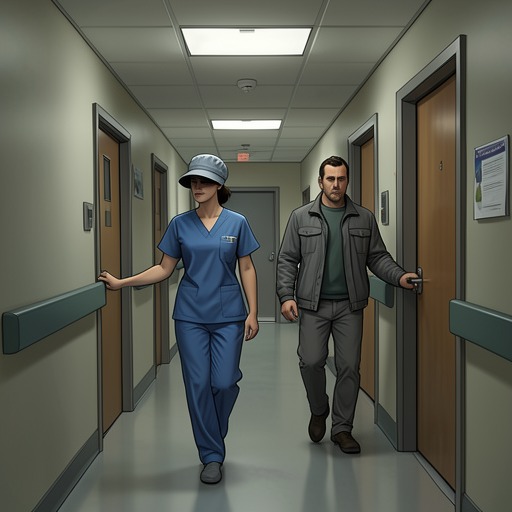
In October, during a midshift, Amy lists against the hard white wall of the nurses’ station. Charles Cullen helps her into an empty room and closes the door. She gasps for air before explaining what is happening: she is a cardiac-care nurse who believes she is slowly dying of heart failure. The scene’s dark irony lies in the gap between her workplace expertise and her concealed emergency. She is caring for critically ill patients while trying to keep her own failing heart from interrupting the shift.
Amy has diagnosed herself with advanced atrial fibrillation brought on by prolonged chronic sick sinus syndrome. As she understands it, misfiring electrical signals in the heart produce an erratic rhythm that cannot reliably circulate oxygenated blood between lungs and body. The account renders the condition as bodily distress rather than an abstract diagnosis: Amy feels as if she is drowning in stagnant blood. The narrative also connects the disorder, at least partly, to her crippling panic attacks, whose intensity is made more unsettling by the possibility that her heart itself is contributing to them.
The cause remains uncertain. Amy considers whether a virus from one of her patients has damaged her heart muscle, but also wonders whether the injury might be psychological: an emotional virus, or shrapnel from childhood memories. These are her conjectures, not a confirmed explanation. The illness therefore sits alongside another kind of concealed damage in her life without reducing one to the other; Amy experiences both as burdens that are harming her, while the precise medical cause remains unresolved in the account.
Cullen’s Care and the Hospital Shift
After listening, Cullen leaves and returns with a mint-green oval pill of diltiazem, identified as 0.5 mg. Amy takes it and pulls herself upright using an empty IV stand. It is two in the morning, and she still has work to do. Cullen tells her to rest and offers to handle her patients that night. When she begins to respond, he says he can keep a secret and leaves the room.
His response is practical and intimate: he temporarily takes over the patient care she cannot safely continue, while also agreeing to conceal her condition. Amy’s illness thus enters their relationship through a concrete act of assistance. The narrative places this moment beside a darker chronology: Cullen never knew how many patients he harmed at Somerset Medical Center, but the account says his actions began around the time Amy became sick and did not stop once they began. The timing is explicit; it does not, by itself, establish that her illness caused his violence.
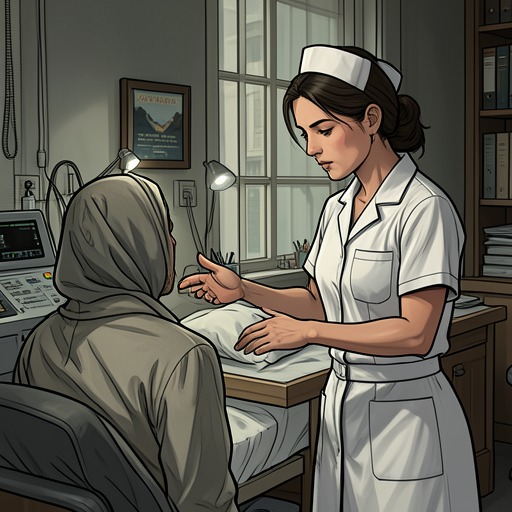
Amy’s condition goes unchecked until February, when she collapses at work and is rushed to the emergency room. She requires a pacemaker and a leave of absence. Cullen is alone on the overnight shift, and the narrative describes him as replacing his attentions to Amy with his own compulsions. Her absence marks a change in the working relationship as well as in the hospital routine: the nurse who had relied on his technical proficiency is no longer there beside him, and he now works the overnight alone.
Illness Amid Suspicion
Amy’s health also informs her response to an unexplained change in medication procedure. When the hospital introduces an insulin adjustment form, requiring nurses to electronically sign their estimate of how much insulin remains in a vial, she objects that the amount cannot be accurately judged by eye. She suspects that something may have happened on her unit, perhaps to patients, and demands to know why insulin is being treated like a narcotic. Her manager does not explain. Amy refuses to sign, even after being ordered to do so.
That refusal becomes consequential when rumors spread that insulin, Cullen, and a patient death are connected. Nurses know Amy as Cullen’s friend and remember her resistance to the insulin form; some avoid her as if suspicion could pass between people. She is frightened for herself. Because her heart condition requires daily anti-anxiety medication, she wonders whether she might have taken too much Atavan and made a mistake, and worries about missing narcotics, her nursing license, and whether she needs a lawyer. The account presents these as fears under uncertainty, not evidence that she caused harm.
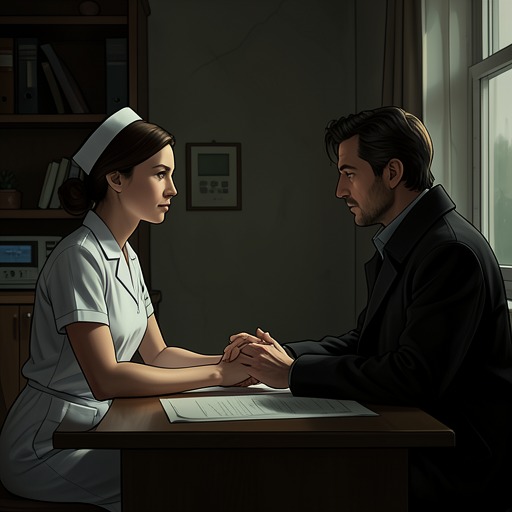
When a detective shows her Cullen’s Pyxis record from the night Reverend Gall died, Amy recognizes the document. Until then, she has defended Cullen against what she considered unfair accusations. The printout makes it possible for her to imagine that he did something terrible on those shifts, but she cannot yet reconcile the evidence with her idea of her friend. Her shock is bound up with a history of difficult trust: after disclosing childhood abuse and feeling blamed by her family, she had come to believe that self-reliance was safer than trusting others. The illness does not explain that history, but it raises the stakes of a moment when both her body and her closest professional bond feel precarious.
From Vulnerability to Risk
Once the investigation asks for her help, Amy weighs the danger to her job and the possibility that the detectives may be wrong against her loyalty to Cullen. Her heart condition is part of the material risk she is already living with: she knows her limits, takes anti-anxiety medication, and fears the consequences of being implicated in a case she does not understand. Even so, she talks with the detectives, later studies paperwork through the night, and continues working overnight shifts while bringing them documents. She worries that helping them could get her fired by the institution she hopes to improve, and describes feeling alone in that strain.
The illness’s later details resist a simple recovery narrative. With a pacemaker, Amy sometimes feels her heart stop until the device kicks in. She recognizes the foolishness of smoking and partying despite her condition, yet death does not frighten her as she thinks it ought to. Her body remains present in the story as an ongoing vulnerability, not a problem neatly removed by treatment.
Amy’s heart condition gives the investigation a bodily counterpoint to its records and procedures. A Pyxis printout can transform her understanding of Cullen, but it cannot make her own heart dependable or resolve the risk of trusting the wrong person. The narrative links her illness to work, friendship, fear, and the practical demands of survival without treating it as a mere symbol: she gasps at the nurses’ station, takes medication, collapses, receives a pacemaker, and continues to face the strain of an investigation while living with its effects.