Charles Cullen and Adrianne Cullen’s marriage and divorce
The Good Nurse: A True Story of Medicine, Madness, and MurderCharles Cullen and Adrianne Cullen’s marriage moved from swift courtship and a shared vision of family life into isolation, suspicion, and a contested separation. Its decisive rupture came when Adrianne, increasingly afraid of what Charles’s drinking and unexplained behavior might mean for her and their children, sought a divorce and began bringing her concerns to lawyers, police, and the family court. The book presents the collapse not as a single discovery but as a long accumulation of absences, warnings, and moments she could not explain.
Courtship and a shared future
Adrianne was an ambitious college graduate working as a manager at a Roy Rogers restaurant when Charles, then working cleanup, became captivated by her. When she was transferred away, he quit and increased his hours at the Caldor store next door, but continued taking his breaks at the restaurant. A month later, when Adrianne returned without her boyfriend, Charles was waiting. He pursued her with gifts, flowers, and candy, and worked to present himself as an attentive partner to her family. Adrianne saw a serious young man who was working multiple jobs, leading his nursing-school class, and committed to a career. His frequent job changes did not initially dislodge that impression.
Their courtship was rapid and consuming. They spent their scarce free time together, became engaged six months after their first date, and married the week after Charles graduated from nursing school. Their wedding and honeymoon at Niagara Falls felt to Adrianne like a fairy tale. They returned a day early so Charles could begin his new job in the Burn Unit at Saint Barnabas Medical Center. The insistence on starting immediately was consistent with the industrious, career-focused husband Adrianne believed she had married.
In October 1987, the couple took out a mortgage on a small, dark, cramped house in Phillipsburg, Pennsylvania. Adrianne had moved into a computer-programming job, while their schedules often placed her on long days and Charles on long nights. The new home and professional beginnings looked like the foundation of family life, but Adrianne increasingly felt alone. Charles’s openness about his history of depression and alcoholism had seemed to her like evidence of self-knowledge and control. She did not realize that he had resumed drinking.
Home life and growing estrangement
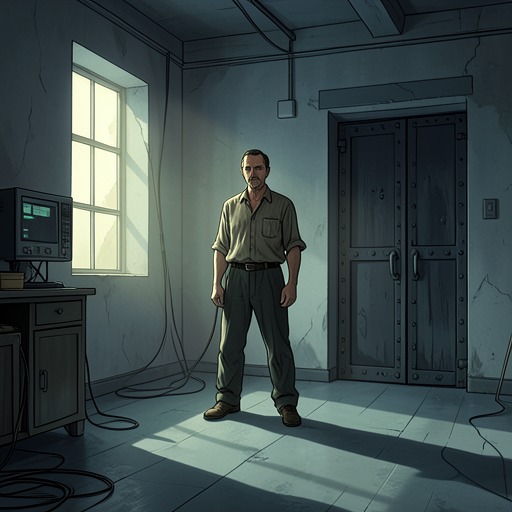
Charles drank alone in the basement, keeping alcohol in a Navy footlocker and the footlocker in the boiler room behind a locked door. He had told Adrianne while they were dating that he could not drink, and she had taken his abstinence as a firm choice. She had never seen him drink and had even thrown away a bottle of Baileys from her apartment. In the house, the basement became a private space from which he avoided her, while she attributed his emotional coolness partly to the demands of nursing work and proximity to death.
The marriage’s first year was crowded with Charles’s work, schooling, and commute. Adrianne watched the end of 1988 alone; in February she became pregnant. After their daughter Shauna was born that fall, she felt Charles’s remaining attention shift almost entirely to the baby, as though he could not extend his affections to both wife and child. She had already noticed a pattern in his interest: he could be absorbed by a new relationship, home, or pet, then seem to lose interest when its novelty faded. Their second daughter, Saskia, was born in December 1991.
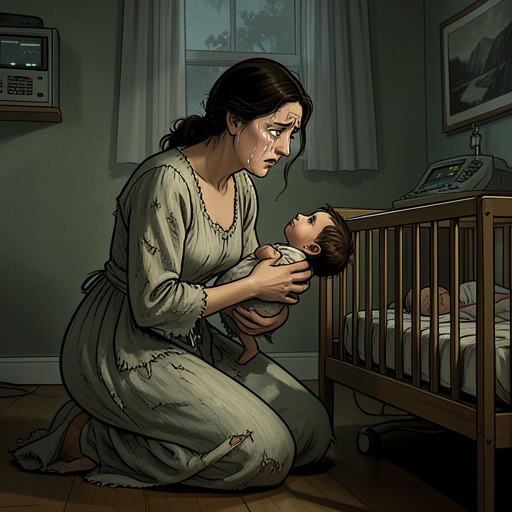
Adrianne’s unease also gathered around events she could not make fit an ordinary account of family life. A new puppy disappeared while Charles was home with it and the baby; he seemed unconcerned and did not help her look. She worried that he had left the infant alone with the front door ajar and recalled earlier arguments over her suspicion that he used cold medicine to keep the baby quiet, something he denied. She also found photographs of Shauna in which Charles had carefully cut out the little boys. Those images frightened her, though she tried not to dwell on them.
When the elderly beagle Queenie, a neighbor’s dog who often wandered into the Cullens’ yard, was found dead in an alley beside their house, a veterinarian said the dog had been poisoned. Adrianne remembered the missing puppy and the photographs, and began to cry. She had also seen Charles keep their Yorkie chained outside while she was at work; after animal-control authorities removed the dog, she had to retrieve it from the ASPCA. Later, she heard thumps and yelps from the basement. These incidents did not give her a complete explanation, but together they sharpened her fear. She described Charles’s eyes as blank and detached, and at times felt that the man she had married was no longer present.
Drinking, fear, and the decision to separate
By the time Saskia was born, Charles’s secret drinking had become impossible for Adrianne to ignore. She broke into his footlocker while he was at work and confronted him with the bottles. He tried to make the breach of privacy the issue; she refused to let that displace the drinking. Charles eventually acknowledged it but insisted it was not a problem. He said he was depressed and did not want antidepressants. Adrianne saw his drinking and depression worsening one another, with the family caught in the spiral.
Attempts to confront him produced no resolution. When he was drunk, arguments were followed by nights he either did not acknowledge or did not remember; when she approached him sober, he retreated to the basement. Adrianne looked for outside help, including the possibility of a five-day alcohol-treatment stay covered by her employer’s benefits, and left Charles’s old Alcoholics Anonymous books where he might see them. He responded by getting angry, ignoring them, or putting them away before returning to drink. His displays of distress also deepened the distance between them: he staged scenes intended to demonstrate his pain, but Adrianne experienced them as further pressure rather than a path back to intimacy.
In November 1992, Adrianne quietly consulted a lawyer. She feared that what had happened to Queenie might happen to her children. Her concern became acute because she was due to have gallbladder surgery in January at Warren Hospital, where Charles worked. She insisted on obtaining paperwork declaring her intention to divorce and explaining her reasons before going into his hospital. She did not specify exactly what she thought might happen, but told the lawyer she could not enter the hospital without the document. Her father accompanied her to surgery and waited until she emerged from recovery; she instructed him not to allow visitors, especially Charles.
Divorce proceedings and continuing conflict
Charles was working in the Warren ICU when the divorce papers were delivered to him in public. Humiliated, he tried to find Adrianne in the recovery ward but encountered her father and a closed curtain. Her father went home with her after the operation and stayed on a foldout couch. Charles became indignant and then pathetic in Adrianne’s eyes, and her old sympathy returned in part: he was suffering, and he was the father of her children. The couple agreed that he would move out when he could afford it, while they continued living in the house until they could work out the arrangements. Adrianne regretted that decision almost immediately.
In January 1993, Adrianne brought her concerns outside the home by speaking with police. She described Charles as a dangerous drunk, made a vague accusation of domestic violence, and recounted the hospital investigation and his childhood boast that he had poisoned an abusive boyfriend’s drink with lighter fluid. She also told an officer about the animals: the missing puppy, other pets, and the Yorkie chained in the yard until animal-control authorities intervened. Adrianne was trying to put her fears on record and force the situation forward, even though she had not yet connected all the incidents into a single explanation.
The separation expanded into disputes over custody and legal protection. Adrianne sought full custody, citing Charles’s drinking while caring for the children and requesting a restraining order after her police call. Charles proposed a polygraph, which was arranged for June 18, two months after his release from Greystone Psychiatric Hospital. According to the test, he passed, but the result did not settle the conflict: twelve days later, Adrianne obtained a final restraining order. Charles was also facing criminal charges in Pennsylvania, including stalking, breaking and entering, trespass, and harassment, alongside the divorce proceedings. The marriage had become a struggle fought in separate arenas—at home, in family court, and in criminal court—with no simple return to the unit they had once imagined themselves to be.