Charles Cullen—Saint Barnabas Medical Center
The Good Nurse: A True Story of Medicine, Madness, and MurderCharles Cullen—Saint Barnabas Medical Center is both the starting point of Cullen’s documented nursing career and an early record of serious concerns about his conduct. At Saint Barnabas, reports accumulated involving medication irregularities and unsafe care, but the surviving paperwork did not preserve the internal investigations that framed his final year there. When investigators later returned to the hospital’s history, the relationship was visible chiefly through an incomplete file—and through the evidence that had been removed or lost.
Employment and the first warning signs
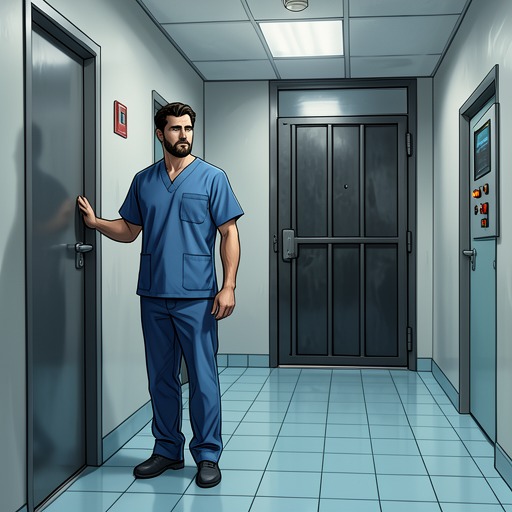
Danny Baldwin’s employment chronology placed Cullen’s nursing career at Saint Barnabas Medical Center in Livingston, New Jersey, beginning in 1987. The job was therefore more than one stop among the several medical centers where he later worked: it was the first known institutional setting in which concerns about his nursing practice were recorded.
The surviving paperwork listed roughly half a dozen reports. They described Cullen failing to sign out a drug properly, withholding prescribed medication, hanging an unprescribed IV, repeatedly shutting down the respiratory vents of a critically ill patient, and writing orders for unprescribed insulin. Taken together, the reports traced several different kinds of risk, from medication handling to direct interference with patient care. The book presents this record as evidence that Cullen had, in effect, been caught in the act at the hospital where his killing career began, although the surviving documents did not supply the detail needed to reconstruct each incident as a criminal case.
A fragmentary record
The file that Baldwin and Tim Braun examined was difficult to read and conspicuously incomplete. It did not mention the internal investigations that had shaped Cullen’s last year at Saint Barnabas. Nor did it explain the circumstances behind the various reports. What remained was enough to establish that serious problems had been recognized, but not enough to show how the hospital had investigated them, what conclusions it reached, or how those conclusions shaped its decisions.
A later conversation with Algretta Hatcher, the nurse recruiter for Medical Center Health Care Services, supplied one further fragment. In a handwritten note dated March 14, 1991, a supervisor expressed deep concern about Cullen’s attitude after a dual medication error and said that he appeared unconcerned both about the error and about the patient’s welfare. Hatcher could not define the error, and the file contained no additional explanation. Baldwin was left with what the narrative calls a skeleton without the meat: a serious judgment about Cullen’s response, severed from the clinical facts that would make it intelligible.
What disappeared
The missing context was not limited to the personnel file. Several years later, Saint Barnabas underwent renovations, and the materials connected to the investigation were cleared out: evidence bags containing tainted IVs, multiple drawers of notes, and eventually the metal filing cabinet itself. The only visible trace described in the account was a rust outline left on the linoleum. The physical setting that had held the records was gone, while the surviving paperwork retained only scattered marks of what had happened.
That loss shaped the later inquiry. Cullen’s personnel record suggested repeated opportunities for concern, but the destroyed or missing materials prevented investigators from recovering a continuous institutional history. The surviving fragments could identify warnings without fully explaining their handling or outcome; the absence of the investigation papers also meant that the evidence available years later was weaker and less complete than the evidence Saint Barnabas had once possessed.
Retrospective significance
Saint Barnabas Medical Center’s connection to Cullen is defined by the contrast between the seriousness of the recorded conduct and the thinness of the archive that survived. The reports involved specific departures from safe practice, including unprescribed medication and interference with a patient’s respiratory support, while the later file offered little explanatory detail and did not preserve the internal inquiries. The book’s reconstruction thus links Cullen’s first nursing position to early institutional warnings, but also shows why those warnings could not simply be converted into a complete account after the records were lost.