Charles Cullen’s confession
The Good Nurse: A True Story of Medicine, Madness, and MurderCharles Cullen’s confession turned a murder investigation into an extended account of how he understood his own crimes. Beginning with Reverend Gall, Cullen moved backward through a career spent among vulnerable patients, describing deaths in the language of nursing while resisting the language of murder. He offered investigators names and a narrative, but not a complete or independently verifiable count; the confession was both a breakthrough and an imperfect record of what had happened.
The interview and its emotional terms
The detectives wanted to ask Cullen about Reverend Gall. Amy Loughren’s presence changed the terms of the encounter. She did not demand the truth, and the narration presents Cullen’s disclosure not as an answer extracted by force but as something he could choose to give her. He could not be made to comply, the account suggests; he could, however, decide to speak. Loughren recognized that he did not need to appear saintly. He needed the possibility of being a hero to her, and the investigators’ access to his story depended in part on that distinction.
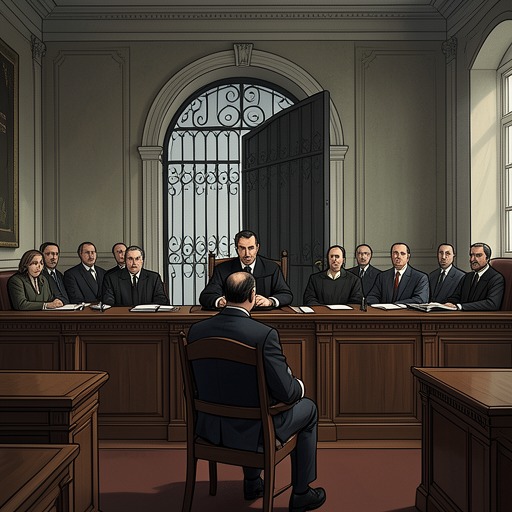
Cullen sat with his feet tucked up in the interrogation-room chair, Loughren’s cardigan draped across his shoulders. Once he began, he took the floor. He spoke in a hushed, level voice, pausing when Tim Braun changed a tape and resuming at the same point. Food, coffee, and toilet breaks interrupted the account, but did not end it. He began at 6:15 on Sunday night; at 1:31 the following Monday morning, the detectives stopped for the night. By then the tape had run out, and Cullen had supplied forty names.
The form of the confession mattered as much as its length. Cullen had kept no written list of his victims and collected no mementos. He had never spoken his entire story aloud. Yet he had repeatedly relived edited versions of it privately, and in the interview those recollections became a sustained narrative. He spoke about the technical demands of nursing, periods of depression and suicidal behavior, failed relationships, and circumstances that had not suited him. These episodes were arranged into the portrait of a misunderstood wanderer with a criminal compulsion he described as benevolent. The account could sound composed and patient without becoming a straightforward admission of responsibility.
A narrative of intervention, not murder
Cullen’s word choices kept death at a distance. Patients, in his telling, had passed, expired, or died; he had intervened, or been compelled to intervene. He did not describe himself as killing people, and he did not call the acts murder. He framed death as a kind of grace that, in his view, need not come from God alone. The vocabulary made the confession a story he could inhabit: it acknowledged what happened while bending the meaning of his actions toward care, compulsion, and a supposed mercy.
That self-presentation echoed earlier explanations he had given for events at Saint Barnabas Medical Center. He had told Adrianne Cullen that the hospital’s insulin-tainted intravenous bags and its investigation had made him a scapegoat, dismissed because of workplace politics and his opposition to a nurses’ strike. The book places that account beside the later confession as another version of Cullen’s effort to control the meaning of his history: in one, he was the wronged nurse; in the other, a compelled intervener rather than a murderer. The difference is not that the later account supplies an unfiltered inventory. Its disclosures remain shaped by the story he wanted to tell.
The confession also connects that story to concrete opportunities in hospital routine. At Saint Luke’s Hospital, Cullen injected digoxin through an intravenous line’s piggyback port, a route nurses ordinarily used to flush a line. At another point, he used the quiet of an otherwise empty night hospital, waiting and monitoring a patient’s chart. At Saint Luke’s Medical Center, he could appear to be doing ordinary helpful work: receiving medication deliveries, stocking supplies, and assisting with intravenous lines. Amy Loughren later recognized that Cullen’s position near the hallway doors let him meet pharmacy runners and take their drug totes without having to use Pyxis. These examples do not make the confession complete; they show how the nursing routines Cullen described could conceal the acts he cast as intervention.
What the confession established—and what it could not
Cullen initially confessed to killing perhaps forty people, but the count was never a settled total. He omitted names, skipped entire years and hospitals, and would not guess when he was unsure. At Lehigh Valley Hospital, he recalled four or five victims, while investigators had positively identified two. He first said he had not overdosed anyone at Hunterdon Medical Center; investigators ultimately discovered five victims there. Cullen heard experts’ estimate that his total might be closer to four hundred. He disliked the number, but did not deny it or acknowledge the distinction it would imply.
The evidence needed to check his account had often disappeared or was incomplete by the time the Somerset County Prosecutor’s Office was alerted. Many victims were already buried, making autopsies impractical; older medical records had been destroyed or could no longer be reconciled with ordinary hospital mortality. For his five years at Saint Barnabas Medical Center, Cullen’s formal confession named only Judge John Yengo, killed on November 6, 1988. He had earlier described his first murder as that of a young patient with AIDS in 1987, but that patient was never identified. He later admitted to homicide investigators that he had targeted patients and randomly spiked insulin bags, sometimes three or four times a week, at Saint Barnabas. Missing charts and autopsies made those claims difficult to verify. By the time of the account, he had been convicted of only one murder or attempted murder from those five years, while at Somerset Medical Center, where computerized charts and drug data were available, investigators ultimately confirmed sixteen murders from the last six months of his career.
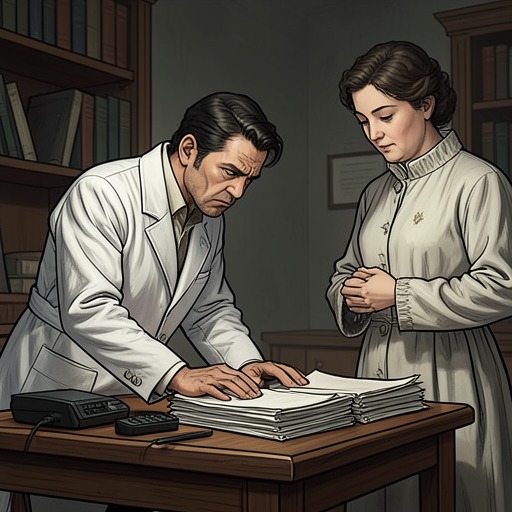
The investigators tested his recollections against records rather than treating the confession as a complete ledger. Led by Danny Baldwin, Tim Braun and the Somerset County detectives compared about 175 tips with Cullen’s work schedule, assignments, Pyxis records, and Cerner transactions. Their initial list contained twenty-six high-probability victims from Cullen’s year at Somerset Medical Center. A few names stood out to him; for the rest, he said he would need to review charts. His account gave the inquiry direction, but the documentary trail supplied a separate means of checking it.
From confession to plea and imprisonment
In April 2004, Cullen pleaded guilty in New Jersey to thirteen murders and two attempted murders, offenses that qualified him for the death penalty. During the confession process, he had told Loughren and the Somerset County detectives that he wanted to be put to death. He did not tell the same thing to his court-appointed lawyer, Johnnie Mask. Cullen and Mask reached an agreement with New Jersey prosecutors: the state would remove the death penalty from consideration in exchange for Cullen’s cooperation. The confession therefore became part of a longer investigative process, not its conclusion; Baldwin and the Somerset County team spent the following three years continuing the work.
In jail, the interview’s shifting arrangement—Cullen speaking while detectives listened and checked records—became a routine. At the Somerset County Jail, he had his cell, spy novels, time to exercise and shower, and visits with a Catholic deacon and the head chaplain, with whom he studied the lives of the saints. Guards escorted him across the lawn to the prosecutor’s office, where he sat with Braun or Baldwin and reviewed records: abnormal heart rhythms, flatlines, and bloodwork from thousands of patients. New charts arrived nearly every week, covering sixteen years of deaths at nine hospitals. Cullen worked through them with black coffee as investigators and lawyers handled the paperwork around him. His confession had opened a path into the records; the records, in turn, kept testing the story he had told.
The confession’s final significance lies in this tension between revelation and evasion. Cullen spoke for hours, gave investigators dozens of names, and enabled them to pursue cases across hospitals. Yet his account preserved his preferred distinction between killing and intervening, and its omissions left the death toll uncertain. It made his history audible without making it whole.