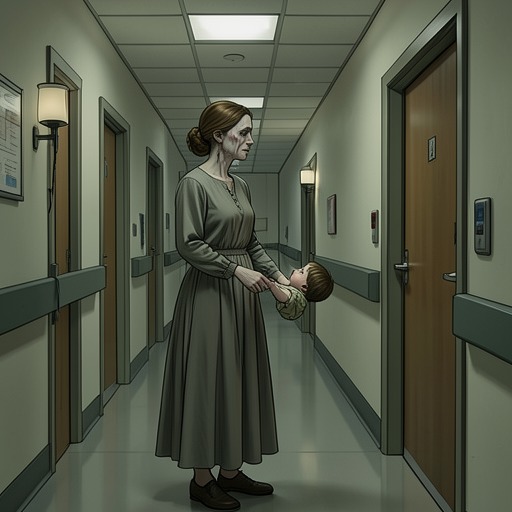
Do-not-resuscitate order
The Good Nurse: A True Story of Medicine, Madness, and MurderThe Do-not-resuscitate order is a decision about whether to attempt resuscitation if a patient’s body stops functioning. In the account of Reverend Florian Gall, it marks a change in his family’s expectations as his condition shifts from precarious to hopeful—and is rescinded before his later, unexpected cardiac arrest.
The Order During Gall’s Critical Illness
For the first week of Gall’s hospitalization, it was uncertain whether he would live. His family consented to a Do-not-resuscitate order so that, if his body failed, he would not undergo dramatic resuscitation measures. The decision is framed as an effort to spare him what they regarded as an earthly indignity, not as a rejection of his ongoing care: Gall was being treated for pneumonia and a serious heart problem, and a cardiologist prescribed digoxin for his atrial fibrillation.
Rescinded as His Condition Improves
Gall gradually began to recover. As his pneumonia subsided and his heart rhythm stabilized, he sat up, ate, and talked with his sister, Lucille Gall. With that improvement, his family rescinded the Do-not-resuscitate order, and his digoxin was discontinued. His return to ordinary interaction made leaving the hospital seem possible if the recovery continued.
The Later Cardiac Arrest
On June 28, Gall unexpectedly went into cardiac arrest. The order had already been rescinded, and the medical staff undertook resuscitation measures, which were unsuccessful; his death was recorded at 10:10 a.m. Bloodwork showed digoxin levels far above the expected range. The sequence matters: the account does not present Gall’s death as occurring under an active Do-not-resuscitate order. Instead, the order records a decision made during one phase of illness, then reversed when recovery appeared possible, before a subsequent crisis ended in death.