Ellen Amedeo
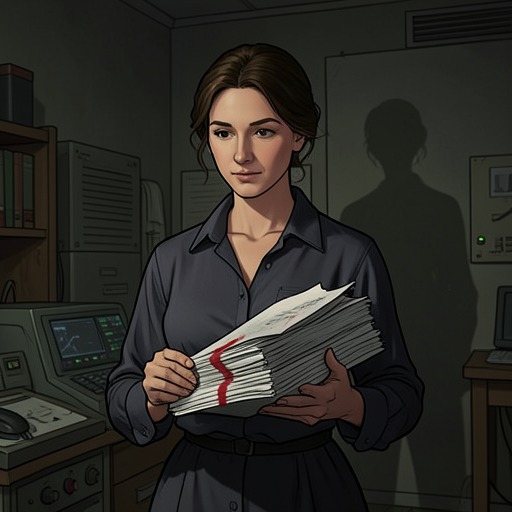
The Good Nurse: A True Story of Medicine, Madness, and MurderEllen Amedeo is a supervisor on the coronary care unit at Saint Luke’s Hospital. Her part in the account is defined by a contrast: she repeatedly confronts Charles Cullen over small disruptions to the unit, while an early report of disappearing medication leads to no further action from her. When nurses later identify Cullen as connected to a cache of dangerous drugs, she is alerted and becomes part of the hospital’s administrative response.
Supervising the CCU
Cullen’s habit of wheeling chairs away from the nurses’ station becomes a nightly ritual. Amedeo repeatedly asks him to return them; he sighs, rolls his eyes, and puts them back, only to remove them again. Because the chairs are missing by the next morning, staff have to search the rooms and wheel them back themselves. The behavior seems designed to test the unit’s patience, but its repetition makes it familiar rather than an occasion for deeper scrutiny.
An early medication warning
In April 2002, day charge nurse Thelma Moyer told Amedeo and hospital pharmacist Tom Nugen that Pronestyl appeared to be running out in spurts. Nugen checked the records but could not account for the missing medication. Amedeo took in the information but did not pursue it further. The episode places her at an early point in the chain of warning signs, while distinguishing her from the person who first noticed the unusual depletion and the pharmacist who checked the records.
The vecuronium discovery
The hospital’s response changed after nurses Gerry Kimble and Candy Wahlmark watched Cullen enter the medical storage room and remain inside for five minutes. Kimble checked the sharps box after he left and found it full again. The two nurses contacted Amedeo at home and told her they believed they knew who had been using the deadly vials of vecuronium bromide. Unlike the earlier report about Pronestyl, this warning identified Cullen directly and followed the nurses’ own observation of his access to the room.
Amedeo arrived at the unit as the hospital’s administrative response gathered pace. Risk manager Janice Rader and risk management director Ken Vail considered how to handle the missing heart drugs and the activated paralytic, with Cullen due back on shift within hours. They consulted in-house counsel Sy Traub, who brought in the law firm Stevens and Johnson; attorney Paul Laughlin was subsequently called back to the hospital when another cache of drugs was found in the sharps box. The account does not make Amedeo the decision-maker in those legal and risk-management steps, but shows her present as a supervisor during the escalation.
Narrative role
Amedeo’s two appearances mark a consequential contrast in institutional attention. Cullen’s conspicuous chair-moving draws repeated, routine correction; Moyer’s report of medication disappearing in spurts is received but not pursued. Once staff observe Cullen’s access to the medical storage room and report a renewed cache of dangerous drugs, Amedeo is alerted and the hospital’s response moves into risk management and legal consultation. Her role helps show how warning signs could pass through ordinary supervision without prompt investigation, even as a more immediate and specific discovery forces action.