Helen Dean's fatal injection at Warren Hospital
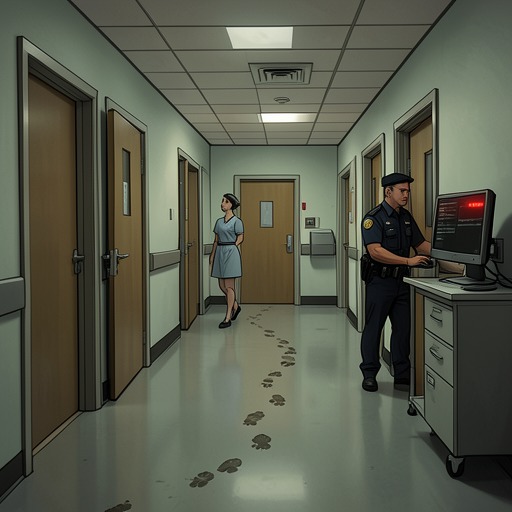
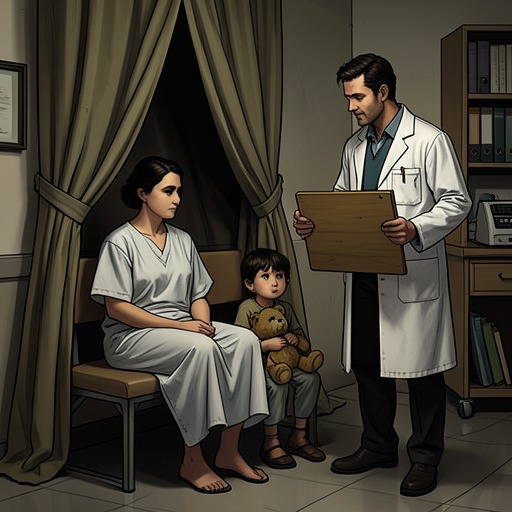
The Good Nurse: A True Story of Medicine, Madness, and MurderCharles Cullen’s fatal injection of Helen Dean at Warren Hospital was an early, unmistakable intrusion of deliberate violence into routine patient care. Her son, Larry Dean, saw a stranger enter his mother’s room, was sent away, and returned to find a pinprick on her thigh. Helen died the next day. Although Larry traced the unexplained injection to Cullen and contacted prosecutors, the medical examination omitted the drug that would have substantiated the suspected poisoning; her death was officially classified as natural.
Decision and opportunity
The episode is dated September 1, 1993. Cullen had recently been visiting the intensive care unit and was narrowing his attention toward a patient. Helen Dean, an elderly woman recovering well from breast cancer surgery, was expected to leave the hospital the following day. Her adult son, Larry, had been staying at her bedside. The account presents his constant presence as the detail that forced Cullen’s decision, but does not explain more fully what Cullen made of it.
Cullen obtained digoxin from the hospital drug closet, where it was kept in small glass ampules in a plastic drawer called a cassette. Nurses commonly used the drug in the intensive care unit to slow the heart’s rhythm. Cullen loaded three ampules, each containing half a milligram, calculating a total of one and a half milligrams, and considered an intramuscular injection potentially sufficient. He concealed the syringe in his hand and went to Helen’s room. The drug’s ordinary place in hospital care, and its unremarkable storage among routine supplies, gave this lethal act the outward shape of clinical work.
The injection and Helen’s death
Larry later recalled that he was sitting beside his mother when a male nurse entered. He had visited every day and recognized the nurses by sight, so the unfamiliar man stood out. His clothing did too: this nurse was dressed entirely in white, unlike the other nurses Larry had seen at Warren Hospital, who wore blue. The nurse ordered Larry to leave without making eye contact or showing expression. Larry went down the hall for coffee.
When he returned about ten minutes later, Helen was alone and angry. She said that the nurse had stuck her and pointed to her inner thigh. Larry examined the spot with the magnifying lens on his Swiss Army knife and saw a pinprick. He called her doctor. The doctor suggested it could be a bug bite, but Helen had not been scheduled to receive an injection. By the next day she was sweating and exhausted, and then became violently ill. Her heart stopped; resuscitation failed. Larry was left grieving and unconsoled.
The clinical emergency did not itself explain what had happened. The injection site was small, the suspected substance was not established, and Helen was an older patient recovering from serious illness. But the specific sequence mattered: a stranger had ordered her son away, Helen reported being stuck, and a visible puncture remained where she said it happened. What might have been dismissed as an isolated mark became harder to explain when Larry began asking questions.
Identification and investigation
Larry pursued the matter himself. He complained to Helen’s oncologist, who confirmed that no injection had been scheduled, and then questioned her other nurses. They identified the male nurse Helen had described as Charles Cullen. Larry’s next call was to the Warren County Prosecutor’s Office. He reported that he believed his mother had been murdered and named Cullen as the person responsible.
Cullen, meanwhile, went home after the injection and did not dwell on it for long. He assumed the hospital would work out what had happened, though he wondered whether that depended on Helen dying. He returned to work the following day and was surprised that it had taken twenty-four hours for her to die. Meetings followed. A doctor, Warren Hospital administrators, nursing supervisors, and members of the prosecutor’s Major Crime Investigation Unit each asked him to recount the events. Cullen denied the injection as well as any responsibility, and watched while his locker was searched.
Helen’s body was taken into cold storage and later thawed so that a doctor from the medical examiner’s office could sample the small mark on her thigh. The examiner tested for nearly one hundred potentially lethal chemicals but, for reasons the account does not explain, did not test for digoxin. Without that test, the investigation lacked the direct toxicological confirmation that could have connected the puncture and her death to the drug Cullen had used. Helen’s death was consequently determined to be from natural causes. The failure was not a finding that the injection had not occurred; it was a gap in the examination that left the suspected cause unproved.
Immediate aftermath and significance
Cullen’s supervisor placed him on indefinite paid leave, effective immediately. Away from the hospital, he sat in his basement apartment, depressed and wondering whether investigators would come for him or whether he should arrange to become a tragic suicide in jail. He cycled between the couch, kitchen table, and bed while the stove clock marked the passing seconds. Shortly before eleven that night, an ambulance arrived; this time, he had left the door unlocked. The account thus follows the investigation’s inconclusive outcome with a private crisis, but does not make that crisis a substitute for an official resolution of Helen’s death.
The event’s force lies in the contrast between what could be observed and what the institution could establish. Larry noticed the unfamiliar nurse, obeyed the order to leave, found the puncture, and pursued the mismatch between Helen’s account and her treatment record. Staff identified Cullen, and authorities questioned him. Yet the missing digoxin test left the central suspicion without the medical confirmation needed to change the official cause of death. The episode therefore establishes both the vulnerability of a patient receiving care in a private room and the fragility of accountability when a decisive investigative step is omitted. Helen died after reporting an unauthorized injection; Cullen was suspected and investigated, but her death was still recorded as natural.