Joe Barry
The Good Nurse: A True Story of Medicine, Madness, and MurderJoe Barry was a former police major who became the senior vice president responsible for security at Saint Barnabas Medical Center. When unexplained insulin poisonings raised the possibility that patients were being deliberately harmed, his investigative experience made him Thomas Arnold’s principal partner in the hospital’s inquiry. Their efforts developed substantial suspicion around Charles Cullen, but the evidence did not yet allow them to prove the case, and the local police chief declined to take it on.
Identity and Role
Before joining the hospital, Barry had been a decorated and respected thirty-year veteran of the New Jersey State Police, where he had served as a major. At Saint Barnabas Medical Center, he was responsible for security and was charged with the delicate investigation into possible patient murders. The book presents his police background as practical preparation for the work: alongside Arnold, he brought experience in investigation to a case that crossed the boundary between hospital security and criminal inquiry.
Barry’s role was not simply to respond to a single suspicious incident. After Arnold brought him findings about insulin in patients’ systems without a corresponding prescription or medication notation, Barry joined the effort to compare staff schedules against patient emergencies. Their attention narrowed to three nurses who were working every code under review, with Cullen becoming the nurse who interested them most.
Investigating the Insulin Incidents
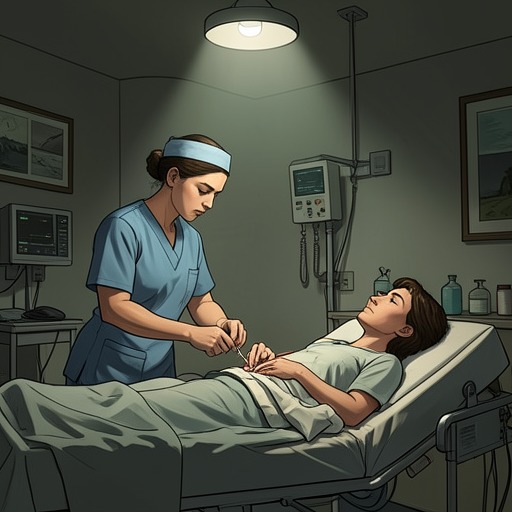
The inquiry acquired physical evidence when a patient’s intravenous bag tested positive for insulin. Its exterior bore tiny needle marks, including punctures along the edges—an unusual pattern that did not look like the ordinary accidental damage that might occur when a bag was connected to a patient. The finding made intentional tampering with stored IV bags a serious possibility. Barry and Arnold also had two bags as evidence and accounts of similar crises involving patients including Anna Byers and Fred Belf.
Reviewing patient records, they found unexplained episodes across intensive-care, critical-care, and cardiac units. Laboratory results showed exceptionally high insulin levels, much of it foreign to the patients’ bodies. Yet the records contained neither an order for insulin nor a notation that it had been administered. That left a troubling alternative: a compound documentation error or deliberate drug administration. The evidence pointed toward criminal conduct, but complicated illnesses and difficult-to-cross-reference shifts prevented the investigators from directly connecting individual emergencies to Cullen.
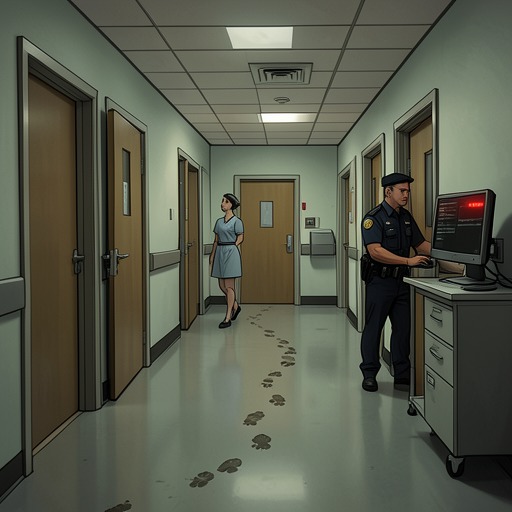
Barry and Arnold tried to catch whoever was responsible. They installed stop-motion cameras in the medication-storage room, interviewed staff, physicians, and families, and introduced a stricter sign-out procedure for insulin, treating a commonly stocked medication with controls ordinarily associated with drugs such as morphine. When two more patients suffered unexplained hypoglycemia in the coronary-care unit in October and their IV bags were found contaminated with insulin, suspicion intensified, but proof remained elusive. Then Cullen left, and the insulin spikes stopped.
The Attempt to Involve Police
Barry and Arnold met monthly with Livingston’s chief of police, Don Jones, in a relationship shaped by the hospital’s importance to the township: Saint Barnabas was Livingston’s largest employer and a foundation of its tax base. On March 5, 1991, they presented the case to Jones over lunch at an Italian restaurant. They had suspected homicides, physical evidence of IV tampering, victims, and a strong suspect. To the former police investigators, the matter had the fundamentals of a serious criminal case.
Jones nevertheless said he did not think he could act on the evidence they had and advised the hospital to handle the matter internally. The account leaves his reason unresolved: Barry and Arnold could not tell whether Jones was trying to do the hospital a favor or believed he could not conduct so complex a medical investigation. In either case, the refusal left the problem with the hospital investigators, who knew that suspicion alone was not enough to establish Cullen’s responsibility.
Limits and Significance
Barry’s investigation shows both the value and the limits of his experience. He and Arnold recognized that the pattern of unexplained insulin crises, unusual bag punctures, and absent medication orders could indicate intentional poisoning; they responded with surveillance, interviews, and tighter medication controls. But a floating nurse’s irregular shifts and patients’ complicated conditions made it difficult to turn a pattern into case-making proof. Their efforts could raise the alarm and constrain access to insulin without resolving the central question of who had administered it.
The local police chief’s recommendation that the hospital investigate internally further narrowed the route to outside intervention. Barry’s role therefore stands at an early, uncertain point in the larger account: he helped make the insulin incidents legible as a possible criminal investigation, but neither his police credentials nor the evidence then available could compel the next step. When Cullen departed and the episodes ceased, the apparent end of the immediate pattern did not amount to a demonstrated resolution.