Lehigh Valley Hospital
The Good Nurse: A True Story of Medicine, Madness, and MurderLehigh Valley Hospital is the setting for a consequential chapter in Charles Cullen’s career: while working overnight in its burn unit, he killed patients, including Matthew Mattern, and later left as conflict with the ward’s senior staff intensified. The hospital’s burn ward brings together the routines of intensive care, the limits of treatment, and Cullen’s growing sense that he could exert private control over life and death.
Identity and Setting
By the time questions about Ottomar Schramm’s death began circulating in March 1999, Cullen had moved from Easton Hospital into a full-time position in the burn unit at Lehigh Valley Hospital. He did not regard Easton as a place to stay, and its internal investigation into Schramm’s death had little effect on him. The book places Lehigh Valley Hospital within a sequence of jobs across several institutions, while giving the burn unit a distinct role in his story: it was where he worked overnight for sixteen months and where his actions included the killing of Matthew Mattern.
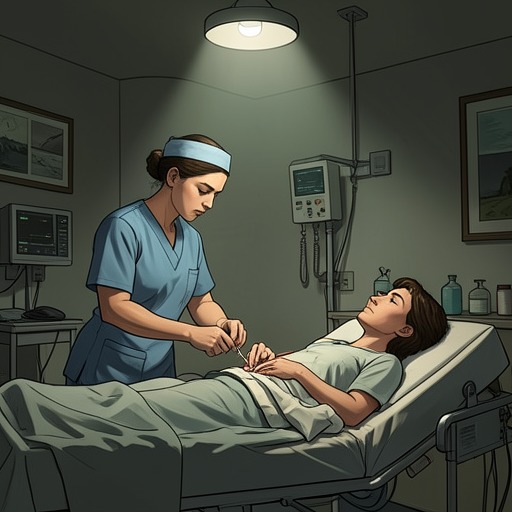
The burn ward was changing. Patients were still scraped on metal gurneys and treated in pressure suits, but newer anti-anxiety drugs and painkillers had made the unit less like the scream-filled wards of Cullen’s earlier experience. OxyContin had entered the market only three years before; medication could now block even very young patients’ pain. Computerized Pyxis MedStations also brought a new system for distributing and tracking drugs, linking withdrawals to a nurse and patient and helping the pharmacy monitor supplies. Cullen liked the technology, but the book stresses its limits: the machine could record transactions, yet it remained only a tool within care delivered by fallible people.
The Burn Unit and Its Patients
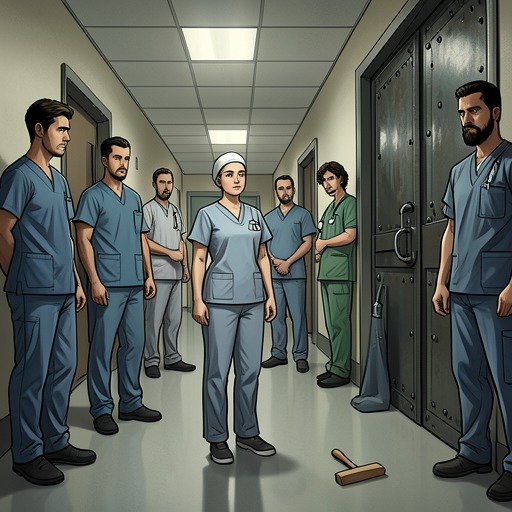
At Lehigh Valley Hospital, Cullen saw himself as an experienced burn nurse, especially after his time at Saint Barnabas Medical Center. The ward’s senior nurses, however, treated him as an outsider, and his own assessment of their care hardened into contempt: he considered them cold and cruel, while they regarded him as strange. The hostility mattered not simply as workplace friction. Cullen experienced the unit as another hierarchy in which he felt powerless, and the overnight shifts gave him access to critically ill patients while leaving him alone with his own account of what their care required.
The burn unit had changed since the wards in which Cullen had first learned the work. New anti-anxiety drugs and painkillers could blunt pain that older treatments had not, yet burn care remained severe: patients were scraped on metal gurneys, placed in pressure suits, and subjected to repeated operations. Matthew Mattern, a twenty-two-year-old brought in after being trapped in a burning car, had burns over 70 percent of his body. By the Rule of Nines, staff privately reckoned that he was 92 percent likely to die. Surgeons amputated his charred extremities piece by piece; even if he survived, Cullen understood that Mattern faced profound and permanent injuries. The nurses’ private prayers for an end to his suffering stood in sharp contrast to the ongoing procedures intended to save him.
On August 31, 1999, Cullen put a bolus dose of digoxin into Mattern’s IV. The slow code ended before sunrise, and Cullen returned to the parking garage. The book presents the act against the ward’s prolonged struggle over Mattern’s failing body, but not as an intervention undertaken for Mattern’s benefit: Cullen’s actions, it explains, were driven by a compulsion for control and relief, often with little attention to the patients themselves. The episode is one of two Lehigh Valley Hospital killings investigators could definitively identify. The other was Stella Danielczyk, seventy-three, whose burns covered more than 60 percent of her body; Cullen later recalled killing four or five patients at the hospital, but the records established only these two victims.
Cullen’s pattern at Lehigh Valley Hospital therefore joined sustained access to patients with an increasingly antagonistic view of the people around him. Over the sixteen months he worked nights, he intervened in patients’ outcomes and often could not later recall which patients had arrived from car accidents or house fires, or how many he had acted upon. The distinction between care and control became especially stark in the case of Mattern: a ward organized around treatment and the possibility of survival became the setting for a concealed lethal act, followed by Cullen’s quiet departure from the unit.
Departure and the Hospital’s Continuing Role
By April 2000, Cullen’s position at Lehigh Valley Hospital was becoming untenable. The Burn Unit’s senior staff no longer concealed their contempt, and his attempt to transfer to the Cardiac Unit failed: it had no interest in taking him. He remained for three more months, killing patients while gradually canceling shifts and looking for work nearby. His departure was thus not a clean break so much as a withdrawal from a workplace where hostility had become open, even as he continued to have access to patients.
The regional abundance of hospital jobs helped make that withdrawal possible. A population surge had brought at least half a dozen health-care employers within a half-hour of Cullen’s rented basement apartment. He updated his résumé with thirteen years of experience across six hospitals. Although he had left nearly all of them amid claims of incompetence or worse suspicions, former coworkers could still confirm his employment dates, and his Pennsylvania nursing license remained valid. References described him as a calm, gentle employee, an excellent team player who willingly covered extra shifts; his communication and work were rated good and great. Saint Luke’s Hospital was among the first to receive his résumé.
Lehigh Valley Hospital later re-entered the story as a source of employment information when Saint Luke’s considered Cullen. In August 2002, Saint Luke’s physician Dr. Saunders contacted his counterpart at Lehigh Valley, Dr. Robert Laskowski, to ask whether Cullen’s file showed similar medication incidents and to warn him not to hire Cullen because of his behavior. Saunders also reported that Cullen was listed as not eligible for rehire at Saint Luke’s. Lehigh Valley was therefore both a place where investigators could identify two of Cullen’s killings and a hospital whose records and professional contacts became part of the effort to assess the danger he posed elsewhere.
The Email That Closed the Ward
In April 2000, the conflict at Lehigh Valley Hospital sharpened after Charles Cullen used a unit computer to email two recently fired nurses in sympathy and solidarity. He presented himself as one of them, aligned against the Burn Unit’s fifteen-year veterans, whom he called “the SS,” and extended the comparison with Nazi references. He did not realize the message would go to the entire Burn Unit staff, including the senior nurses he had targeted. After it circulated, life on the ward became, in the book’s account, utterly unbearable; the Cardiac Unit had no room for his transfer. The episode made visible how Cullen’s sense of grievance and his position within the hospital had become entangled, while helping bring his time at Lehigh Valley Hospital to an end.