Thomas Arnold
The Good Nurse: A True Story of Medicine, Madness, and MurderThomas Arnold was a former police officer who became assistant director of security at Saint Barnabas Medical Center. In February 1991, he helped investigate insulin found in IV bags intended for patients, uncovering a pattern that raised the possibility of deliberate poisoning. His inquiry narrowed suspicion toward nurse Charles Cullen, but the hospital could not turn its growing concerns into conclusive proof; Arnold and his colleagues ultimately needed police involvement.
Identity and Role
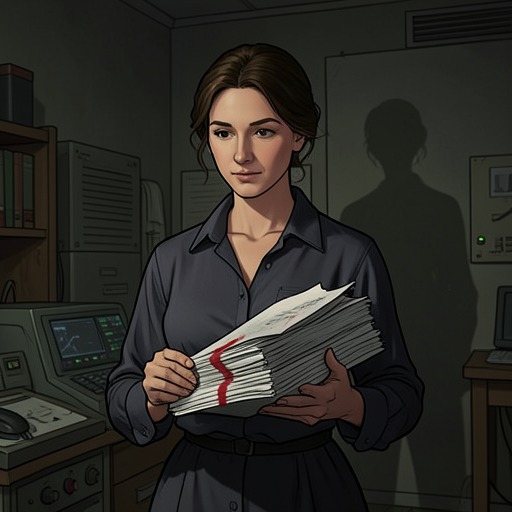
Arnold brought police experience to a hospital security job. When pharmacy nurse Pam Allen brought a suspicious IV bag to risk manager Karen Seiden on February 11, 1991, Arnold arranged for it to be tested by the pathology lab. The bag was supposed to contain saline and heparin; testing found insulin as well. This converted an unsettling physical irregularity into evidence that a drug not intended for the bag’s contents was present.
Arnold worked with Seiden and Joe Barry, Saint Barnabas Medical Center’s senior vice president in charge of security and a former major in the New Jersey State Police. Barry was Arnold’s superior, and the two combined their investigative experience as the hospital tried to determine whether patients had been harmed deliberately.
The Insulin Investigation
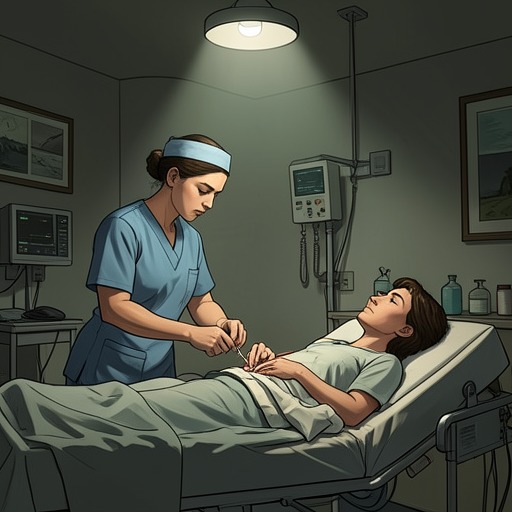
The inquiry gained urgency as patients receiving heparin developed severe symptoms consistent with insulin exposure. When Fred Belf’s IV bag tested positive for insulin, a microscopic examination found tiny needle punctures across its surface, including three on the edges. Those perimeter marks did not fit the usual explanation of a bag accidentally punctured while being connected to a patient. Arnold and Seiden now had two suspect bags, alongside patient episodes involving Belf and Anna Byers, and began reviewing records for similar unexplained insulin crises.
That review widened the problem. For months, codes in the intensive, critical-care, and cardiac units had become frequent enough to overlap, yet the incidents were scattered across units and shifts. Laboratory work found exceptionally high levels of insulin in affected patients, much of it foreign to their bodies. Arnold and Seiden first considered ordinary medication or documentation errors, but the charts contained neither insulin prescriptions nor notations that it had been administered. The absence of records left open two troubling possibilities: a drug had been given and not documented, or the insulin had been administered intentionally.
Suspicion and Confrontation
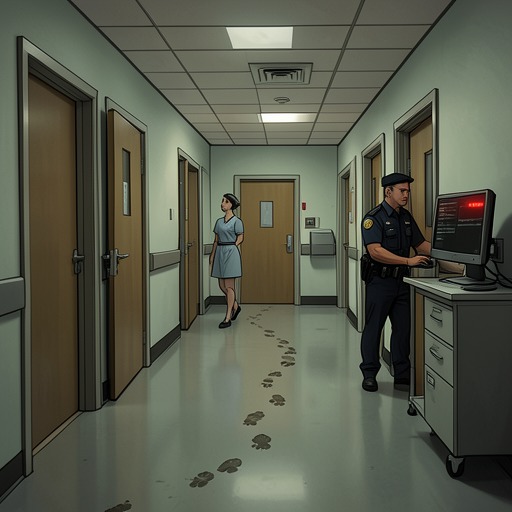
Arnold and Barry compared nursing schedules with the timing of patient codes. Only three nurses had worked every code, and Cullen drew particular attention. Arnold had already interviewed staff members who appeared anxious about the incidents and their professional consequences; Cullen, by contrast, seemed unconcerned and defiant. His employment through a staffing service and irregular shifts made it difficult to arrange an interview, but Arnold and Barry eventually brought him into a conference room.
Cullen refused to answer their questions. He sat with his arms crossed, looking down at the linoleum. Arnold directly accused him of putting something into the bags. Cullen replied that the investigators could not prove it, then said he did not need to speak with them and walked out. Arnold and Barry regarded the exchange as a warning sign, but it did not establish that Cullen had tampered with the bags. Arnold’s suspicion remained an investigative judgment, not proof.
Limits and Significance
The deeper Arnold and Barry looked, the more questionable cases they found, but the hospital’s records did not provide a definitive link between Cullen, a particular insulin spike, and a patient’s eventual death. Patients had complex illnesses; the incidents could not be connected to one event with certainty. Cullen’s work as a floater, including last-minute call-ins, further complicated comparisons between his shifts and patient crises.
Faced with that evidentiary gap, Arnold and Barry concluded that the inquiry needed outside help. Their investigation shows both the value and the limits of Arnold’s police background inside a hospital: he recognized that the bags and patient records might indicate intentional harm, pressed Cullen directly, and helped identify a pattern, yet suspicion and circumstantial timing could not substitute for a provable case. The move to alert police marked the point at which the hospital inquiry had to pass beyond its own security and risk-management staff.