Vecuronium bromide
The Good Nurse: A True Story of Medicine, Madness, and MurderVecuronium bromide was a powerful paralytic that became a central material clue in the investigation of drug diversion and patient deaths at Saint Luke’s Hospital. Its empty vials were not merely evidence that medication had gone missing: because the drug had to be prepared before use and could immobilize a patient while leaving the person able to feel pain, the discarded containers suggested both deliberate handling and a danger that ordinary theft could not explain.
What the Drug Was and How It Was Prepared
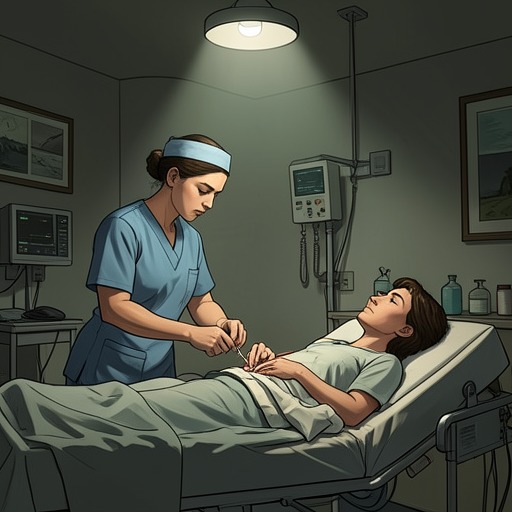
Vecuronium bromide, called vec by nurses, arrived as a powder sealed inside a glass vial with a permanent rubber stopper. To use it, someone had to draw saline into a needle, pierce the stopper, inject the saline, shake the vial until the drug dissolved, and withdraw the prepared contents into a syringe. The emptiness of a vial therefore implied more than routine access: it suggested that the medication had been deliberately reconstituted and drawn up. At Saint Luke’s, investigators found evidence of preparation on a staggering scale.
The drug’s clinical purpose and its danger were sharply at odds. Usual prescriptions called for small doses of around 5 milligrams, and doctors were increasingly wary of it because prolonged or excessive dosing could cause brain damage in comatose patients. A paralytic overdose could shut down the muscles, eventually including those needed for breathing and heartbeat. It could also prevent movement or speech without stopping pain. In the context of unconscious patients, the drug’s effects could be difficult to recognize quickly, while its capacity to leave a person unable to signal distress made the possibility of misuse especially grave.
The Sharps-Box Discovery
The drug first emerged from a wider collection of discarded medication recovered from the sharps box at Saint Luke’s. Gerry Kimble and Candy Wahlmark, with Kim Wolfe involved in watching the medication room, helped sort the contents after Environmental Services unlocked the box. The nurses found six bottles of vecuronium bromide among other drugs, alongside forty boxes of missing Pronestyl and medications including magnesium sulfate, phenylephrine, Levophed, dobutamine, nitroglycerine, and labetalol. The variety made the discovery difficult to interpret as ordinary theft: several of the drugs were not the familiar addictive medicines that might be taken for recreational use or resale.
The empty vecuronium bottles were the most alarming part of the find. Staff determined that preparing the drug required active work with a syringe, and that the quantity represented by the discarded containers amounted to 60 milligrams. Yet no patient in the cardiac critical-care unit had been prescribed vecuronium during the four-shift weekend. The mismatch between a drug requiring preparation, the large amount apparently made ready, and the absence of any authorized prescription turned the sharps box into a record of unexplained activity. A container meant to dispose of needles and medication waste had become an unintended archive of what had been handled.
The nurses could not establish from the discovery alone where the prepared drug had gone or whether it had harmed anyone. Their uncertainty did not make the evidence benign. Kimble, Wolfe, and Candy Wahlmark kept watch on the medication room, observing who entered and how the door was used. They saw Charles Cullen arrive early, perform his customary rearrangement of chairs, and enter the room; after five minutes, he emerged. Kim and Candy checked the room and found the sharps box full again, then alerted CCU manager Ellen Amedeo. When the box was examined at the Monday morning shift change, it contained several dozen more bottles, including ten spent vials of vecuronium. The drug waste had accumulated again while hospital staff were trying to understand its significance.
From Physical Evidence to Missed Warnings
The spent vials supplied a concrete trace, but the hospital’s response did not establish a connection between the medication and patient harm. In later civil litigation involving five families of former patients, the question of whether Saint Luke’s had reason to suspect Cullen’s involvement in deaths was contested. The court record showed divergent accounts of what attorney Paul Laughlin learned during his inquiry. Nurse Patricia Medellin testified that she told him unauthorized vecuronium could explain unexplained slowing of patients’ heart rates followed by cardiac emergencies, and that no one in the unit should have been receiving the drug. According to her testimony, Laughlin said the investigation was closed and that he was confident Cullen was not harming patients.
Medellin also said she raised her concerns with supervisors, who likewise told her the matter was closed. She compared deaths in the unit with Cullen’s shifts and found a disproportionate number occurring while he was on duty, but withheld her list because she feared repercussions after her concerns had been dismissed. Later chart reviews by hospital staff and an outside physician did not lead Saint Luke’s to conclude that Cullen had harmed patients. The hospital referred him to the State Board of Nursing, but the investigation as described in the litigation failed to uncover the connection.
Retrospective Significance
The limits of the initial inquiry became clearer after the Somerset County prosecutor’s investigation began. Investigators seeking to connect drug access to particular patients found that Pyxis medication records were said to be retained for only thirty days; by the time they sought records relevant to Reverend Florian Gall’s death, the hospital indicated that the information was gone. This problem underscored the difference between physical traces such as spent vials and a usable account of who obtained medication, when, and for which patient. A vial could make unauthorized preparation visible without, by itself, identifying a recipient or proving a particular act.
Cullen ultimately confessed to killing, among others, the five Saint Luke’s patients whose cases figured in the civil litigation; seven patients in total were specifically identified as having been killed by him at the hospital. That later knowledge changes the meaning of the vecuronium evidence without erasing the uncertainty that surrounded it when nurses first found the bottles. The discarded vials were an early warning: a dangerous paralytic had been prepared in quantities without a corresponding prescription, and staff had reason to ask whether patients were being harmed. The object’s evidentiary force lay both in what it revealed about drug handling and in the gap between that warning and the institution’s eventual recognition of Cullen’s crimes.