
Danny Baldwin Builds the Case
The Good Nurse: A True Story of Medicine, Madness, and MurderThis thread traces Danny Baldwin’s work as lead detective, from medical uncertainty through evidence gathering and the decisive collaboration with Amy.
increasing Bearing strength in each event
 decreasing
Bearing strength in each eventdecreasingThe First Somerset Case
The First Somerset Case
A New Detective’s Assignment
Danny Baldwin received the first hospital death call as a relatively new member of the Somerset team. His initial autopsy of McKinley Crews offered no evidence of homicide, but a later meeting revealed a cluster of unexplained patient incidents.
A Case Beyond His Training
The charts contained drug levels, medical terms, and timelines unfamiliar to homicide detectives. Danny had to learn enough medicine to ask the right questions while resisting the hospital’s framing of the events as merely clinical.
The assignment demanded patience and intellectual humility. Danny’s willingness to keep working through the unfamiliar details would become central to the case.
The Wrong Suspect
The Wrong Suspect
A Suggested Lead
Mary Lund directed Danny toward phlebotomist Edward Allatt, suggesting that he had a grievance against the hospital. The lead offered an apparently concrete suspect at a moment when detectives had little direction.
A Dead End
Background checks on Allatt produced no useful evidence. Danny then found an earlier digoxin investigation involving Cullen at Easton Hospital, making the nurse’s name impossible to ignore.
The episode taught Danny to distinguish a convenient lead from a meaningful pattern. It also exposed how a hospital could redirect attention away from the employee whose past most needed scrutiny.
Medical Records and Persuasion
Medical Records and Persuasion
Seeking an Outside View
Danny arranged for Leon Smith at Saint Michael’s Hospital to review the suspicious patient charts. Smith found that several cases appeared to involve drug overdoses from an outside source.
Reaching the Family
Danny told Lucille Gall that her brother’s high digoxin levels indicated possible homicide and asked her to support further investigation. Her grief became anger, and she recognized the force of the evidence.
The outside medical review and a family member’s understanding helped turn clinical suspicion into a human and forensic case. Danny needed both professional interpretation and the family’s consent to pursue Gall’s remains.
Trusting Amy
Trusting Amy
A Deliberate Risk
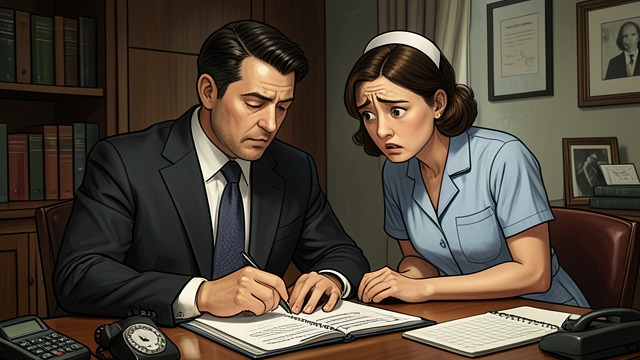
Danny recognized Amy’s fear and candor during her interview. When Mary Lund left the room, he showed Amy Cullen’s Pyxis record and watched her immediately identify its unusual features.
A Working Partnership
Danny revealed enough of the investigation to ask Amy for help, despite the risk that she might pass information to Cullen. Amy eventually agreed, becoming an indispensable interpreter of clinical and electronic evidence.
Danny’s decision replaced institutional access with personal trust. It gave the investigation insights that formal interviews conducted in the hospital, under administrative observation, had not produced.
An Investigation Across Borders
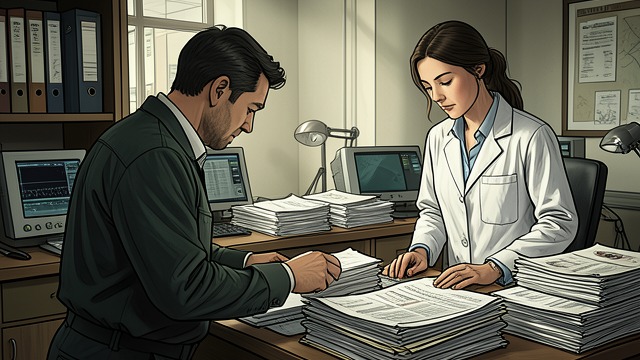
An Investigation Across Borders
Expanding the Inquiry
Danny gathered records from hospitals, agencies, and Pennsylvania investigators while organizing schedules, medication data, and patient outcomes. The work reached across state lines and across years of incomplete documentation.
A Difficult Accounting
After Cullen confessed, Danny and colleagues reviewed large numbers of charts and tips to identify likely victims. The records eventually supported numerous convictions, but could not establish the total number of people Cullen had harmed.
Danny’s work turned a confusing cluster into a broad prosecution. Its limits reflected the damage done when hospitals had lost records or failed to preserve evidence at the time of the deaths.
October 2003
October 2003
October to November 2003
November 2003
Late 2003 to 2006
