
The Limits of Counting Victims
The Good Nurse: A True Story of Medicine, Madness, and MurderThis thread traces the gap between Cullen’s confessed crimes and the far larger number of deaths investigators believe he may have caused.
increasing Bearing strength in each event
 decreasing
Bearing strength in each eventdecreasingA Death Hidden in Medicine
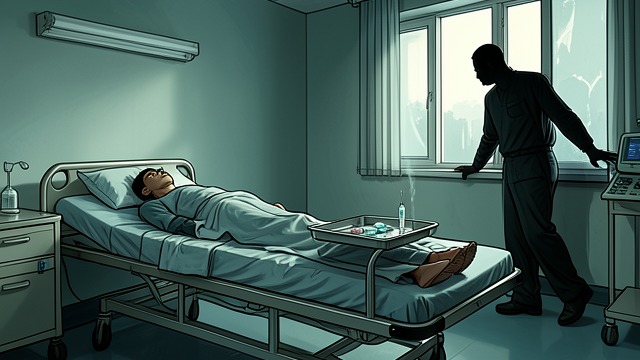
A Death Hidden in Medicine
Complicated Patients
Hospital patients often had multiple diseases, medications, and unstable vital signs. When someone died, an unusual laboratory result could be difficult to separate from the natural course of illness.
A Cause Disappears
If no autopsy was ordered or the relevant drug was not tested, a deliberate poisoning might remain indistinguishable from a medical complication. Time and embalming further reduced what investigators could learn later.
The crime’s setting shaped the evidence. Medicine’s complexity, normally a tool for care, could make a murder almost impossible to distinguish from a natural death.
The Confession’s Missing Names
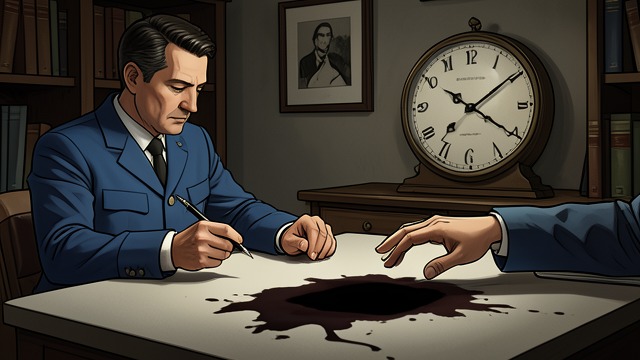
The Confession’s Missing Names
An Incomplete Account
Cullen initially confessed to killing around forty people, but he missed names, skipped years, and avoided guesses when he was unsure. His account was not a complete ledger of his crimes.
Memory and Self-Protection
Some victims did not stand out to him, and his language framed deaths as interventions rather than murder. The confession therefore required verification against records and testimony.
The person responsible could identify some crimes while remaining an unreliable guide to the full scale of the harm. A confession supplied access to knowledge, but it could not replace independent evidence.
Records Determine the Count
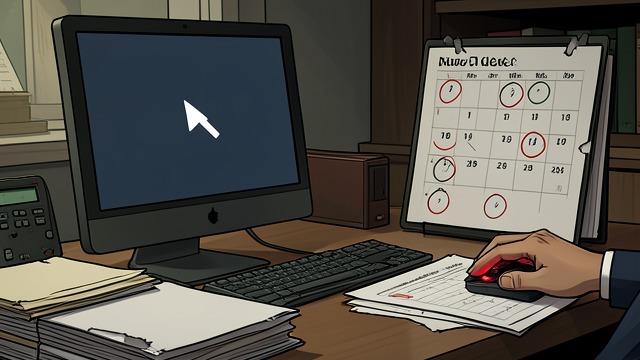
Records Determine the Count
Somerset’s Data Advantage
At Somerset, investigators had computerized patient charts, Pyxis records, work schedules, and tip information. Cross-referencing these materials helped identify high-probability victims and establish multiple murders.
Older Cases Remain Unclear
At earlier hospitals, records had been lost, destroyed, or never collected. The absence of reliable charts and timely toxicology left investigators unable to prove many deaths that Cullen later described.
The number of confirmed victims depended not only on what Cullen had done, but on what institutions had preserved. The count became a measure of the investigation’s evidence as much as the killer’s total conduct.
Forty and Four Hundred
Forty and Four Hundred
A Wider Estimate
Cullen’s initial account named perhaps forty victims. Experts familiar with the case believed the true number could be closer to four hundred, although that estimate could not be proven patient by patient.
The Difference Between Estimate and Verdict
Only a fraction of the suspected deaths produced criminal convictions. The gap between the legal count and the estimated total reflects how difficult it was to distinguish Cullen’s actions from hospital mortality.
The numbers carry different meanings: one is an evidentiary conclusion, the other a sober estimate of scale. Treating them as interchangeable would erase the uncertainty that investigators and families had to live with.
The Voiceless Witnesses
The Voiceless Witnesses
Patients Cannot Testify
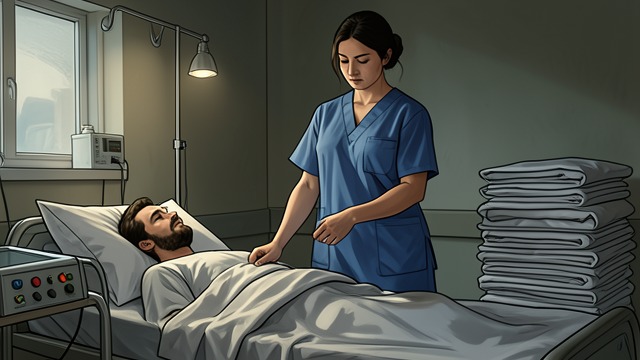
The people Cullen harmed were often unconscious, critically ill, or already dead before anyone understood that a crime might have occurred. Their bodies and medical records became the primary witnesses.
A Dedication to Care
The author frames the book as a tribute to victims and to nurses who devote their lives to caring for others. This distinction matters: Cullen’s crimes exploited a profession whose ordinary work remains essential and humane.
The missing evidence is not merely a technical problem. It is a reminder that patients whose voices were silenced deserve to remain central to the story, even when their deaths cannot be fully reconstructed.
1987 to 2003
December 2003
2003 to 2006
After 2003
Near the ending
